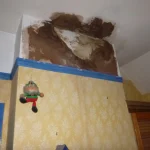
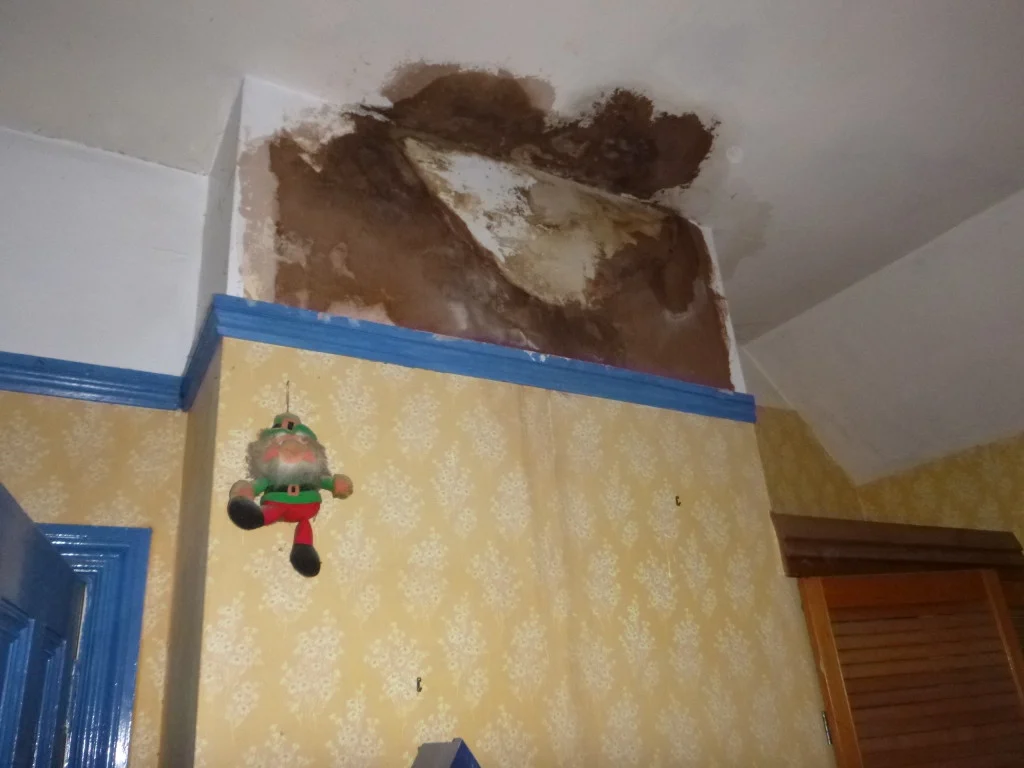
Brown or yellow stains appearing on a wall around a chimney breast are often a sign that moisture is interacting with deposits within the chimney or chimney structure.
These marks are often referred to as chimney staining. They can be frustrating because simply painting over them may not solve the problem: if the underlying source of moisture remains, the staining can come back through the decoration.
There is not one single cause of every brown mark near a chimney. Water ingress, moisture within a disused chimney and historic soot or other combustion deposits can all play a part, so the first step is understanding what may be happening rather than assuming the stain itself identifies the cause.
In This Guide
- Why brown stains appear on walls near a chimney
- What causes brown or yellow chimney breast stains
- Why chimney stains can get worse when it rains
- Why brown stains can come back through paint
- Whether a disused or blocked chimney can contribute to staining
- What to do about brown stains near a chimney
- Frequently asked questions
Why Are Brown Stains Appearing on the Wall Near My Chimney?
Brown staining around a chimney breast usually tells you that something from within or around the chimney structure is reaching the finished wall surface.
Older chimneys can contain soot and other combustion deposits from many years of use. If moisture reaches those deposits, discolouration can migrate through porous masonry, plaster and decoration and become visible as brown or yellow marks.
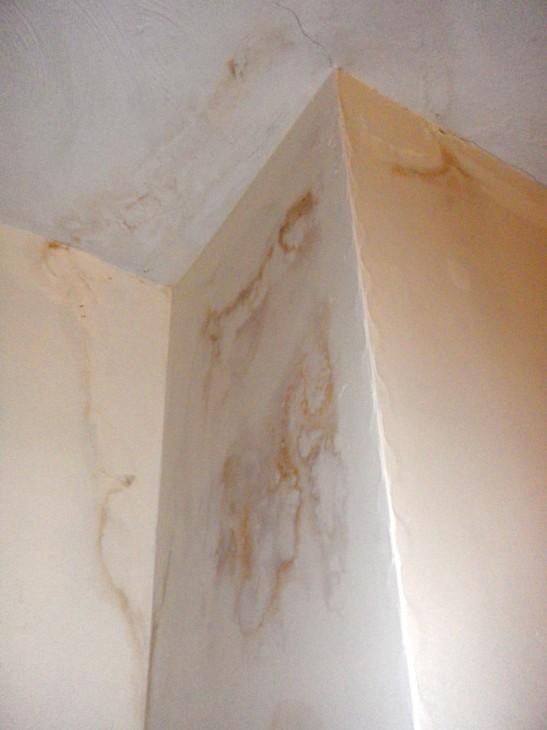
Moisture may come from water entering around the chimney externally, condensation or damp conditions within the chimney. The appearance of the stain alone cannot tell you which of these is responsible.
If you can actually see or hear water entering the fireplace or flue, see our guide to water coming down a chimney.
What Causes Brown or Yellow Chimney Breast Stains?
Brown or yellow stains on a chimney breast are usually caused by moisture interacting with soot and other combustion deposits within the chimney or chimney structure. The moisture may come from external water ingress or from poor ventilation within a disused or incorrectly blocked chimney. More than one factor can be present at the same time.
Historic soot and combustion deposits
A chimney that has been used for fires can retain combustion deposits within the flue and surrounding masonry. Moisture can interact with these deposits and contribute to staining appearing through the chimney breast.
This is different from soot acid erosion, which describes deterioration that can occur when soot and moisture create acidic conditions inside a chimney. The two subjects can involve the same ingredients without being the same problem.
Water entering around the chimney
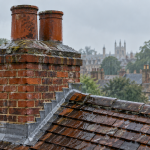
Rainwater can enter a chimney or the surrounding building fabric through defects such as damaged flashing, flaunching, pointing, masonry or the chimney pot or terminal. Ablewight does not repair chimney stacks, roofs, flashing, flaunching or pointing, so suspected external water ingress will normally need to be investigated by an appropriate roofer or builder.
Moisture in a disused or blocked chimney
If staining has appeared after a chimney has been blocked off, poor ventilation is an important possibility to investigate once external sources of water ingress have been ruled out. A disused chimney still needs airflow so that moisture can escape. We explain what to do if you suspect this is the problem in the section below.
Why Do Chimney Stains Get Worse When It Rains?
If brown stains become darker, larger or more noticeable after rain, additional moisture may be reaching the chimney structure. That does not prove exactly where the water is entering, but the timing is useful information when the problem is investigated.
Rain can enter directly through an open chimney top, but it can also reach the chimney through defects elsewhere around the stack or roof. A cowl or rain cap therefore should not automatically be treated as the solution to every chimney leak.
Different chimney terminals perform different jobs. Our guide to chimney cowls and bird guards explains when a terminal may reduce rain entry and why the correct type matters.
Why Do Brown Stains Come Back Through Paint?
Painting covers the visible mark; it does not remove whatever caused the staining to reach the wall in the first place.
If moisture continues to move through contaminated masonry or plaster, the discolouration can reappear through new decoration. That is why repeatedly painting a chimney breast without addressing the underlying moisture problem may only provide a temporary cosmetic improvement.
Before redecorating, the cause of any ongoing moisture should be investigated and the affected area allowed to dry appropriately. A decorator or building professional can then advise on treatment of the finished wall once the underlying problem has been addressed.
Can a Disused or Blocked Chimney Cause Damp and Staining?
Yes. If a chimney has been blocked without adequate ventilation, moisture can become trapped within the flue. If external leaks have been ruled out, poor ventilation is an important cause to investigate — particularly if the staining appeared after the chimney was blocked.
The first step is to open the flue back up. We recommend having it swept at this stage, particularly if it was blocked without being swept first, so that soot, nesting material and loose debris are removed rather than left inside the damp flue.
The chimney should then be left open and ventilated for as long as practicable so that it can dry thoroughly. Only once the moisture problem has stabilised should it be blocked again, this time with appropriate ventilation at both the top and bottom of the flue. If an air vent is used at room level, keep it clear of dust, debris and furniture so that airflow is not restricted.
Do not rush to redecorate while the staining is still changing. Once the chimney has dried and the marks have stopped worsening, the affected plaster may need to be removed and replaced before repainting. We recommend discussing an appropriate non-porous or stain-resistant plaster or finishing system with a suitably qualified plasterer or decorator so that historic staining is less likely to migrate back through the finished surface.
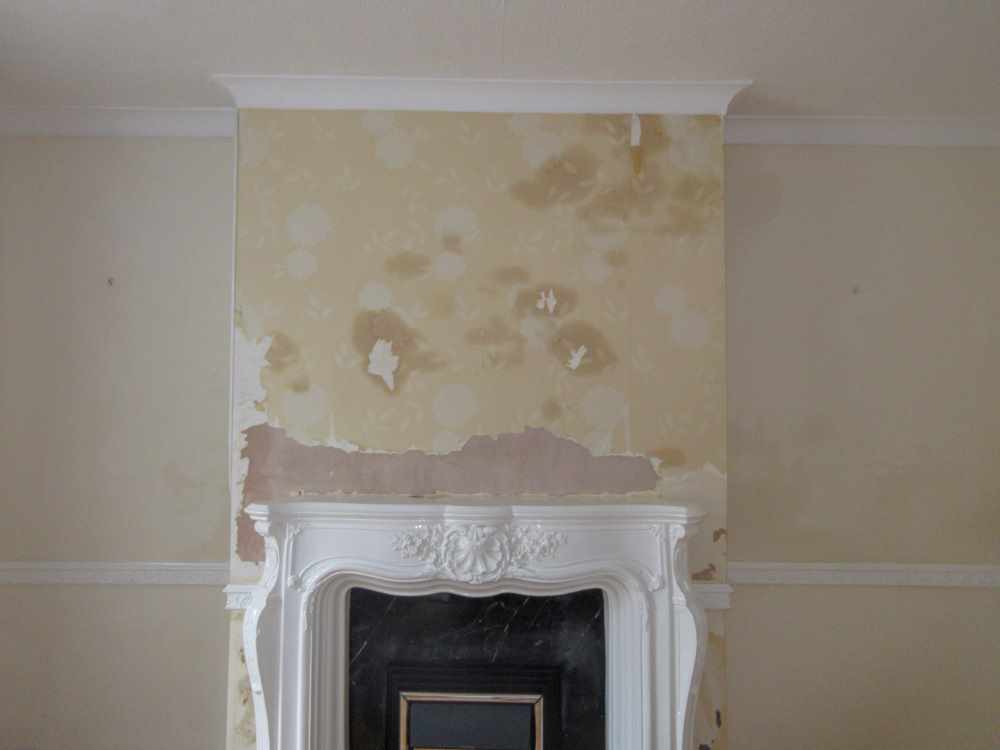
What Should You Do About Brown Stains Near a Chimney?
The important thing is to deal with the cause of the moisture before repairing or redecorating the stained wall.
1. Rule out water entering around the chimney
Check whether the staining becomes darker or spreads after heavy rain. A roofer or appropriate building professional should check the flaunching, chimney stack, lead flashing, pointing and surrounding roof for defects. If water is getting in externally, that needs to be repaired first.
2. If the chimney has been blocked, check the ventilation
If the external chimney and roof are sound and the staining has appeared after the fireplace or flue was blocked, inadequate ventilation is a likely cause to investigate. The flue may need to be opened back up so that trapped moisture can escape.
3. Have the chimney swept
If the chimney was blocked without being swept first, soot and other deposits may still be inside it. We recommend having the flue swept once it has been opened so that soot, nesting material and loose debris are removed rather than left inside the damp chimney.
4. Let the chimney dry thoroughly
Leave the flue open and ventilated for as long as practicable. Do not rush to block it again or repair the stained plaster while the chimney is still drying or the staining is continuing to change.
5. Block the chimney correctly if it is staying out of use
Once the chimney has dried, it can be blocked again with appropriate ventilation at both the top and bottom of the flue. If there is an air vent at room level, keep it clear of dust, debris and furniture so that airflow is not restricted. See our guide to permanently blocking a chimney for more detail.
6. Repair the stained wall only once the problem has stopped
When the chimney has dried and the staining has stopped getting worse, the affected plaster may need to be removed before the wall is replastered and painted. We recommend discussing an appropriate non-porous or stain-resistant plaster or finishing system with a suitably qualified plasterer or decorator to reduce the risk of historic staining migrating back through the finished surface.
If there is a specific reason to examine the accessible inside of the flue more closely, a CCTV chimney survey may be appropriate. However, CCTV from inside the flue cannot diagnose every source of water entering around a chimney stack or roof.
If the main symptom is an odour rather than visible staining, our guide to why chimneys smell is the better starting point.
Not Sure What’s Causing the Staining?
If your chimney needs sweeping or there is a specific reason to investigate the accessible flue, we can advise on the appropriate appointment.
Frequently Asked Questions
What causes brown stains on walls near a chimney?
Brown stains can appear when moisture interacts with soot and other combustion deposits within a chimney or chimney structure and discolouration reaches the finished wall. Water ingress and damp conditions in a disused chimney are among the possible contributors.
Why do brown stains keep coming through paint?
Paint covers the visible mark but does not remove the underlying moisture or contamination. If the cause remains, staining can migrate back through new decoration.
Does a brown chimney stain mean the roof is leaking?
Not necessarily. External water ingress is one possibility, but moisture can also be associated with conditions inside a disused chimney or other parts of the chimney structure. The stain alone does not identify the source.
Can a chimney sweep remove brown stains from the wall?
No. Sweeping removes soot and loose deposits from inside the flue; it does not remove staining from plaster or decoration. It can, however, be part of investigating and managing the chimney itself.