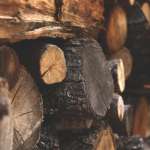
The best way to store firewood is off the ground, protected from rain and with plenty of airflow around the logs. Simply leaving wood for a year or two does not mean it will become properly seasoned. If it is lying on grass, soil or concrete, or stacked where moisture cannot escape, it can remain damp or absorb moisture from its surroundings.
In This Guide
What Is the Best Way to Store Firewood?
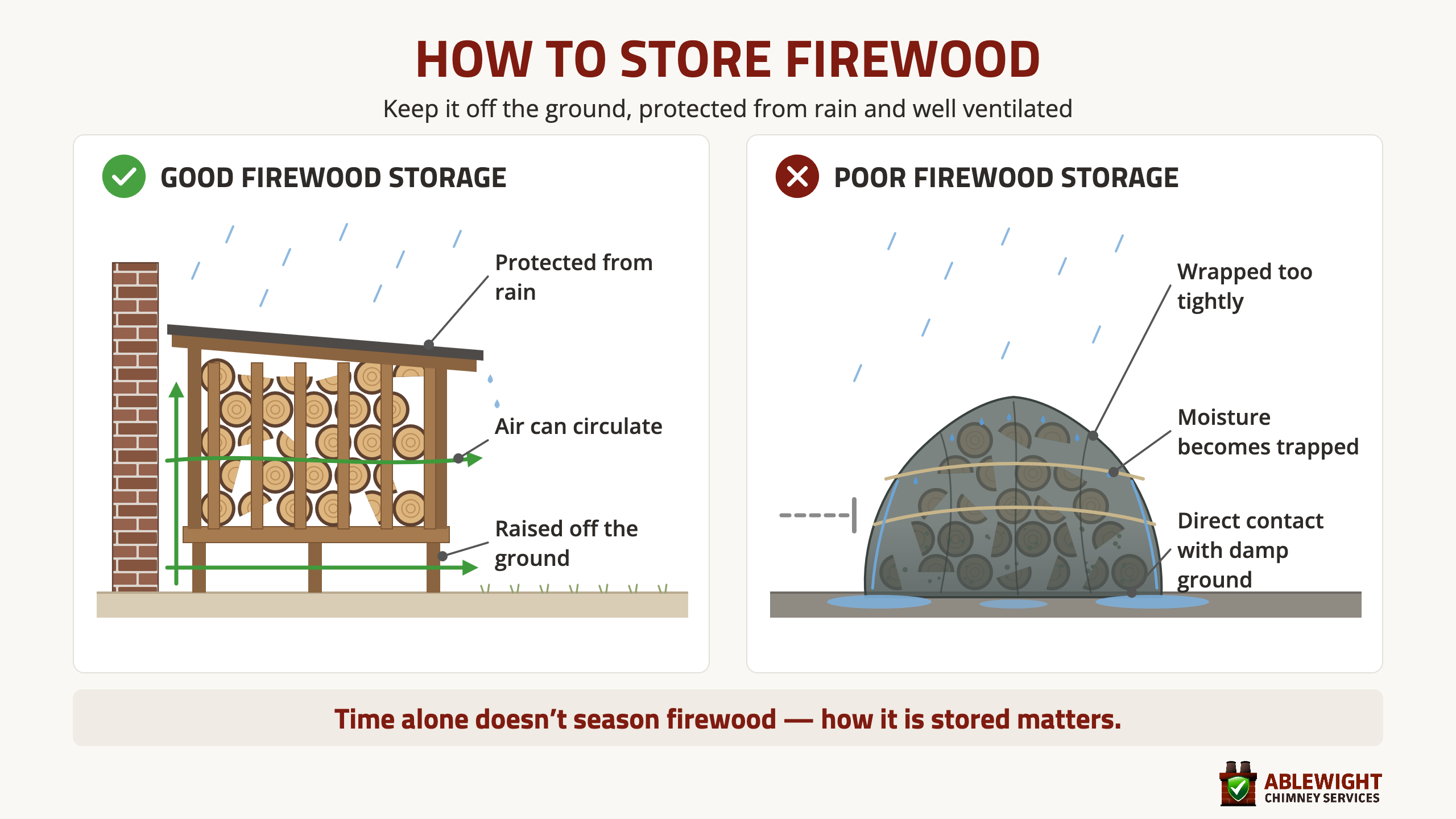
Good firewood storage does three things: keeps the logs off damp ground, protects them from rain and allows air to circulate.
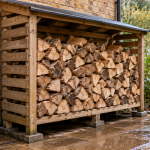
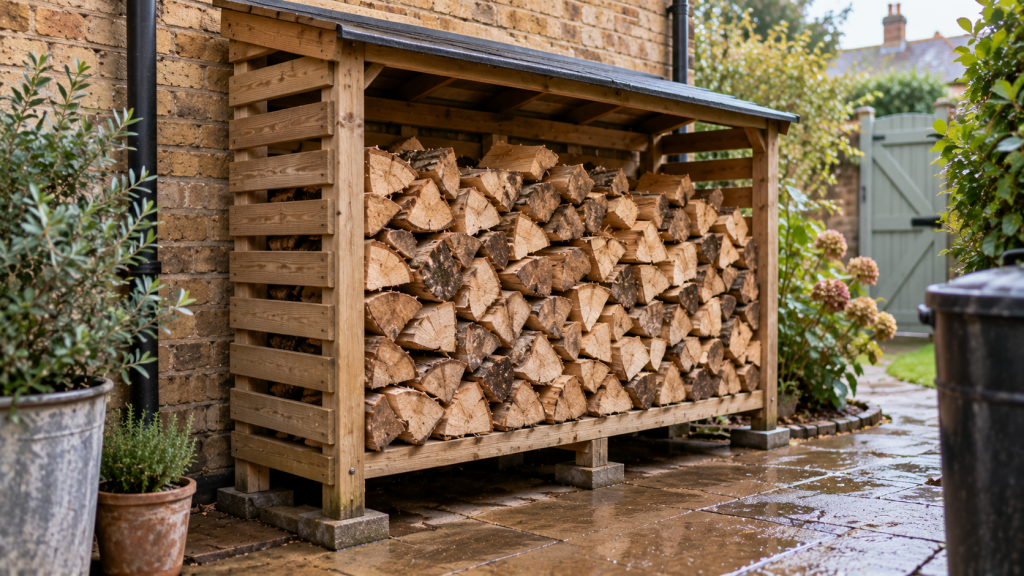
A purpose-built log store makes this relatively easy because it normally combines a raised base, a roof and open or slatted sides. You can achieve the same principles with other storage arrangements; the important thing is the conditions around the wood rather than the type of store you buy.
If you are seasoning freshly cut timber, splitting it before stacking exposes more of the wood to the air. Stack it securely without sealing the pile inside plastic or another covering that prevents moisture escaping.
Why Should Firewood Be Stored Off the Ground?
Firewood left directly on the ground can absorb moisture instead of drying properly. This applies not only to grass and soil but also to surfaces such as concrete.
We regularly come across people who have felled a tree, left the timber lying outside for a couple of years and understandably assumed that the time alone means it is seasoned. Unfortunately, wood does not become ready to burn simply because it is old. If it has remained in contact with a damp surface or been exposed to poor drying conditions, its moisture content can still be too high.
Raise the logs on a suitable base such as a pallet, battens or the raised floor of a log store. This separates the bottom layer from the damp surface and allows air to move underneath the stack.
Should Firewood Be Covered?
Yes, firewood should be protected from rain, but it should not be completely wrapped up.
A solid roof over a log store is ideal because it sheds rain while leaving the sides open for ventilation. If you use a tarpaulin, use it to protect the top of the stack rather than wrapping the whole pile in plastic.
Covering the sides too tightly can restrict airflow and trap moisture around the logs. The aim is to keep direct rain off while still allowing moisture within the wood to escape.
Why Does Firewood Need Airflow?
Moving air helps carry moisture away from the wood as it dries. A stack may be protected from rain and still dry poorly if it is packed into an enclosed, poorly ventilated space.
Choose a position where air can move around the store and avoid packing logs so tightly that there is no ventilation through the stack. If a log store is positioned against a wall, leaving some space behind it also helps air circulate.
Airflow remains important after the wood has seasoned. Dry logs can absorb moisture again if they are moved into damp or poorly ventilated storage.
Can You Store Firewood in a Shed?
You can store firewood in a shed provided the shed is dry and adequately ventilated.
Keep the logs raised from the floor, particularly if the shed has a concrete floor, and make sure there is enough ventilation for moisture to escape. A tightly enclosed shed with little airflow is not an ideal place to season freshly cut timber.
A shed can work particularly well for keeping already-dry firewood protected from the weather, as long as damp and poor ventilation are not allowed to undo the drying that has already taken place.
Can You Store Firewood Indoors?
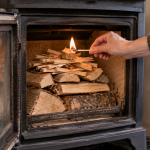
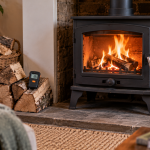
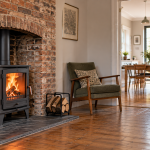
Keeping a small amount of dry firewood indoors can be convenient for reloading your stove or fire, but it is not essential. Your main supply can remain in suitable outdoor storage and be brought inside as needed.
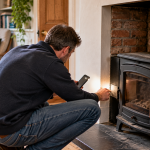
Most importantly, never store logs touching the stove or in close proximity to it. Firewood is combustible, so storing it against or too close to a hot appliance creates a fire hazard. Follow the appliance manufacturer’s instructions for safe distances from combustible materials.
What Are the Most Common Firewood Storage Mistakes?
The problems we see most often come back to the same basic storage principles:
- Leaving timber directly on grass, soil or concrete. Time alone will not season wood if it continues absorbing moisture.
- Assuming wood is seasoned because it has been outside for a long time. Drying conditions matter more than simply counting months or years.
- Wrapping the entire stack in plastic or tarpaulin. Keeping rain off is useful; trapping moisture inside is not.
- Storing logs somewhere with little airflow. Moisture needs a way to escape.
- Allowing already-dry wood to become wet again. Good storage still matters after the seasoning process is complete.
- Keeping indoor logs against or too close to the stove. Convenient storage should never create a fire hazard.
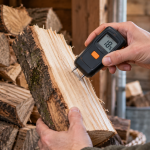
If you are unsure whether your stored wood is ready to burn, our guide to seasoned wood and moisture content explains what moisture level to aim for and how to test it. If you need a meter, see our guide to choosing a firewood moisture meter.
Storing Your Firewood Properly? Don’t Forget the Chimney
Correct storage helps keep your firewood dry and ready to burn, but soot and other combustion deposits will still build up in the flue. Regular sweeping removes these deposits and helps keep your chimney clear and safe to use.
Frequently Asked Questions
Can you store firewood directly on concrete?
It is better to raise firewood off concrete rather than stack it directly on the surface. Concrete can remain damp, and separating the logs from the floor also allows air to circulate underneath the stack.
Should a log store have open sides?
A log store should allow plenty of ventilation. A roof protects the wood from direct rain, while open or slatted sides allow air to move around the logs and carry moisture away.
Can firewood get wet after it has been seasoned?
Yes. Dry firewood can absorb moisture again if it is exposed to rain or stored in damp conditions. Seasoned or kiln-dried wood still needs suitable storage after it reaches the required moisture level.
Can you store firewood against a house wall?
It is better to leave some space between the firewood store and the wall so air can circulate behind it. Avoid stacking logs tightly against the building, particularly where this could restrict ventilation or hold moisture against the wall.