For most households burning firewood, a simple digital pin-type moisture meter is the best choice. Look for a clear percentage display, a range that comfortably covers the 20% moisture level and straightforward checking or calibration instructions. Replaceable pins are useful, but specialist features are rarely necessary for domestic firewood.
In This Guide
- Why buy a moisture meter for firewood?
- What type of moisture meter is best for firewood?
- What should you look for when choosing a firewood moisture meter?
- What moisture meter features don’t you need for firewood?
- Do you need an expensive moisture meter for firewood?
- How do you use a moisture meter on firewood?
- Frequently Asked Questions
Why Buy a Moisture Meter for Firewood?
A moisture meter gives you a practical way to check firewood rather than relying on appearance, weight or how long it has been stored.
Logs can look dry on the outside while retaining considerably more moisture inside. Wood can also become wet again if it is stored badly after drying.
If you regularly burn wood, a meter is a useful tool to keep at home. It can help you check bought-in logs, monitor wood you are seasoning yourself and make sure stored fuel has remained dry enough to burn.
Our guide to seasoned wood and moisture content explains the moisture level to aim for and how to check logs correctly.
What Type of Moisture Meter Is Best for Firewood?
For normal household firewood testing, we recommend a digital pin-type moisture meter. We do not recommend a particular brand.
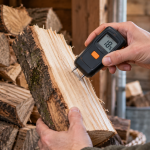
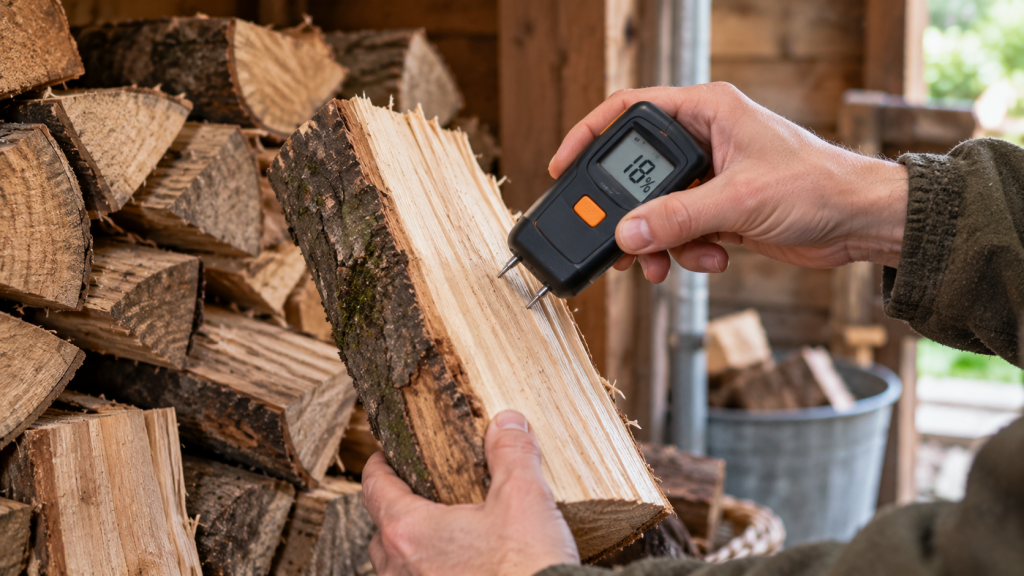
Pin-type meters use two metal probes that make contact with the wood and estimate its moisture content from electrical resistance. They are simple, widely available and well suited to checking split logs.
Pinless meters use sensors to take a reading without inserting probes into the wood. That can be useful for other timber applications, but it offers little practical advantage for a homeowner whose main purpose is checking firewood.
What Should You Look for When Choosing a Firewood Moisture Meter?
Prioritise a clear reading and simple operation over a long list of features. For domestic firewood, useful things to look for include:
- a clear digital percentage display that is easy to read;
- pin-type probes suitable for testing freshly split wood;
- a measurement range that comfortably includes the area around 20%;
- replaceable pins, if available, so a damaged probe does not mean replacing the whole meter; and
- clear manufacturer instructions for checking, calibrating and using the meter.
If you are comparing two otherwise similar meters, build quality, ease of use and replaceable probes are likely to be more useful for firewood than extra electronic features.
What Moisture Meter Features Don’t You Need for Firewood?
Most homeowners do not need professional timber-analysis features simply to check logs.
Bluetooth connectivity, data logging, app integration and other advanced functions may be useful for specialist or commercial timber work, but they do not make a meter inherently better for deciding whether domestic firewood is dry enough to burn.
Some meters also offer settings for different wood species. Follow the manufacturer’s instructions if your chosen meter uses these settings, but you do not need to buy a complicated professional meter solely because it offers a long list of species options.
Do You Need an Expensive Moisture Meter for Firewood?
No. For ordinary household firewood checks, price alone does not make a moisture meter more suitable.
The job is relatively simple: you need a meter capable of giving a useful percentage reading around the moisture level at which you are deciding whether to burn the wood. A straightforward domestic pin meter can do that without the specialist functions found on professional instruments.
Rather than buying on price alone, compare the measurement range, clarity of the display, manufacturer instructions, build quality and whether replacement pins are available.
How Do You Use a Moisture Meter on Firewood?
Split the log and test the freshly exposed inner face, following the instructions supplied with your meter. Test several logs rather than relying on a single reading.
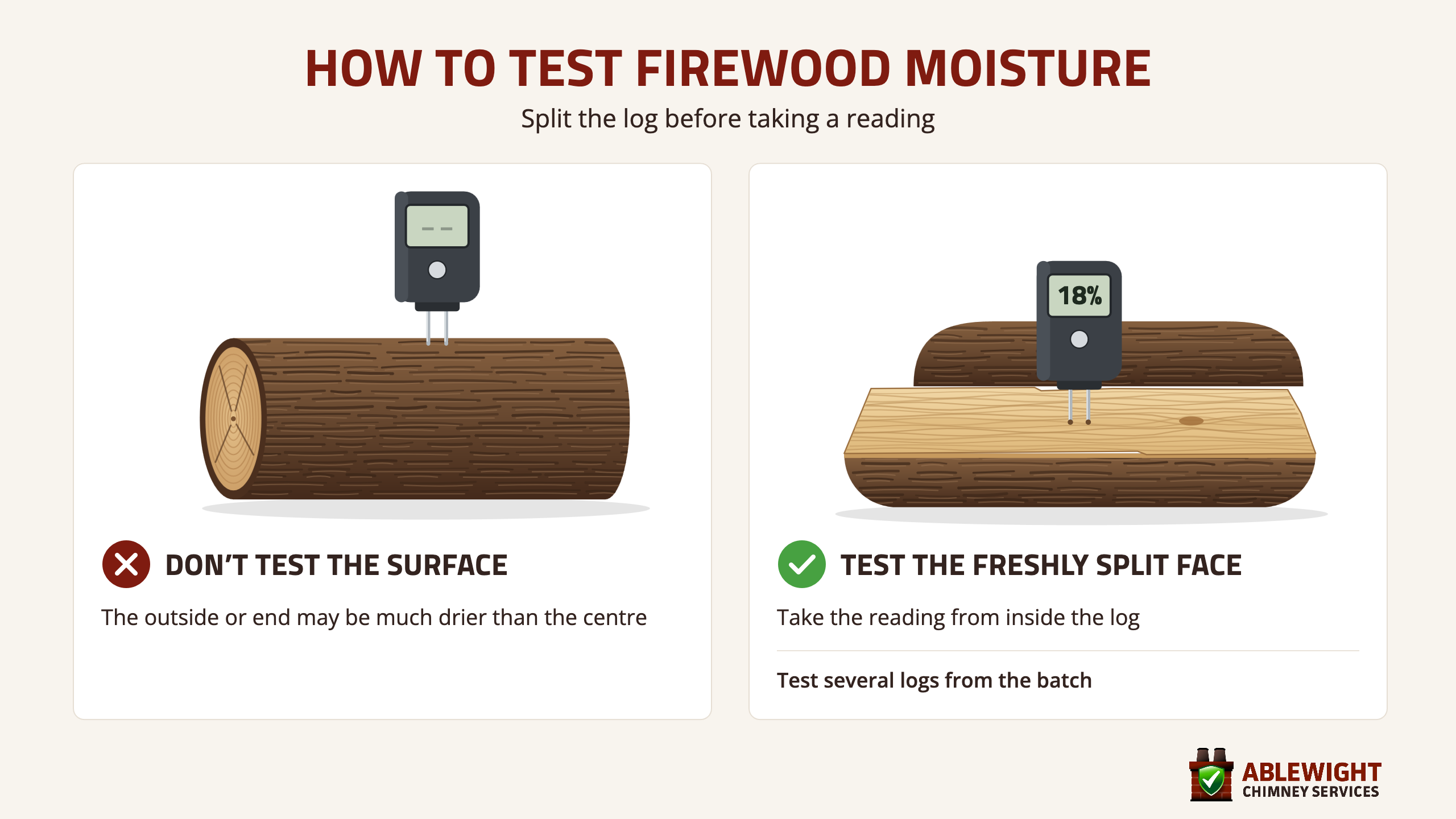
We cover the testing method, the moisture percentage to aim for and why storage matters in our seasoned wood guide. If your logs need further drying, see our guide to storing firewood.
Burning Dry Wood Helps — But Your Chimney Still Needs Sweeping
Using properly dried firewood can help reduce smoke and deposits, but soot and other combustion deposits will still build up in the flue. Regular sweeping removes these deposits and helps keep your chimney clear and safe to use.
Frequently Asked Questions
What is the best moisture meter for firewood?
For most homeowners, a simple digital pin-type moisture meter is sufficient. Look for a clear percentage display, a suitable measurement range, straightforward instructions and, ideally, replaceable pins.
Is a pin or pinless moisture meter better for firewood?
A pin-type meter is the more practical choice for normal domestic firewood testing. Pinless meters can be useful for other timber applications, but their additional capabilities are generally unnecessary for checking split logs.
Do you need an expensive moisture meter for logs?
No. A straightforward domestic meter can provide the information a homeowner needs. Concentrate on ease of use, a suitable measurement range and clear manufacturer instructions rather than price or advanced features.
What should I look for when buying a moisture meter for firewood?
For domestic firewood, look for a digital pin-type meter with a clear percentage display, a measurement range that comfortably covers the area around 20%, clear manufacturer instructions and, ideally, replaceable pins. Specialist features such as Bluetooth or data logging are generally unnecessary.