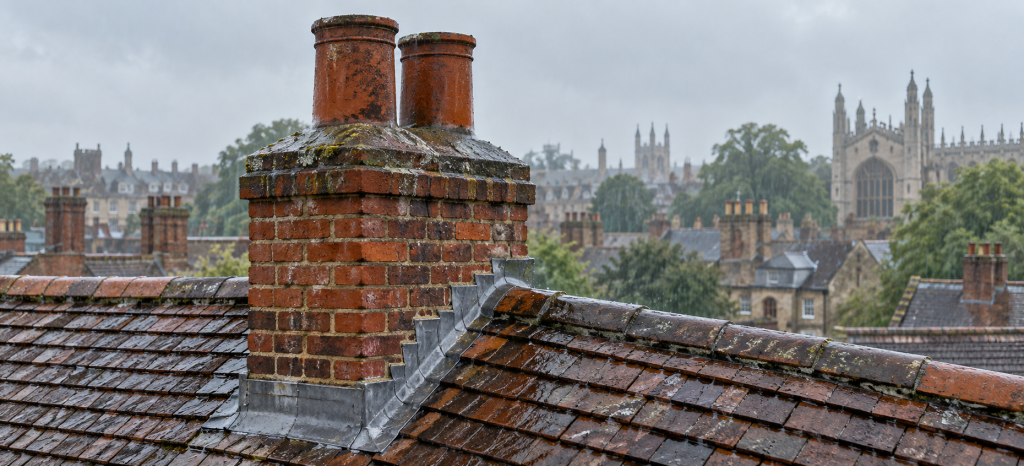
If water or rain is coming down your chimney, it is worth investigating rather than assuming it is normal. A small amount of rain can enter an open chimney pot, but visible dripping, water reaching the fireplace or repeated damp after heavy rain can indicate a problem with the chimney top, stack, flashing or surrounding roof.
The important part is identifying where the water is entering. A chimney cowl or rain cap can help in some situations, but it will not fix water entering through damaged flashing, pointing, flaunching or masonry.
In This Guide
- Is it normal for rain to come down a chimney?
- Why is water coming down my chimney?
- Why does water come down the chimney in heavy rain?
- Where can water enter a chimney?
- How can you tell where a chimney leak is coming from?
- How do you stop water coming down a chimney?
- Can a chimney cowl or rain cap stop water coming in?
- Who should you call about a leaking chimney?
- Frequently asked questions
Is It Normal for Rain to Come Down a Chimney?
An open chimney pot is exposed to the weather, so some rain can enter from above. However, water visibly dripping down the flue, reaching the fireplace or repeatedly causing damp and staining should not simply be accepted as normal.
The amount of water entering directly through the opening of a chimney is only one possibility. Rain can also enter through defects elsewhere around the chimney stack and roof, which is why the source should be investigated before deciding on a solution.
Why Is Water Coming Down My Chimney?
Water can enter a chimney through the open pot or terminal, or through defects in the chimney stack, flaunching, pointing, flashing or surrounding roof. Once inside the chimney structure, water may travel before it becomes visible, so the place where you see the damp is not necessarily the place where the water entered.
If the symptom is mainly brown or yellow marks on the chimney breast rather than water visibly entering the flue, see our guide to brown stains on walls near a chimney.
Why Does Water Come Down the Chimney in Heavy Rain?
If the problem only appears, or becomes much worse, during heavy or wind-driven rain, that is useful evidence that the water is entering externally.
Heavy rain can increase the amount of water entering an uncovered chimney pot, while wind can drive rain against the stack and into defects that are less noticeable in lighter weather. The timing alone cannot identify the exact entry point, but noting when the problem occurs can help a roofer or building professional investigate it.
Where Can Water Enter a Chimney?
Common areas to investigate include:
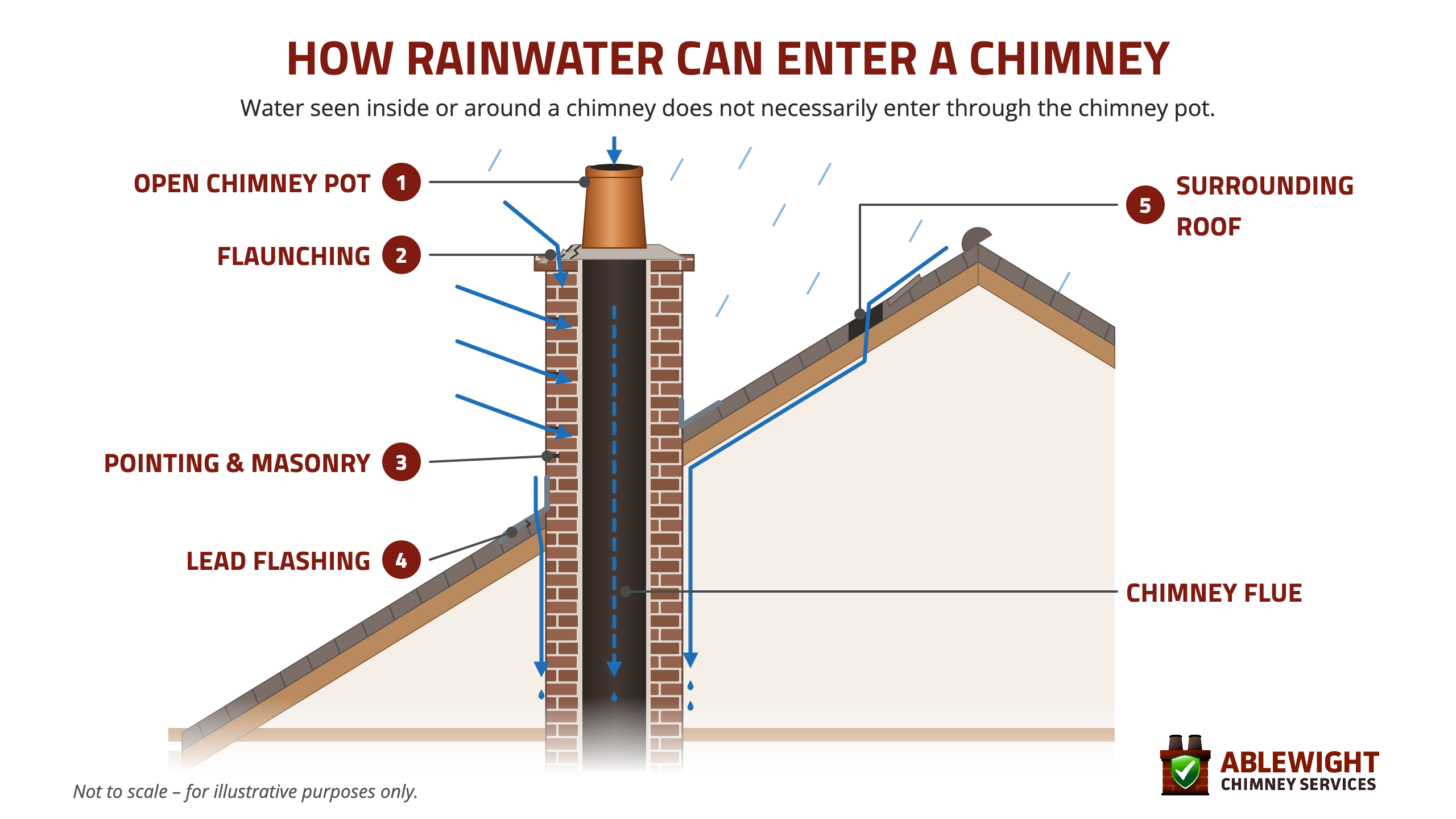
- The chimney pot or terminal: rain may enter directly through an open top, particularly in exposed conditions.
- Flaunching: the material around the chimney pots can deteriorate or crack.
- Pointing and masonry: damaged mortar joints or masonry can allow rain into the chimney structure.
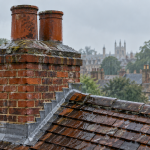
- Lead flashing: defects where the chimney meets the roof can allow water into the building.
- The surrounding roof: a problem close to the chimney may appear to be a chimney leak even when the chimney itself is not the entry point.
Ablewight does not repair chimney stacks, flaunching, pointing, flashing or roof leaks, and we do not access the roof. These external areas should be assessed by an appropriate roofer or building professional.
How Can You Tell Where a Chimney Leak Is Coming From?
The pattern and timing of the water can provide clues, but they do not provide a definitive diagnosis on their own. Note whether the problem happens only after rain, whether wind direction seems to matter, where the water first becomes visible and whether you can actually see water travelling down the flue.
A roofer or appropriate building professional can inspect the external chimney and surrounding roof for likely entry points. During a chimney sweep we may also notice evidence of moisture or water ingress within the accessible flue.
Where there is a specific reason to investigate inside the chimney, a CCTV chimney survey can examine the accessible interior of the flue. It can help identify internal defects or conditions, but it does not replace an external roof or chimney-stack inspection and cannot by itself establish where an external leak originates.
How Do You Stop Water Coming Down a Chimney?
The correct solution depends on where the water is entering. Fitting a cowl will not solve damaged flashing, and repairing flashing will not stop rain that is entering directly through an unsuitable or uncovered chimney terminal.
- Note when and where the water appears. Heavy rain, wind direction and the location of visible damp can all be useful information.
- Have the external chimney and roof checked. A roofer or suitable building professional can inspect the stack, flaunching, pointing, flashing and surrounding roof.
- Repair the source of external water ingress. Deal with the cause before repeatedly repairing or redecorating internal damage.
- Consider the chimney terminal only where appropriate. If rain is entering directly through the chimney opening, the correct type of cowl or terminal may help.
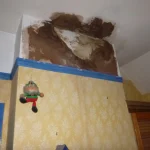
- Allow damp materials to dry. Internal staining or plaster repairs are best addressed after the source of moisture has been dealt with and the area has had time to dry.
If soot and moisture have been present together for a prolonged period, our guide to soot acid erosion explains why leaving combustion deposits in a damp chimney can contribute to deterioration.
Can a Chimney Cowl or Rain Cap Stop Water Coming In?
A suitable chimney cowl or rain cap can reduce rain entering directly through the top of a chimney, but it is not a universal fix for chimney leaks. If water is entering through flashing, flaunching, pointing, masonry or the surrounding roof, a terminal will not repair that defect.
The correct terminal also depends on how the chimney is used. Our guide to chimney cowls and bird guards explains the different considerations. Ablewight does not currently install cowls or terminals, although we can make recommendations where appropriate.
Who Should You Call About a Leaking Chimney?
If water appears to be entering around the chimney stack or roof, the appropriate first call is normally a roofer or building professional who can inspect the external chimney and roof. They can assess areas such as the flashing, flaunching, pointing, masonry and surrounding roof covering.
If you need the chimney swept, or there is a specific reason to investigate the accessible inside of the flue, we can help with that part of the investigation. We do not diagnose or repair external roof or chimney-stack leaks.
Need the Flue Swept or Investigated?
If your chimney needs sweeping or there is a specific reason to investigate the accessible flue, we can advise on the appropriate appointment.
Frequently Asked Questions
Can rain come down a chimney?
Yes. An open chimney pot is exposed to rain, so some water can enter directly from above. However, visible dripping, water reaching the fireplace or repeated damp should be investigated because the water may also be entering through a defect elsewhere around the chimney or roof.
Why is rain coming down my chimney only in heavy rain?
Heavy or wind-driven rain can increase direct rain entry and can expose defects around the chimney stack or roof that are less noticeable in lighter weather. The timing is useful evidence, but an external inspection may still be needed to identify the exact source.
Will a chimney cowl stop rain coming down?
It can help if rain is entering directly through the chimney opening and the correct terminal is suitable for that chimney. It will not fix water entering through defective flashing, flaunching, pointing, masonry or roofing.
Can a CCTV chimney survey find the source of a leak?
A CCTV survey can inspect the accessible inside of the flue and may reveal relevant internal defects or signs of moisture. It cannot inspect the roof or exterior of the stack and should not be treated as a definitive way to locate an external water-entry point.