Soot left inside a chimney can absorb moisture. Over time, the resulting acidic conditions can contribute to deterioration of the materials inside the flue. It is one of the reasons we recommend having a chimney swept at the end of the burning season rather than leaving soot deposits sitting inside it throughout the summer.
This guide explains what soot acid erosion is, which chimney materials can be affected and how regular sweeping can help reduce the conditions that contribute to it.
In This Guide
What is soot acid erosion?
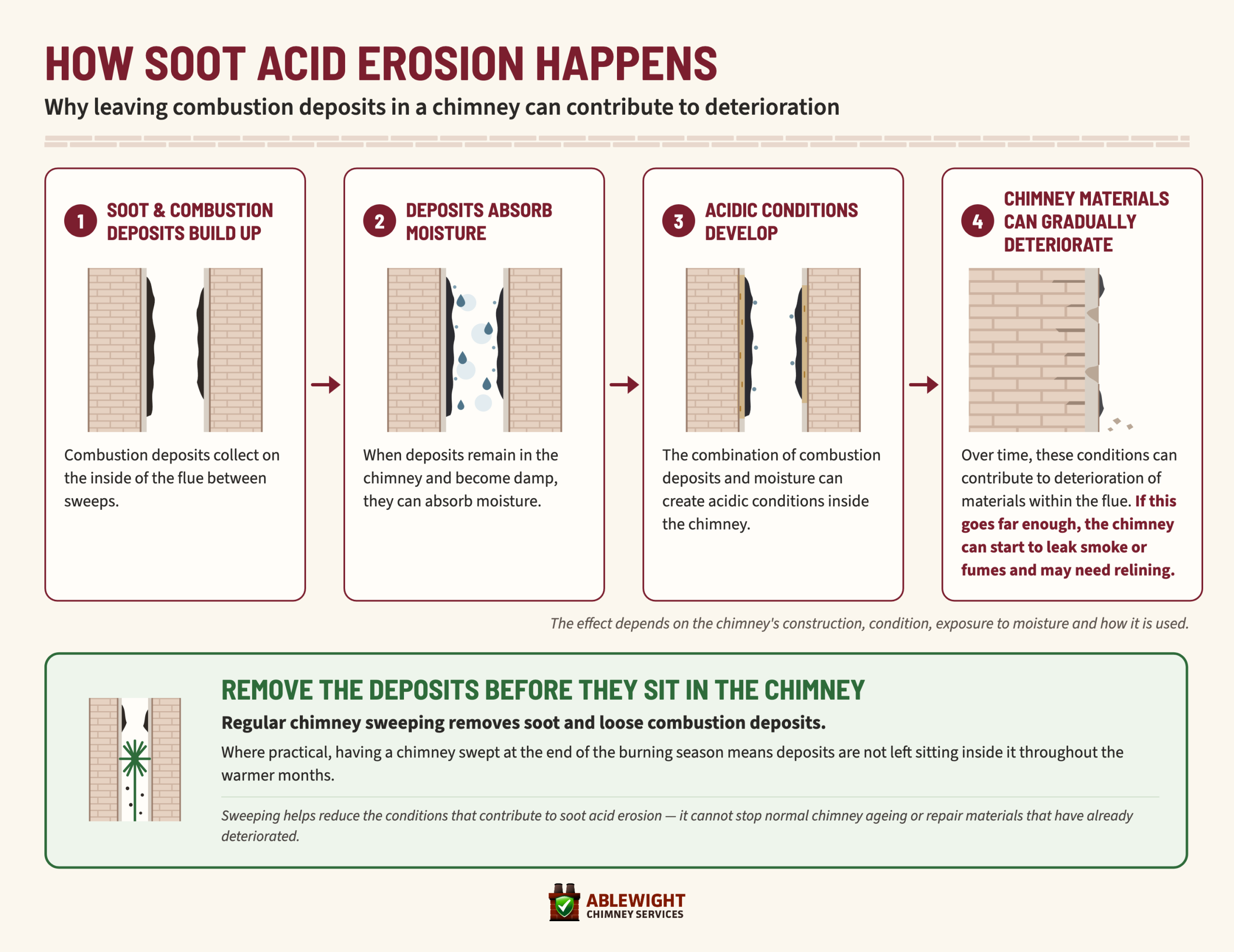
Burning fuel produces soot and other combustion deposits, which build up on the internal surfaces of a chimney between sweeps. When those deposits remain in the flue and become damp, they can create acidic conditions that contribute to deterioration of chimney materials over time.
This is generally a gradual process rather than something a homeowner suddenly sees happening. The effect also depends on the chimney’s construction, condition, exposure to moisture and how it is used.
How Does Soot Cause Acid Damage in a Chimney?
Soot is not simply dry dust that remains unchanged inside the chimney. If it is left on the internal surfaces of the flue, it can absorb moisture. The combination of combustion deposits and moisture can create conditions that are damaging to the materials around them.
The longer deposits remain in place, the longer those materials are exposed to them. Sweeping removes soot and other loose combustion deposits, which is why regular chimney sweeping is about more than simply preventing a blockage.
What Parts of a Chimney Can Soot Acid Erosion Damage?
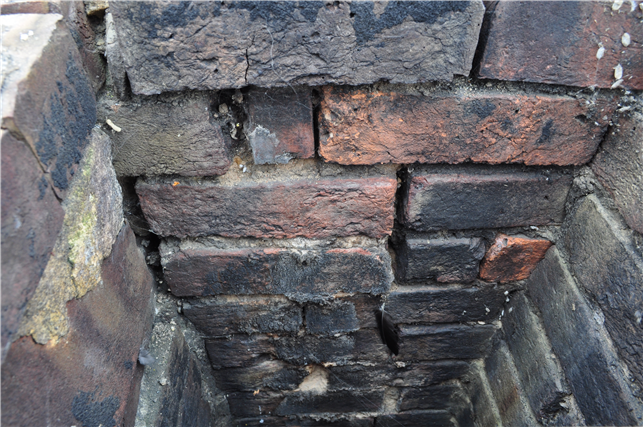
The effect depends on the type of chimney. In a traditional masonry flue, the internal surfaces may include brickwork, mortar and parging or render. In a lined chimney, the flue may instead contain a separate liner.
Older masonry chimneys can already have experienced many decades of heating, cooling, moisture and previous use, so deterioration cannot automatically be attributed to soot acid erosion alone. Our guide to Victorian chimneys and traditional masonry flues explains how these older chimney systems were constructed and why their internal surfaces can deteriorate.
Modern chimney liners are a different system. If you are concerned specifically about the condition of a liner, see Chimney Liner Problems: Signs, Causes and What to Do.
What Are the Signs and Effects of Soot Acid Erosion?
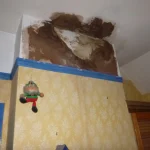
As internal chimney materials deteriorate, pieces of mortar, parging or other debris may loosen or fall. In more advanced cases, deterioration can affect the integrity or separation of parts of an older masonry flue.
However, debris, staining, smells or smoke appearing where it should not can have several possible causes. They should not be treated as proof of soot acid erosion without considering the chimney as a whole.
If you have noticed a change in your chimney, our guide to Signs Your Chimney May Have a Problem is a better starting point for the symptoms to look out for.
How Can You Reduce Soot Acid Erosion?
You cannot stop a chimney ageing, but you can avoid leaving unnecessary combustion deposits sitting inside it.
Appropriate regular sweeping removes soot and loose deposits from the flue. Burning suitable fuel and operating an appliance correctly also helps reduce excessive deposits in the first place.
How often a chimney needs sweeping depends on the fuel, appliance and use. See our guide to how often you should sweep your chimney rather than relying on one schedule for every household.
Why Does End-of-Season Chimney Sweeping Help?
If you use your chimney over winter, we generally recommend having it swept at the end of the burning season, around April or May.
This removes the soot and combustion deposits before they are left sitting inside the chimney over the warmer months, when they may absorb moisture and contribute to acidic conditions and deterioration.
If your chimney is due to be swept at another time of year, however, it is still worth having it done. The important thing is that the chimney is swept at an appropriate frequency rather than postponing an overdue sweep simply to reach the ideal time of year.
You can read more about the reasoning in When Is the Best Time to Have Your Chimney Swept?.
Reduce the build-up of soot in your chimney
Regular sweeping removes soot and combustion deposits from the flue and gives us an opportunity to identify anything unusual during the sweep.
Frequently Asked Questions
Is chimney soot acidic?
Combustion deposits can contain acidic compounds. When soot remains inside a chimney and absorbs moisture, it can contribute to acidic conditions that may gradually affect chimney materials.
Can soot damage a chimney liner?
Soot and other combustion deposits can contribute to damaging conditions when moisture is present. The effect depends on the type of liner, its condition and how the chimney is used. If you are concerned about a liner, it should be assessed on its individual condition rather than assuming soot is the only cause of deterioration.
Can soot damage chimney mortar and brickwork?
In a traditional masonry flue, damp combustion deposits can contribute to deterioration of internal mortar, parging or render over time. Older chimneys may also deteriorate for other reasons, including age, moisture and previous alterations, so the cause cannot always be identified from one symptom alone.
Does chimney sweeping prevent soot acid erosion?
Regular sweeping helps reduce the risk by removing soot and loose combustion deposits from the flue. It cannot repair materials that have already deteriorated or guarantee that deterioration will not occur. This is one reason we prefer end-of-burning-season sweeping where practical, so deposits are not left inside the chimney over the summer.