The best fuel for a stove or fireplace is a fuel that the appliance and installation are designed to burn. A wood-burning stove, multi-fuel stove and open fireplace do not necessarily have the same fuel requirements, so start with the manufacturer’s instructions where you have an appliance and make sure the fuel is suitable for the installation.
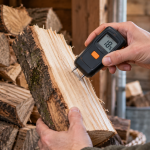
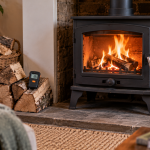
When wood is suitable, the important question is whether it is properly dried. Firewood should be 20% moisture content or less before burning. It does not need to be kiln-dried: naturally seasoned wood can be equally suitable if it has reached the right moisture level and has been stored correctly. A moisture meter for firewood is the simplest way to check.
In This Guide
- How do you choose the right fuel for your stove or fireplace?
- Choosing fuel for a wood-burning stove
- Choosing fuel for a multi-fuel stove
- Choosing fuel for an open fire or inglenook
- What about house coal?
- Is kiln-dried wood better than seasoned wood?
- Does the type of firewood matter?
- What should you never burn in a stove or fireplace?
- Do Smoke Control Area rules affect which fuel you can burn?
- How should you store firewood and other fuels?
- Frequently Asked Questions
How Do You Choose the Right Fuel for Your Stove or Fireplace?
The right fuel depends on the type of stove or fireplace you have and how it has been installed. Different appliances are designed to burn different fuels, and using a fuel simply because it burns well elsewhere does not mean it is suitable for yours.
If you have a stove or other manufactured appliance, check the manufacturer’s instructions for the fuels it is designed to burn. If there is a chimney liner or other installation-specific requirement, the fuel also needs to be suitable for that installation.
This is particularly important with multi-fuel appliances. The words “multi-fuel” do not mean that every combustible solid fuel is suitable.
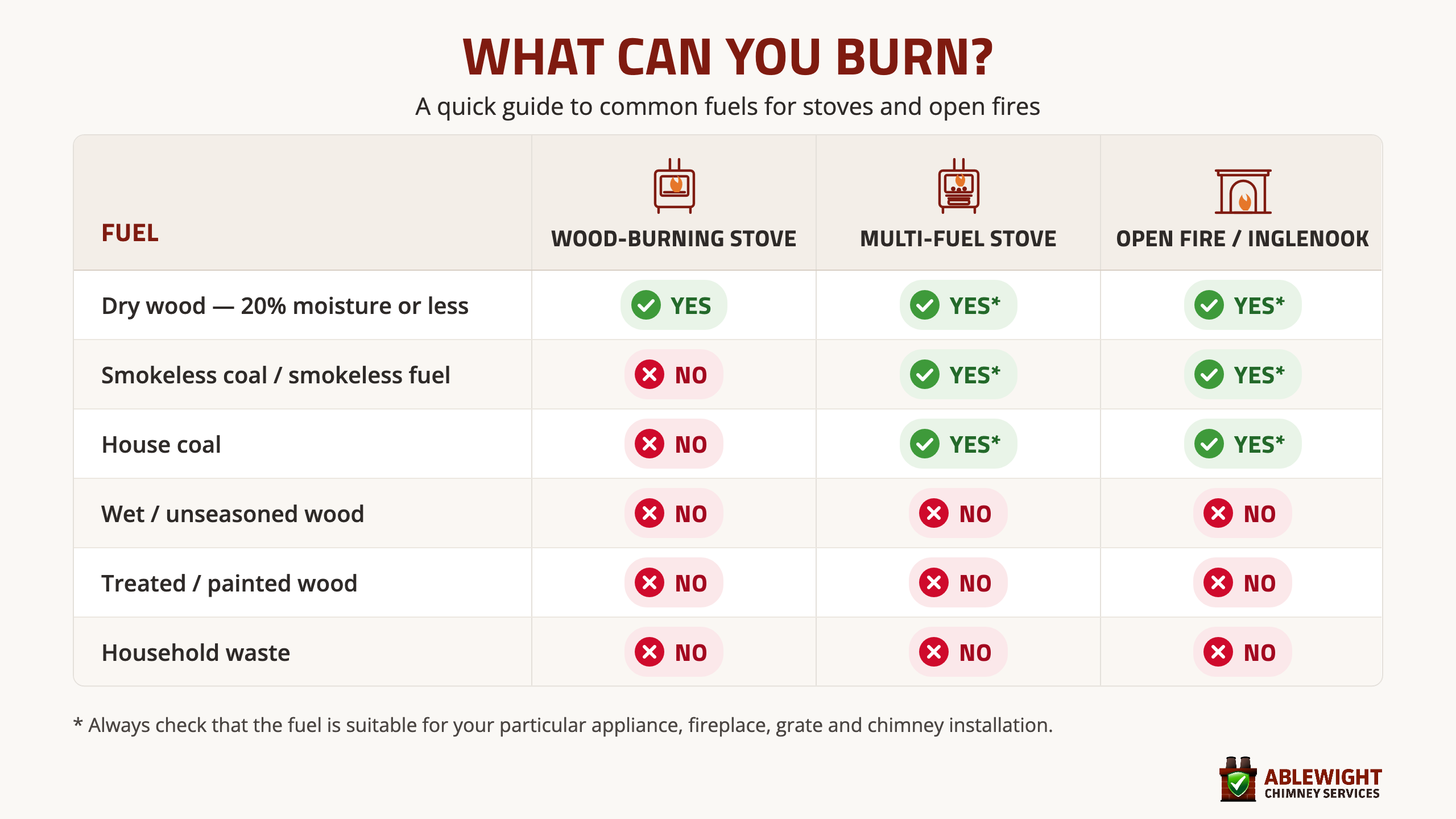
Choosing Fuel for a Wood-Burning Stove
A wood-burning stove is designed to burn wood only. Do not burn coal, smokeless fuel or other solid fuels in a wood-burning stove.
For firewood, moisture content is more important than marketing terms. Aim for 20% moisture content or less. Damp wood is harder to burn effectively and can create more smoke and tar and creosote deposits in the chimney.
Our seasoned wood guide explains how to tell whether logs are ready to burn and how to check their moisture content correctly.
Choosing Fuel for a Multi-Fuel Stove
A multi-fuel stove may be designed to burn more than one type of fuel, but you should still check exactly which fuels the manufacturer permits. Appliance designs differ, as do grates, air supplies and installation requirements.
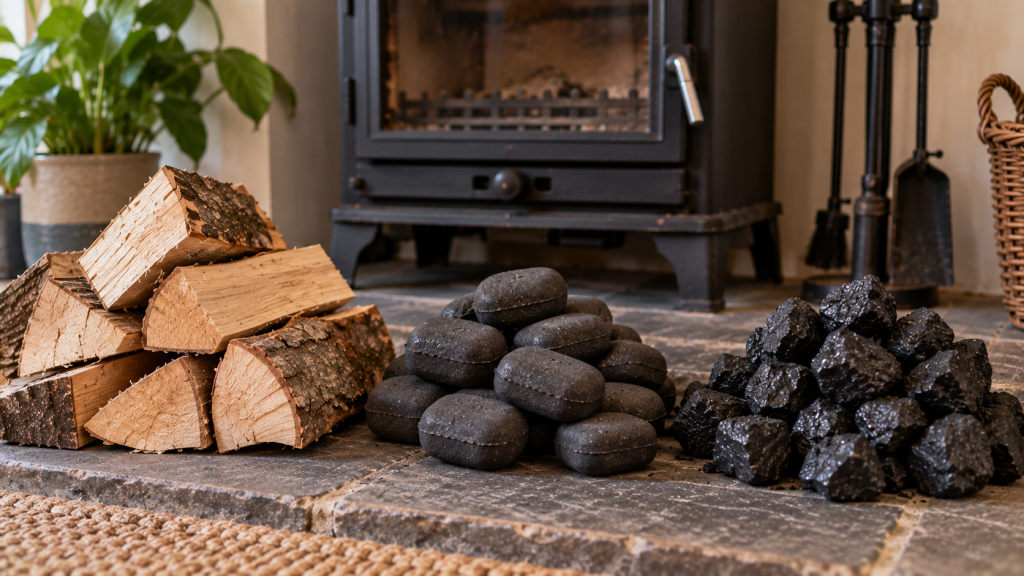
Depending on the appliance, suitable fuels can include dry wood at 20% moisture content or less, smokeless coal or smokeless fuel, and house coal. The appliance manual or manufacturer’s current instructions should still be your starting point because not every multi-fuel stove is designed for every fuel.
If you have inherited a stove and do not know the make or model, look for an appliance data plate or identifying information before making assumptions about the fuel it can burn.
Choosing Fuel for an Open Fire or Inglenook
The appropriate fuel for an open fireplace or inglenook depends on the fireplace, chimney arrangement and any local restrictions that apply. An open fireplace does not automatically mean that every solid fuel is suitable.
Depending on the fireplace and installation, an open fire or inglenook can burn dry wood at 20% moisture content or less, smokeless coal or smokeless fuel, and house coal. Make sure the fuel is suitable for the fireplace, grate and chimney installation.
Inglenooks follow the same basic principle. Their larger fireplace opening does not remove the need to burn suitable fuel or maintain the chimney correctly.
What About House Coal?
Traditional house coal can be burned in multi-fuel stoves and open fires that are designed for it. However, the rules around its sale have changed.
In England, it has been illegal to sell traditional house coal for domestic use since 1 May 2023, apart from a limited exemption for traditional house coal extracted and sold locally in the Forest of Dean. So although a suitable multi-fuel stove or open fireplace may be capable of burning house coal, it is generally no longer available to buy legally for domestic use.
Other solid mineral fuels remain available, but always check that the fuel is suitable for your appliance, fireplace and chimney installation. If you live in a Smoke Control Area, additional restrictions can affect which fuels you can burn.
Is Kiln-Dried Wood Better Than Seasoned Wood?
Not simply because it has been kiln-dried. Kiln drying is a way of reducing the moisture in wood more quickly. Natural seasoning can achieve the same important outcome: firewood that is dry enough to burn.
For household burning, concentrate on the moisture content of the logs rather than assuming kiln-dried wood is automatically superior. Properly seasoned wood at 20% moisture content or less can be suitable, as can kiln-dried wood at the same moisture level.
Whichever you buy, it still needs to be stored properly. Dry logs can absorb moisture again if they are left in unsuitable conditions.
Does the Type of Firewood Matter?
Different species of wood have different densities and burning characteristics, but there is no single species that every household needs to buy. For most homeowners, the moisture content and condition of the firewood are more important than choosing a particular species.
Dry wood of a suitable size for your appliance is generally more useful than choosing a particular species while ignoring moisture content. Whatever species you use, make sure it is suitable for your appliance and properly dried before burning.
Softwoods and hardwoods can both be used where suitable. Rather than relying on rules such as “only burn hardwood”, follow the appliance manufacturer’s guidance and concentrate on dry, appropriate fuel.
What Should You Never Burn in a Stove or Fireplace?
Do not use your stove or fireplace as a way of disposing of unsuitable materials. As a practical rule, avoid burning anything that the appliance or fireplace is not intended to burn.
Examples include:
- Painted, treated or chemically coated timber, including wood whose treatment you cannot identify.
- Household rubbish and plastics.
- Wet or unseasoned wood above the recommended moisture level.
- Manufactured fuels that are not suitable for your particular appliance or installation.
- Any fuel specifically excluded by the appliance manufacturer.
If you are unsure what a piece of timber has been treated with, do not burn it.
Do Smoke Control Area Rules Affect Which Fuel You Can Burn?
Yes. If your property is within a Smoke Control Area, additional rules can affect which fuels you may burn and which appliances can burn them. This is separate from whether a fuel is technically capable of burning in your stove or fireplace.
Because the requirements depend on the appliance, fuel and location, check the current rules that apply to your property rather than relying on a generic fuel list. Our Cambridge Smoke Control Area guide covers the local position in more detail.
How Should You Store Firewood and Other Fuels?
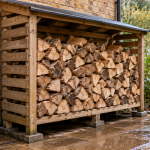
Fuel needs to remain in suitable condition between buying it and burning it. For firewood, that means keeping logs off damp ground, protected from direct rain and with enough airflow to stay dry.
Simply leaving timber outside for a long time does not guarantee that it will season correctly. Wood left directly on grass, soil or concrete can continue to absorb moisture.
See our guide to storing firewood for the full practical advice. For other fuels, follow the manufacturer’s or supplier’s storage instructions.
Using the Right Fuel? Keep the Chimney Clear Too
Suitable fuel and good burning practices help, but soot and other combustion deposits will still build up in the flue. Regular chimney sweeping removes these deposits and helps keep your chimney clear and safe to use.
Frequently Asked Questions
Can I burn coal in a wood-burning stove?
No. A wood-burning stove is designed to burn wood only. Coal, smokeless coal and other solid mineral fuels should not be burned in a wood-burning stove.
What can I burn in a multi-fuel stove?
Depending on the appliance, a multi-fuel stove may be designed to burn dry wood, smokeless fuel and coal-type fuels. Check the manufacturer’s instructions for your particular stove, as “multi-fuel” does not mean that every solid fuel is suitable.
Can I burn house coal in my fireplace or multi-fuel stove?
A suitable open fire or multi-fuel stove may be capable of burning traditional house coal. However, the sale of traditional house coal for domestic use in England has been prohibited since 1 May 2023, apart from a limited exemption for locally sold Forest of Dean coal. Other solid mineral fuels remain available.
What moisture content should firewood be before burning?
Firewood should have a moisture content of 20% or less before it is burned. This applies whether the wood has been naturally seasoned or kiln-dried. Our moisture meter guide explains how to check it correctly.
Can I burn pallet wood in my stove or fireplace?
As a general rule, no. We recommend using known, suitable firewood rather than pallet wood. Pallets may have been treated, painted, contaminated or exposed to substances you do not want to burn, and it is not always possible to know their history.