Chimney cowls, bird guards and terminals sit at the top of a chimney, but they do not all perform the same job. The correct terminal must suit the flue, appliance and fuel, as well as the particular problem it is intended to address.
A suitable, securely fitted terminal can help prevent birds entering, reduce rain entry or address certain wind-related problems. The wrong product, a loose fitting or unsuitable mesh can restrict the flue and create a hazard.
Ablewight does not currently supply or install chimney cowls, bird guards or terminals. Before every chimney sweep, we look at the terminal from ground level. If it appears unsuitable, damaged or insecure, we can explain what we have observed and recommend the type of terminal that may be required.
In This Guide
- Chimney pots, cowls, terminals and bird guards
- What different terminals do
- How the correct terminal is chosen
- Why secure fitting matters
- Loose terminals and chicken wire
- What we check before sweeping
- When a cowl will not solve the problem
- Bird nests and legal protection
- Signs a terminal needs attention
- Frequently asked questions
WHAT IS THE DIFFERENCE BETWEEN A CHIMNEY POT, COWL, TERMINAL AND BIRD GUARD?
The terms are often used interchangeably, but they describe different parts or functions.
Chimney pot
The chimney pot is the clay, concrete or metal section at the top of the chimney stack. It helps raise the outlet above the masonry and forms the point to which many terminals are fitted.
Chimney terminal
“Terminal” is the broad term for the fitting at the top of a chimney or flue. A terminal may be an open pot, cowl, rain cap, bird guard or another purpose-designed product.
Chimney cowl
A cowl is a terminal designed to alter or manage conditions at the chimney outlet. Depending on its design, it may help with downdraught, rain entry, wind exposure or bird access. No single cowl is suitable for every chimney.
Bird guard
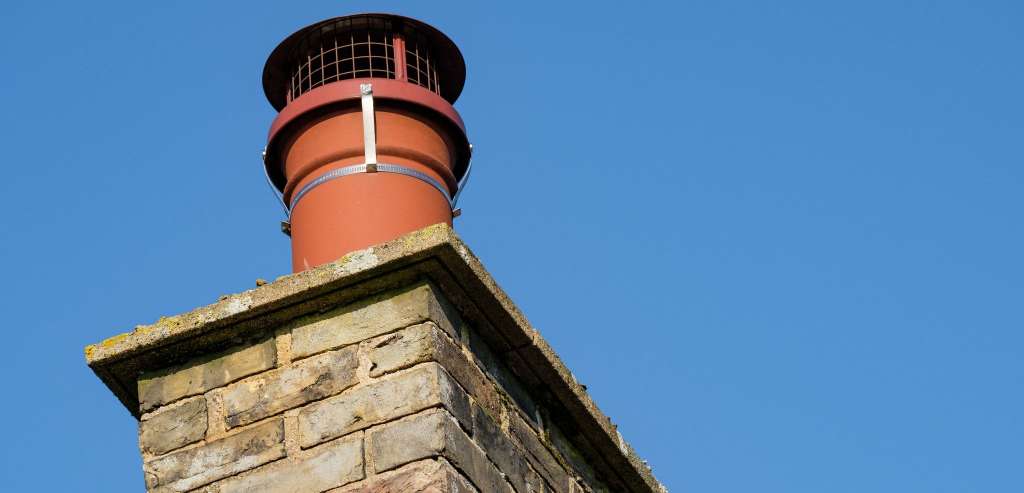
A bird guard is designed to prevent birds entering the chimney while leaving sufficient open area for smoke and combustion gases to escape. The mesh size, free area, material and fitting method must all be suitable for the chimney and appliance.
Rain cap
A rain cap provides some protection from direct rainfall. Some products combine rain protection with a bird guard, but a rain cap should not be assumed to solve a smoke, draw or downdraught problem.
WHAT DO CHIMNEY COWLS AND BIRD GUARDS DO?
Different terminals are designed for different purposes. A correctly selected product may help to:
- prevent birds entering an open chimney pot;
- reduce the amount of rain entering the flue;
- limit leaves and larger debris entering;
- address certain wind-related downdraught problems;
- terminate a flue safely in accordance with the appliance and flue requirements; or
- ventilate a disused chimney using a product intended for that purpose.
A terminal must still allow the chimney to discharge combustion products safely. Adding a cover or mesh changes the outlet, so the choice cannot be based on appearance alone.

HOW IS THE CORRECT CHIMNEY TERMINAL CHOSEN?
The correct terminal depends on the complete chimney and appliance arrangement. Relevant factors include:
- whether the flue is live or disused;
- the appliance and fuel being used;
- the size, shape and material of the chimney pot or flue outlet;
- the manufacturer’s instructions for the appliance and flue system;
- whether the aim is to prevent birds, reduce rain entry or address a proven wind problem;
- the amount of open area needed for safe discharge;
- the chimney’s position in relation to the roof, nearby buildings and trees; and
- whether the existing terminal can be swept and maintained safely.
A product suitable for a disused flue may be unsafe on a working fireplace or appliance. Likewise, a bird guard is not automatically an anti-downdraught cowl, and an anti-downdraught cowl should not be fitted merely because smoke has entered a room. The cause of the problem should be established first.
WHY MUST A BIRD GUARD BE SECURELY FIXED?
A bird guard or cowl must be fixed securely to the chimney pot. A common arrangement uses legs around the pot with a jubilee clip tightened around the legs and pot to hold the terminal firmly in place. The exact fixing method depends on the product and chimney.
Secure fixing matters during normal weather and during sweeping. A correctly fixed terminal should remain in place when the chimney is swept. An unsecured product may move, dislodge or fall, risking damage to the roof, property or anything below.
The fitting should also remain accessible for appropriate maintenance. Corroded straps, loose clips, damaged mesh or movement at the pot are all reasons for further attention.
DO NOT USE LOOSE TERMINALS OR CHICKEN WIRE ON A LIVE FLUE
Some terminals simply sit inside or on top of a chimney pot without being securely fixed. These products are generally intended for particular disused-flue applications. Using an unsuitable loose terminal on a live flue can create problems and may make safe sweeping difficult.
Dome-shaped chicken wire is also sometimes placed over chimney pots. This type of mesh is normally sold as a drain or leaf guard; it is not a fit-for-purpose terminal for a live flue. The fine wire creates numerous surfaces on which soot can collect, allowing the outlet to block more quickly.
For a working chimney, use a terminal designed for the appliance, fuel and flue, with adequate free area and a secure fixing to the chimney pot.
IS THE CHIMNEY TERMINAL CHECKED BEFORE SWEEPING?
Yes. Before every sweep, we look at the chimney terminal from ground level. This visual check helps us identify obvious issues such as:
- a missing, leaning or visibly loose terminal;
- damaged or corroded components;
- mesh that appears obstructed;
- an unsuitable product on a live flue;
- bird activity around the chimney pot; or
- a terminal that may make sweeping unsafe.
A ground-level check cannot confirm the condition of every fixing or concealed component, and it is not a roof inspection. However, it provides useful information before work begins. If the terminal appears unsuitable, we can recommend the type that may be required, based on what can be established during the appointment.
We do not currently supply or fit the replacement terminal. The recommendation can be used when arranging the work with a suitable installer.
WHEN WILL A CHIMNEY COWL NOT SOLVE THE PROBLEM?
A cowl should not be treated as a universal cure for smoke or poor appliance performance. Similar symptoms can have several causes.
Smoke entering the room, difficulty lighting a fire or weak draw may be caused by:
- a blocked or restricted chimney;
- insufficient combustion air or unsuitable room ventilation;
- an appliance fault or incorrect appliance operation;
- a damaged, incorrectly sized or unsuitable flue;
- the chimney height or relationship to the roof and nearby structures;
- cold-air reversal in an unused chimney; or
- weather conditions interacting with the building.
Fitting a terminal without identifying the cause can fail to solve the problem and may add a new restriction. If smoke or a carbon-monoxide alarm indicates the chimney may be unsafe, stop using the appliance until it has been assessed.
CAN A BIRD GUARD BE FITTED WHEN A NEST IS PRESENT?
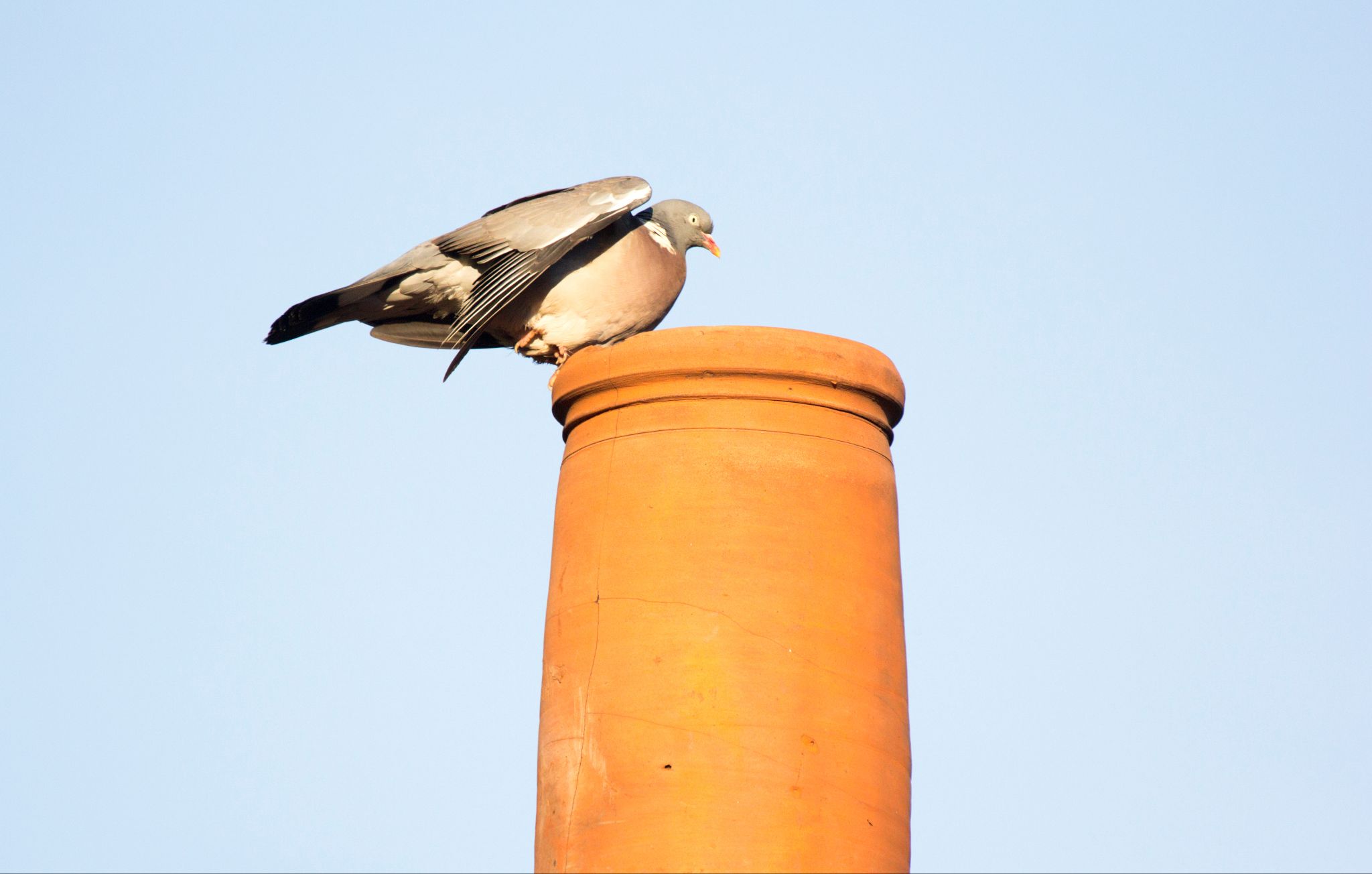
No work should disturb an active wild-bird nest. A nest is protected while it is being built or used, regardless of the calendar date. Eggs, chicks, birds repeatedly entering the chimney or continuing nesting activity indicate that the chimney should be treated as active.
A guard must not be fitted over an active nest or used to trap birds inside. Once the nest is no longer active and removal can be completed lawfully, the chimney must be cleared and swept before a suitable guard is considered. Read our guide to bird nests in chimneys, removal and the law.
If you are dealing specifically with jackdaws, our jackdaws nesting in chimneys guide explains their nesting behaviour, warning signs and removal process.
WHAT SIGNS SHOW THAT A COWL OR BIRD GUARD NEEDS ATTENTION?
Visible signs that a terminal may need repair, cleaning or replacement include:
- the cowl leaning, rotating unexpectedly or sitting unevenly;
- a broken top, mesh panel, strap or fixing;
- heavy corrosion;
- soot or debris visibly collecting around the openings;
- bird activity despite a guard being present;
- parts found in the garden, gutter or fireplace;
- a new rattling noise in windy weather; or
- the sweep advising that the product is unsuitable or insecure.
Do not attempt to inspect a chimney terminal by climbing onto the roof without the appropriate equipment, competence and safe access. Binoculars or a clear photograph taken from ground level may help record an obvious visible defect, but they do not replace appropriate assessment where closer inspection is required.
CAN A CHIMNEY BE SWEPT WITH A BIRD GUARD FITTED?
Usually, yes—provided the guard is suitable for the flue, securely fixed and designed to allow the chimney to be swept. The sweep must be able to clean the flue without the terminal becoming dislodged.
An unsuitable terminal that merely sits in the pot, a loose fitting or fine chicken wire may make sweeping unsafe or prevent the chimney outlet from being properly cleared. If this is identified, the terminal may need attention before the chimney can be returned to use.
FREQUENTLY ASKED QUESTIONS
Does every chimney need a cowl or bird guard?
No. Many chimneys operate safely with an open pot or another suitable terminal. A cowl or guard should have a defined purpose and must be compatible with the flue, appliance and fuel.
What is the difference between a chimney cowl and a bird guard?
A chimney cowl is a broad type of terminal that may be designed for rain, wind, downdraught or other conditions. A bird guard specifically prevents birds entering while maintaining sufficient open area for the flue to discharge safely. Some products combine more than one function.
Can a bird guard stop birds nesting in a chimney?
A suitable, correctly fitted bird guard can prevent future access once the chimney is clear and there is no active nest. It must not be fitted over an active nest or used to seal birds inside.
How should a chimney bird guard be fixed?
The guard must be securely fixed in accordance with its design. Many pot-mounted guards use legs and a jubilee clip tightened around the chimney pot. The fixing must withstand weather and allow sweeping without the terminal becoming dislodged.
Is chicken wire safe to use over a working chimney?
No. Dome-shaped chicken wire intended for drains or leaf protection is not a suitable terminal for a live flue. Soot can cling to its fine mesh and restrict the chimney outlet. Use a fit-for-purpose product selected for the appliance, fuel and flue.
Will an anti-downdraught cowl stop smoke entering the room?
Only if wind-related downdraught is the actual cause and the selected cowl is appropriate. Smoke can also result from a blockage, insufficient air, a flue or appliance fault, or the chimney arrangement. The cause should be assessed before a cowl is chosen.
Does Ablewight install chimney cowls or bird guards?
No. We do not currently supply or install cowls, bird guards or terminals. Before sweeping, we look at the terminal from ground level and can recommend the type that may be required if an obvious issue is identified.
Can a terminal intended for a disused chimney be used on a live flue?
Not unless the product is specifically approved as suitable for that live-flue arrangement. Some ventilating caps and loose terminals are designed for disused chimneys and may be unsafe or restrictive when used above a working fireplace or appliance.
How often should a chimney cowl or bird guard be checked?
It should be considered as part of routine chimney and appliance maintenance. We make a ground-level visual check before each sweep. Arrange further attention if the terminal appears loose, damaged, corroded or obstructed.