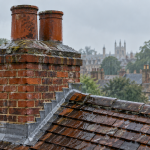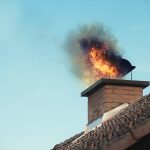
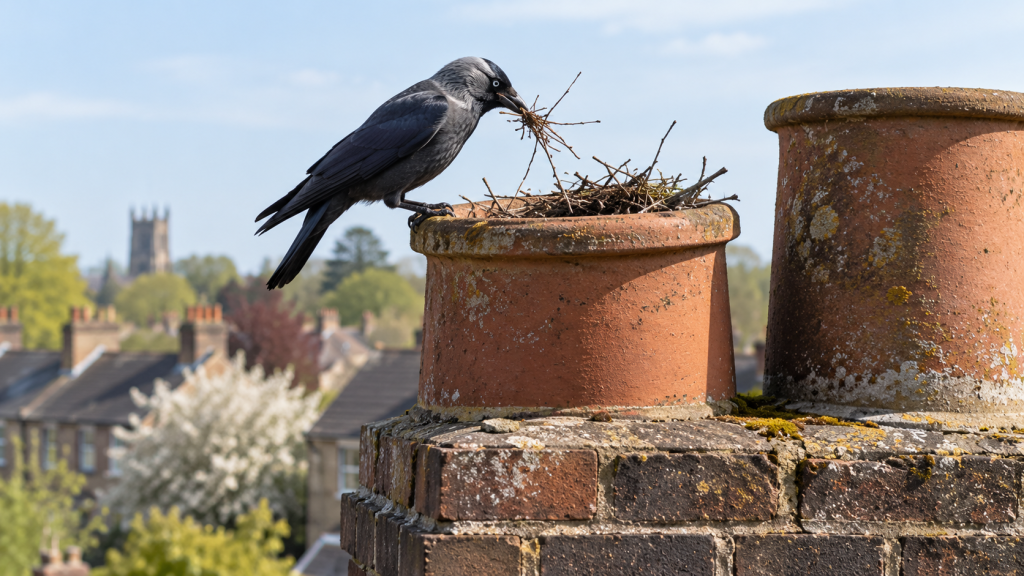
Birds frequently use chimneys as sheltered nesting sites. A nest may partly or completely obstruct the flue, preventing smoke and combustion gases from escaping safely and introducing twigs, feathers, insects and other debris into the chimney.
If you suspect there is a bird nest in your chimney, stop using the fireplace or appliance. Do not light a fire in an attempt to drive the birds away or burn the nest.
An active nest cannot normally be disturbed. Once the nest is no longer active and removal is permitted, the chimney must be professionally cleared and fully swept before it is used again.
What Should I Do If Birds Are Nesting in My Chimney?
If you can hear birds or believe a nest may be present:
- Stop using the fireplace or appliance
- Do not try to burn the nest
- Do not push rods or other objects into the chimney
- Look and listen for signs of ongoing bird activity
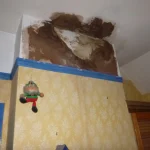
- Keep ornaments and furnishings away from the fireplace if material is falling into the room
- Ensure that working carbon monoxide alarms are installed where required
- Arrange professional help when the nest can legally and safely be removed
Tell us what you have heard or observed, whether any nesting material has fallen into the room and whether you believe there may be a trapped live bird.
Is It Legal to Remove a Bird Nest From a Chimney?
Under the Wildlife and Countryside Act 1981, it is an offence to intentionally take, damage or destroy a wild bird’s nest while it is being built or used. It is also an offence to intentionally take or destroy a wild bird’s egg.
Some species have additional protection against disturbance.
The law does not establish one universal calendar period during which every nest is active. A nest being built or used is protected regardless of the date. Current guidance is available from GOV.UK.
If eggs, chicks or continuing nesting activity are present, the nest must be left undisturbed unless work is lawfully undertaken under an appropriate licence or exemption.
When Does Ablewight Remove Bird Nests?
We do not undertake routine bird-nest removal between 1 April and 31 August.
Our bird-nest removal appointments operate from 1 September to 31 March. Nest removal can be booked from September onwards.
This is our operating policy and should not be confused with the legal protection of active nests. If a nest is still being built or used outside the usual nesting season, it remains protected.
How Can I Tell Whether a Bird Nest Is Active?
Possible signs of an active nest include:
- Birds repeatedly entering or leaving the chimney
- Calls, scratching or movement within the flue
- Birds carrying twigs or other material to the chimney
- Eggs or chicks being visible
- Persistent activity around the chimney pot
- Fresh nesting material falling into the fireplace
An absence of noise does not prove that a nest is inactive. Adult birds may leave for periods while feeding, and chicks may become quiet when people are nearby.
If there is uncertainty, do not attempt to investigate or remove the nest yourself.
What Are the Signs of a Bird Nest in a Chimney?
Signs may include:
- Twigs, leaves or feathers falling into the fireplace
- Scratching, movement or bird calls within the chimney
- Birds repeatedly visiting the chimney pot
- A reduction in chimney draw
- Smoke entering the room
- Persistent or unusual smells
- Flies or other insects around the fireplace
- A chimney that appears completely obstructed
- A carbon monoxide alarm activating
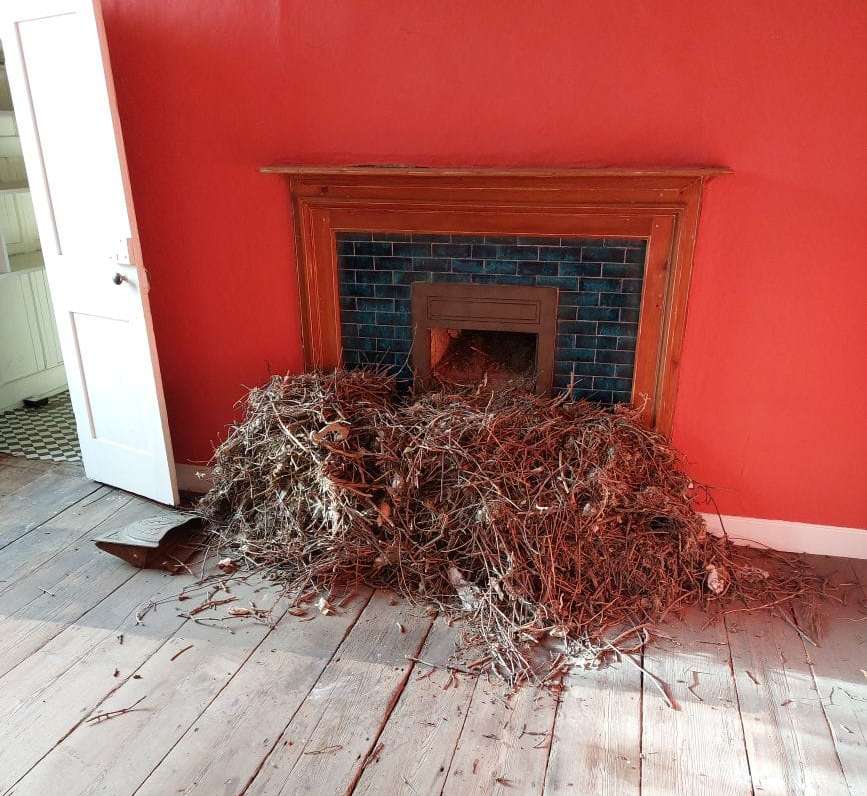
Some nests are approximately the size of a hand. Others are tightly compacted and may fill a substantial part—or almost the entire length—of the chimney.
Can I Use My Fireplace If There Is a Bird Nest in the Chimney?
No. Do not use the fireplace or appliance if you know or suspect that the chimney contains a nest.
A bird nest can:
- Prevent smoke and combustion gases from escaping
- Increase the risk of carbon monoxide entering the property
- Create a significant chimney-fire hazard
- Cause smoke to spill back into the room
- Restrict the chimney’s draw
- Introduce insects, odours and organic debris
- Leave large quantities of material throughout the flue
Lighting a fire beneath the nest is dangerous and could harm the birds, ignite the nesting material or force smoke and carbon monoxide back into the property.
A suspected carbon monoxide incident, chimney fire or appliance fault requires appropriate immediate action and should not be treated as routine maintenance.
Will a Bird Nest Eventually Fall Out or Clear Itself?
Not necessarily.
Bird nests can be tightly packed into a chimney. Jackdaws in particular may drop repeated layers of twigs into the flue until enough material becomes lodged to support the nest. Further material may then build up above it.
Some nesting material may fall into the fireplace, but this does not mean that the chimney has cleared. A substantial obstruction may remain higher within the flue.
Even after the birds have left, the nest will not necessarily break down or disappear naturally. Old nesting material can remain in place for years and may be added to during later nesting seasons.
Why Does the Chimney Need Sweeping After Nest Removal?
Bird-nest removal cannot be completed independently of chimney sweeping.
Once the nest has been loosened, the chimney must be swept to remove remaining:
- Twigs and leaves
- Feathers
- Soot and combustion deposits
- Loose nesting material
- Insects and organic debris
A full sweep also allows the required smoke test to be completed after the obstruction has been removed.
Our bird-nest removal service therefore includes a complete chimney sweep. If the chimney is safe to use, we issue a Guild of Master Chimney Sweeps sweeping certificate. If it is not safe to use, we issue a warning notice instead.
Read about our professional bird-nest removal service.
How Are Bird Nests Removed From Chimneys?
Bird-nest removal and chimney sweeping are carried out from ground level, working from the room containing the fireplace, appliance or suitable access hatch. Roof access is not required.
Suitable rods, brushes and specialist equipment are used to loosen and remove the nesting material.
The time needed depends on:
- The size of the nest
- How tightly the material has been packed
- The length and construction of the chimney
- The fireplace or appliance arrangement
- Access to the flue
- Whether the nest occupies one section or much of the chimney
Most nests are removed during the initial appointment time, but a large or heavily compacted nest may require longer.
Where appropriate, removed nesting material, soot and debris will be bagged and placed in the customer’s suitable external household-waste bin.
What Happens If a Live Bird Is Trapped in the Chimney?
A bird may enter a chimney and become unable to escape even when there is no established nest.
We can remove live birds trapped within accessible chimney systems. The appropriate approach depends on the bird’s location, the fireplace or appliance arrangement and whether nesting material is also present.
This is different from disturbing an active nest containing eggs or chicks.
When contacting us, explain what you have heard or observed and whether the bird appears to be moving within the chimney.
Which Birds Commonly Nest in Chimneys?
Different birds may investigate or use buildings and chimneys, but jackdaws are particularly well known for creating substantial chimney nests.
Their nesting method can result in large quantities of twigs becoming lodged throughout the flue. The visible nest may represent only part of the material within the chimney.
Read our separate guide to jackdaw nests in chimneys for information about their nesting behaviour and the signs to look for.

Can Birds Return to the Same Chimney?
Yes. Birds may return to a previously used nesting site, particularly if the chimney remains accessible and provides suitable shelter.
Removing an old nest does not prevent another nest from being built later.
Once the chimney has been cleared and confirmed safe, an appropriately selected bird guard or terminal may help prevent future access. It must be suitable for the chimney, fuel and appliance and must not restrict the safe escape of combustion gases. Our guide to chimney cowls and bird guards explains the different types and why the correct terminal matters.
Preventive work must not disturb an active nest.
Can I Remove a Bird Nest Myself?
We do not recommend attempting to remove a chimney nest yourself.
DIY removal may:
- Disturb an active and legally protected nest
- Leave a substantial quantity of material within the chimney
- Damage the flue or appliance
- Push the obstruction into a less accessible position
- Release soot, debris or insects into the room
- Fail to establish whether the chimney is safe to use
- Leave the chimney unswept and untested
A chimney that appears clear from the fireplace may still contain nesting material higher within the flue.
What Happens After the Nest Is Removed?
After the nesting material has been removed:
- The chimney is fully swept.
- Loosened soot, debris and remaining nesting material are collected.
- Components removed as part of the agreed access are replaced.
- A smoke test is carried out.
- We explain anything significant found during the work.
- A Guild of Master Chimney Sweeps sweeping certificate is issued if the chimney is safe to use.
- A warning notice is issued instead if the chimney is not safe to use.
Advisory notes may still be recorded on a sweeping certificate, so customers should read and retain it.
We remove bird nests from chimneys in homes and suitable commercial properties, including pubs, restaurants and colleges.
When completing our contact form, please tell us:
- Your postcode
- The type of fireplace or appliance
- What you have heard or observed
- Whether nesting material has fallen into the room
- When the chimney was last used and swept
- Whether you believe there is a trapped live bird
We will respond with suitable appointment availability.
Request Appointment AvailabilityFrequently Asked Questions
Can a bird nest be removed during spring or summer?
We do not undertake bird-nest removal between 1 April and 31 August. Our removal appointments operate from 1 September to 31 March. An active nest remains legally protected whenever it is being built or used, regardless of the date.
Can an old bird nest be removed?
Yes, provided it is no longer active and the work can be completed lawfully. The chimney must also be fully swept after the nesting material is removed.