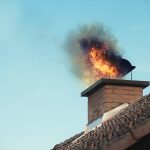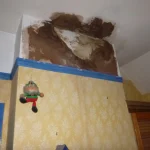
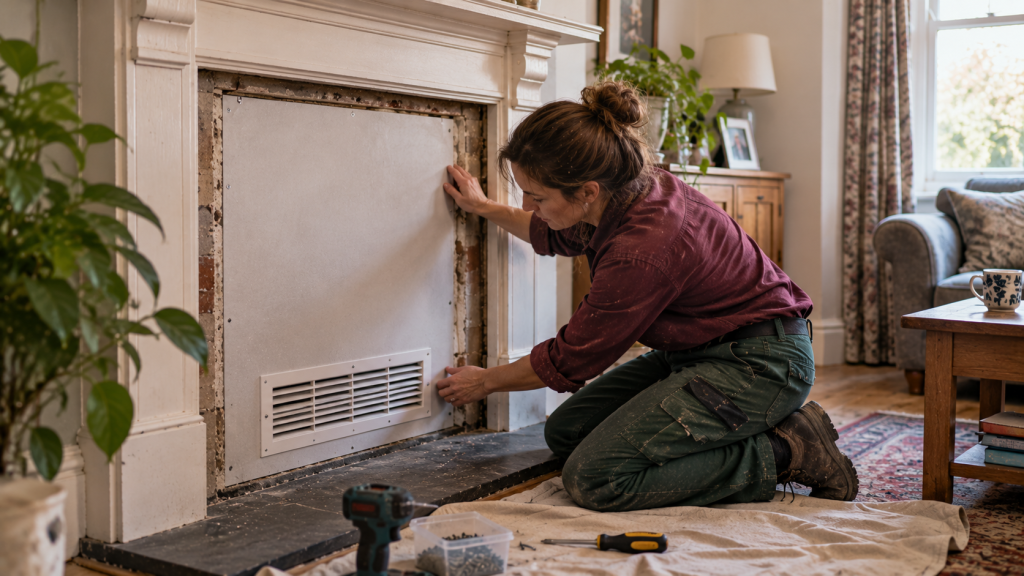
If you have a fireplace and chimney you no longer intend to use, permanently blocking it can seem straightforward. In practice, the way the chimney is closed matters because an incorrectly blocked chimney can create damp and staining problems that may not become obvious until years later.
There are two ways to deal with a redundant chimney: completely close it at both ends, or block the fireplace while keeping the chimney ventilated at both ends. Whichever method is used, the chimney should be swept first so soot and tar are not left trapped inside.
The Rule to Remember
Whatever happens at the bottom of the chimney should be matched at the top.
Completely blocked at the bottom → completely blocked at the top.
Ventilated at the bottom → ventilated at the top.
Do not completely seal the fireplace opening while leaving the chimney open at the top.
In This Guide
Have the Chimney Swept Before You Block It
We recommend having the chimney swept before it is permanently blocked, whether or not you believe it has recently been used.
Unless you know the chimney’s complete history, you may not know when it was last used or whether a previous owner had it swept afterwards. Once the chimney is permanently closed or made inaccessible, any soot and tar left inside can become trapped.
Moisture interacting with deposits left within the chimney can contribute to chemical reactions, damp and chimney staining. These problems can be extremely disruptive and expensive to rectify once a fireplace has been bricked up and decorated.
Having the chimney swept before the work is carried out is therefore a relatively simple precaution that could prevent a much more expensive problem later.
We can sweep the chimney and give you general advice during the appointment. The permanent blocking work itself should be carried out by a suitable builder.
Need Your Chimney Swept Before Blocking It?
We can sweep the chimney and give you general advice during the appointment before your builder carries out the permanent blocking work.
How to Permanently Block a Chimney: Two Options
There are two ways to deal with a chimney that is being permanently taken out of use. You can either completely close the flue at both ends, or block the fireplace while retaining ventilation at both the bottom and top.
What you should not do is combine half of one method with half of the other.
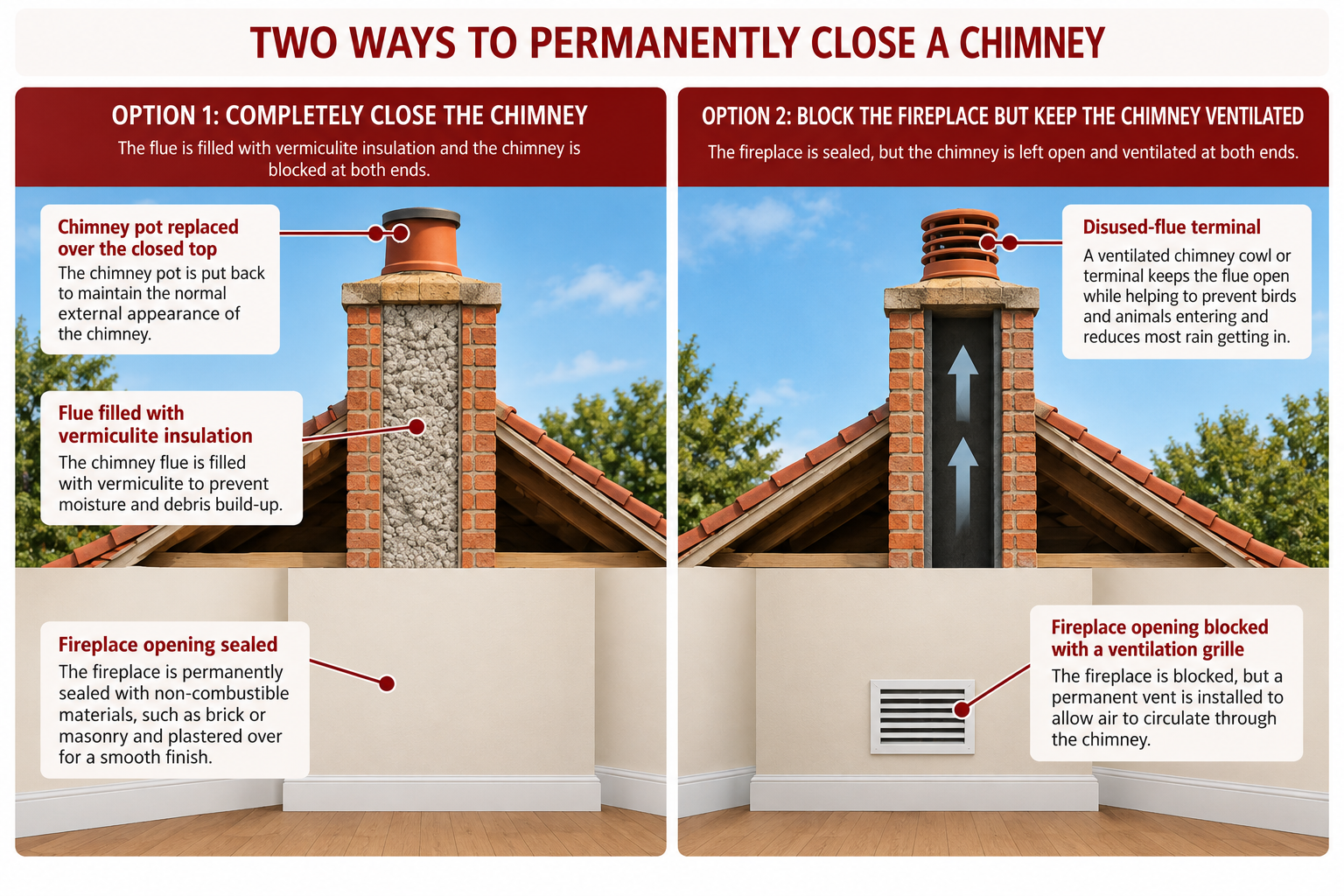
Option 1: Completely Block the Chimney
- Have the chimney swept.
- Brick up and plaster the fireplace opening.
- Fill the flue with vermiculite insulation.
- Completely close the chimney at the top.
- Replace the chimney pot over the closed top so the chimney can retain its normal external appearance.
The important point is that both ends are dealt with as one system. The chimney is not sealed at room level while remaining open to the weather at the top.
Option 2: Block the Fireplace but Keep the Chimney Ventilated
- Have the chimney swept.
- Block the fireplace opening and install a sufficiently large ventilation grille at the bottom.
- Fit a suitable terminal for a disused flue at the chimney pot. This helps prevent birds and animals entering and reduces rainwater getting into the chimney while still allowing air to flow.
Again, the principle is simple: ventilated at the bottom means ventilated at the top.
Why Do the Top and Bottom of a Blocked Chimney Need to Match?
One of the most common mistakes we see is a fireplace that has been completely blocked at room level while the chimney remains open at the top.
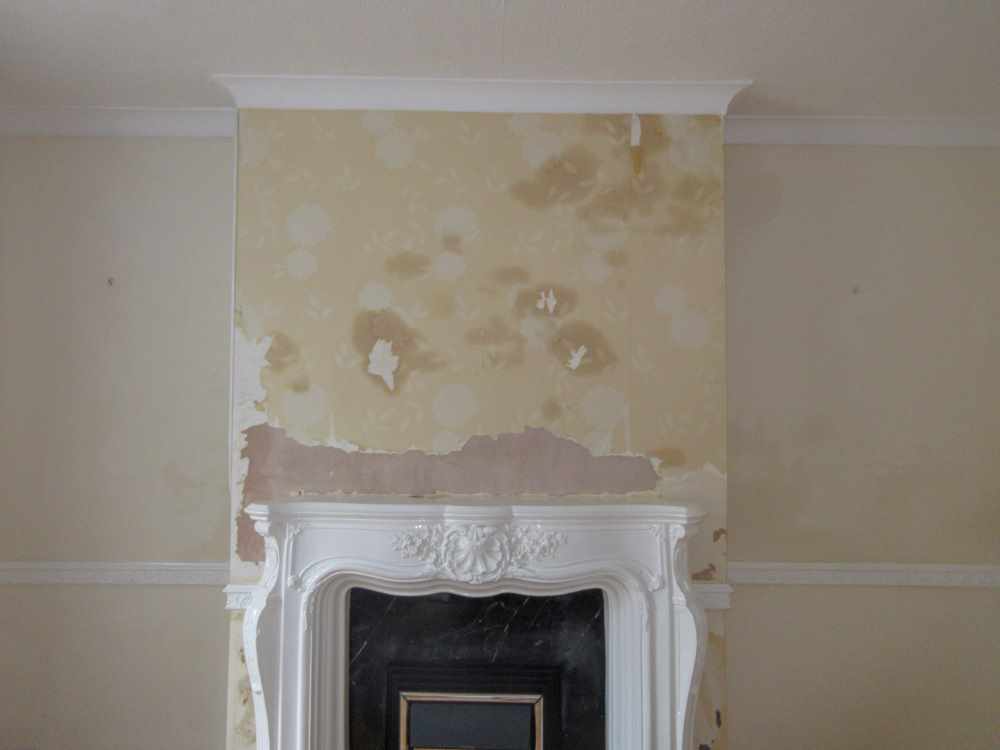
If the chimney is left open at the top but completely sealed at the bottom, moisture can continue to enter the chimney but the airflow needed to help it dry has been removed. Over time, moisture interacting with deposits and materials within the chimney can contribute to damp and characteristic staining through the chimney breast.
This is also why sweeping the chimney before it is made redundant matters: soot and tar should not simply be left inside and forgotten about.
If the Chimney Is Ventilated, Keep the Air Vent Clear
A fireplace can be correctly blocked and ventilated when the work is carried out, only for problems to develop years later because the lower vent is no longer doing its job.
Dust and debris can accumulate in the vent, and furniture is sometimes placed directly in front of it. If the redundant chimney relies on ventilation, keep the grille clear and unobstructed so air can continue to circulate.
Common Mistakes When Blocking a Chimney
- Completely blocking the fireplace opening but leaving the chimney open at the top.
- Not having the chimney swept before it is closed.
- Installing ventilation but later allowing the lower vent to become blocked with dust or debris.
- Covering the ventilation grille with furniture.
- Mixing elements of the completely closed and ventilated methods.
If a chimney cannot be made redundant correctly, leaving it open so that air can continue to circulate can be preferable to blocking it incorrectly.
Who Should Permanently Block a Chimney or Fireplace?
The physical work of bricking up a fireplace, filling a redundant flue and making alterations at the chimney top is building work rather than chimney sweeping. We recommend using a suitable builder for this work.
Our role is before that stage. We can sweep the chimney before it is closed and provide general chimney advice during the appointment.
A CCTV survey is not routinely required simply because you are planning to block a chimney. If there is a separate reason to investigate the inside of the chimney, that is a different matter.
Should You Block a Chimney or Leave It Open?
If you are certain the fireplace will no longer be used, either of the two permanent approaches above can be considered. What matters is that the chimney is treated as a complete system.
Completely closed: closed at the bottom and closed at the top.
Ventilated: ventilated at the bottom and ventilated at the top.
If neither can be done correctly, leaving the unused chimney open and allowing air to circulate may be better than creating problems by blocking it incorrectly.
Planning to Permanently Close a Chimney?
Arrange the sweep before your builder starts work. We can sweep the chimney and provide general chimney advice during the appointment.
Frequently Asked Questions
Should a Chimney Be Swept Before It Is Permanently Blocked?
Yes. We recommend having the chimney swept before it is permanently blocked, even if you do not believe it has been used recently. You may not know its complete history or whether a previous owner had it swept after its last use.
Can I Just Brick Up an Unused Fireplace?
Not without considering what is happening to the rest of the chimney. If the fireplace is completely sealed while the chimney remains open at the top, moisture and lack of appropriate airflow can contribute to long-term damp and staining problems. The treatment at the bottom and top needs to work together.
Does a Blocked Chimney Need Ventilation?
It depends on which method is being used. A chimney can be completely closed at both ends, or the fireplace can be blocked while ventilation is retained at both the bottom and top. Problems can arise when the two approaches are mixed.
Can I Put Furniture in Front of the Vent in a Blocked Fireplace?
No. If the chimney relies on that vent for airflow, keep it unobstructed. Furniture, stored items, dust and debris can all reduce airflow through the vent.
What Goes at the Top of a Ventilated Disused Chimney?
A suitable terminal for a disused flue can be fitted. It helps prevent birds and animals entering and reduces rain ingress while still allowing ventilation.
Who Can Block Up a Fireplace Permanently?
The physical blocking work should be carried out by a suitable builder. Ablewight can sweep the chimney beforehand and provide general chimney advice during the appointment, but we do not carry out the building work.