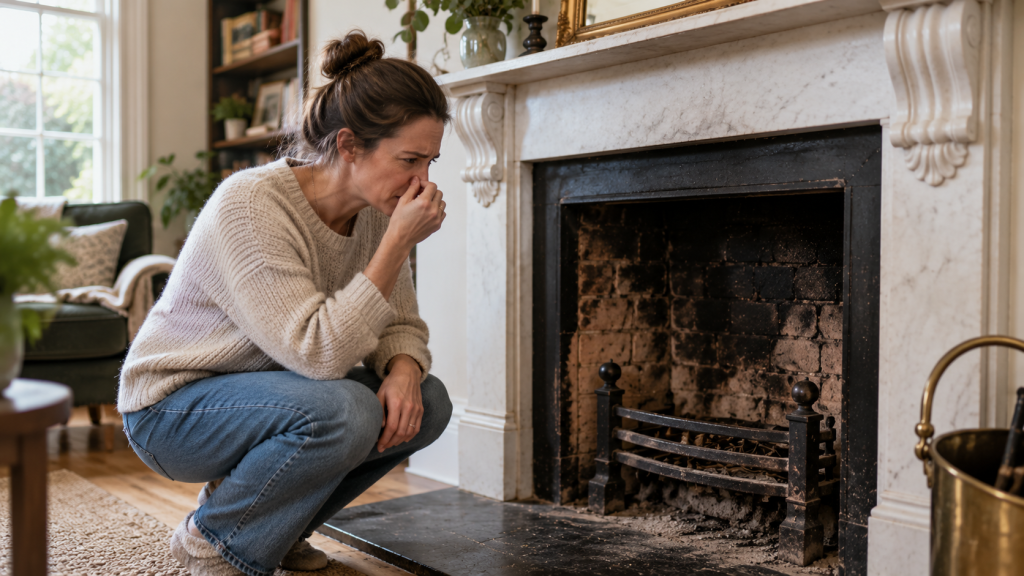
If an unpleasant smell is coming from your chimney or fireplace, the most likely explanation is also the simplest: the chimney is overdue a sweep.
Soot and other deposits build up inside the flue each time the fire is used. These deposits hold a smoky, sooty smell that can find its way into the room, particularly when the weather changes or air is being drawn down the chimney.
In many cases, a thorough chimney sweep removes the source of the smell. However, a damp, tar-like or rotting smell may point to a different problem that also needs attention.
IN THIS GUIDE
Why does an unswept chimney smell?
Burning wood, coal or smokeless fuel leaves soot and other deposits inside the chimney. The longer the chimney goes without being swept, the more material can build up.
Even when the fire is not being used, air can move through the chimney and carry the smell of those deposits into your home. You may notice it close to the fireplace at first, although a stronger smell can spread further into the room.
In our experience, an overdue sweep is the most common reason customers notice a smell coming from their chimney. If you cannot remember when it was last swept, that is the sensible place to start.
Why does my chimney smell worse in hot weather?
It is common to notice a chimney smell during spring or summer, even though you have stopped using the fire.
When a fire is lit, warm air and combustion gases normally travel upwards through the chimney. When the chimney is not in use, the airflow can reverse. Air then travels down the flue, bringing the smell of soot and deposits into the room.
Warm weather can make this more noticeable, particularly when the air inside and outside the property is at a similar temperature. Extractor fans and other changes in air pressure within the home can also encourage air to travel down the chimney.
The heat has not necessarily created a new problem. It may simply have made an existing build-up of soot easier to smell.
Why does my chimney smell when it rains?
Wet or humid weather can intensify an existing chimney smell. Moisture can make soot and deposits smell stronger, while downward airflow carries that odour into the room.
A smell that appears whenever it rains can also indicate that water is entering the chimney. Possible causes include a problem with the chimney pot or terminal, damaged flaunching, defective leadwork or porous masonry.
Sweeping will remove loose soot and deposits, but it will not repair the source of water ingress. If the smell continues after the chimney has been swept, the chimney may need further investigation by an appropriate roofing or chimney professional.
What does the smell from your chimney mean?
The type of smell can provide a clue, although it is not always possible to identify the cause from the odour alone.
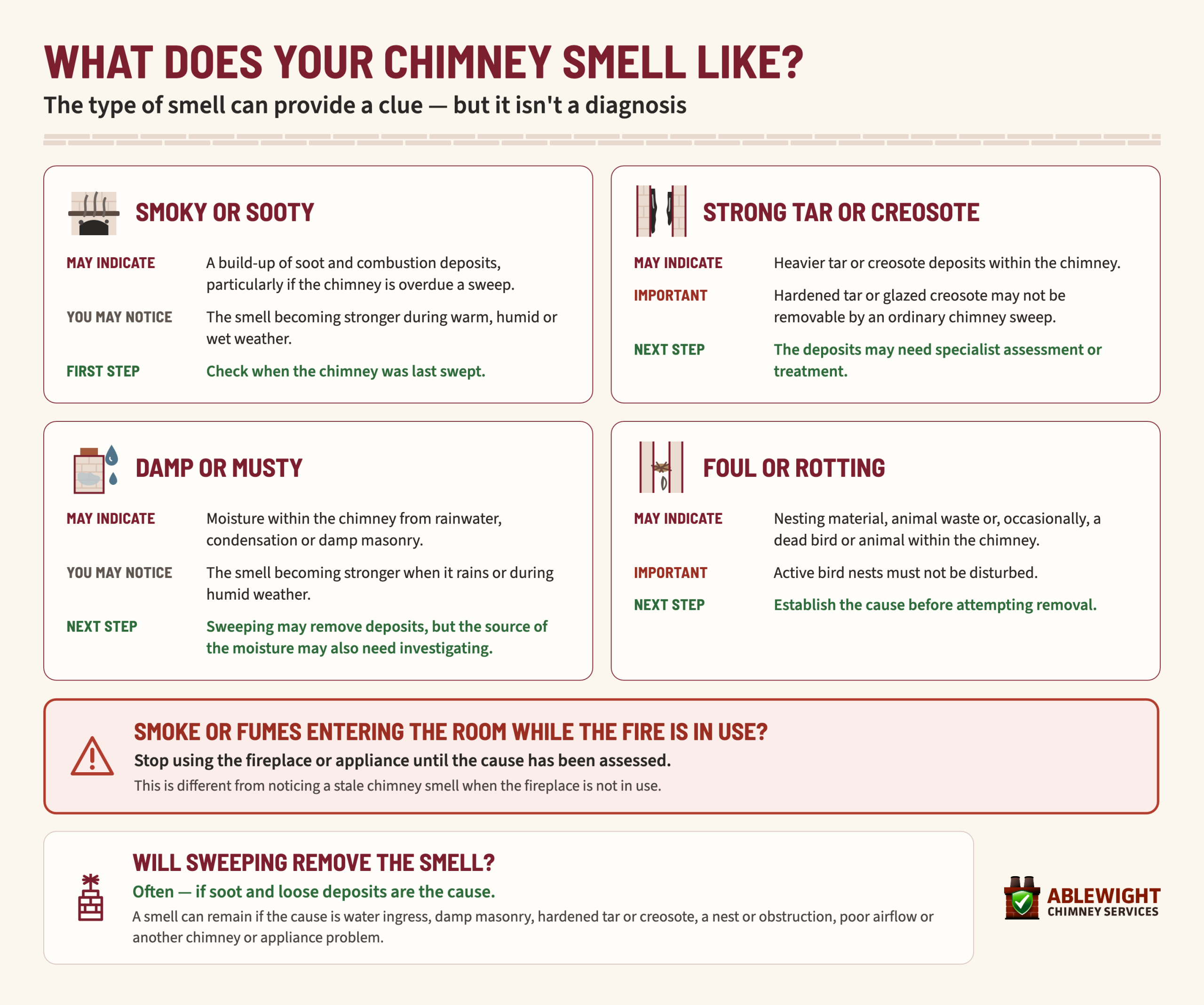
Smoky or sooty smell
This is commonly caused by soot and deposits inside a chimney that has not been swept recently. The smell may become more noticeable during warm, humid or wet weather.
Sweeping is normally the first step.
Strong tar or creosote smell
A sharp, acrid or tar-like smell may indicate heavier deposits within the flue. These can form when wood is burned at a low temperature, when the fuel is too wet or when the flue gases cool too quickly.
Loose soot can be removed during a standard sweep, but hardened tar or glazed creosote may require specialist treatment. Our guide to tar and creosote in chimneys explains the signs and how it is treated.
Damp or musty smell
A damp or musty smell can indicate moisture inside the chimney. The chimney may be affected by rainwater, condensation or damp masonry.
A sweep is still useful if soot and debris are present, but the source of the moisture may also need to be found and repaired.
Foul or rotting smell
A particularly foul smell may be caused by nesting material, animal waste or, occasionally, a dead bird or animal inside the chimney.
Bird nests cannot be disturbed while they are active. Our bird nests in chimneys guide explains the nesting season, the warning signs and when removal can legally take place.
Smoke smell while the fire is being used
If smoke or fumes are entering the room while the fire or appliance is in use, stop using it until the cause has been assessed.
The problem may involve a blockage, insufficient ventilation, poor chimney draw or an issue with the appliance or flue. This is different from noticing a stale sooty smell when the fireplace is not in use.
Is a chimney smell harmful?
A chimney smell does not automatically mean that something dangerous is entering the room, but it should not be used as a test of whether the chimney is safe.
Carbon monoxide has no smell, colour or taste. You cannot rely on your senses to detect it. Every home with a working fireplace or fuel-burning appliance should have a suitable carbon monoxide alarm that is regularly tested.
If smoke or fumes enter the room when the fire is lit, a carbon monoxide alarm sounds, or anyone experiences possible carbon monoxide symptoms, stop using the appliance and seek appropriate safety advice.
Will sweeping get rid of the chimney smell?
If the smell is caused by an accumulation of soot and loose deposits, sweeping will remove the source and will often significantly reduce or eliminate it.
However, sweeping cannot guarantee that every chimney smell will disappear. The odour may continue if it is caused by:
- Water entering the chimney
- Damp or contaminated masonry
- Hardened tar or creosote
- A bird nest or other obstruction
- Poor airflow or a persistent downdraught
- A problem with the appliance or flue
If the smell remains after sweeping, what happens next will depend on when the smell occurs and what it smells like. We can explain anything we notice during the appointment and advise whether another trade or further investigation may be needed.
What should you do if your chimney smells?
Start by checking when the chimney was last swept. If it has been more than a year, or you cannot remember, arrange a professional chimney sweep.
It also helps to notice:
- Whether the smell is smoky, tar-like, musty or foul
- Whether it becomes worse during hot or wet weather
- Whether it is present all the time or only when the fire is used
- Whether you have noticed water, falling debris or bird activity
- Whether the smell remains after the chimney has been swept
Do not block or completely seal the chimney to contain the smell. A chimney that is no longer used still needs appropriate ventilation to help prevent condensation and damp.
Arrange a chimney sweep
If a sooty or smoky smell is coming from your fireplace and the chimney has not been swept recently, sweeping is the right place to start.
Tell us what you have noticed and when the chimney was last swept, if you know. We will send you our appointment availability and advise on the next step.
Frequently asked questions
Why does my chimney smell even when I am not using it?
Soot and deposits remain inside the flue after the fire has gone out. When air travels down the chimney, it can carry that smell into the room. This is particularly noticeable if the chimney is overdue a sweep.
Why does my chimney smell in summer?
The airflow through an unused chimney can reverse during warmer weather, bringing the smell of soot and deposits down into the room. Warm and humid conditions can also make an existing odour more noticeable.
Why does my chimney smell when it rains?
Moisture can intensify the smell of soot and other deposits. A smell that regularly appears during wet weather may also indicate that rainwater is entering the chimney.
What does creosote smell like?
Creosote can have a strong, sharp or tar-like smell. If deposits have hardened inside the flue, a standard sweep may not remove them completely and specialist tar treatment may be required.
Will a chimney sweep remove the smell?
Often, yes. Sweeping removes soot and loose deposits, which are the most common source of chimney smells. If damp, water ingress, hardened tar, an obstruction or poor airflow is responsible, further work may be needed.
Is a chimney smell dangerous?
The smell itself does not tell you whether the chimney is safe. Carbon monoxide is odourless, so keep a working carbon monoxide alarm near any fuel-burning appliance. Stop using the fire or appliance if smoke or fumes enter the room.