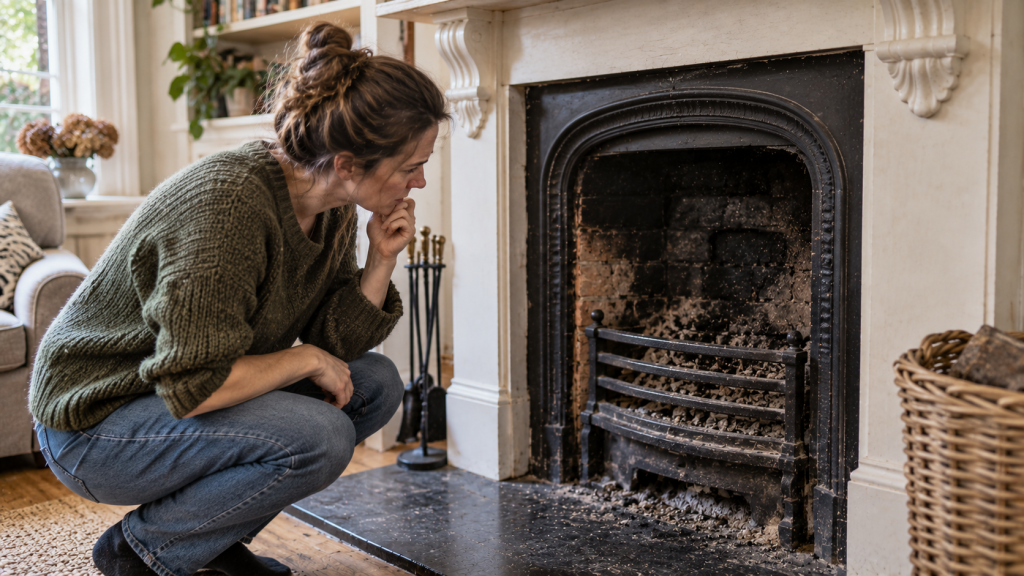
If you don’t know when your chimney was last swept, we’d recommend having it swept before you use it. The same applies if you’ve moved into a property with a fireplace or stove and don’t have a reliable sweeping history.
Other signs that a sweep may be due include soot or debris falling into the fireplace, a noticeable change in how the chimney draws, smoke entering the room, persistent chimney smells and signs of a bird nest or blockage. Some of these symptoms can also indicate a different chimney problem, so a sweep is often the most sensible place to start.
In This Guide
What Are the Signs Your Chimney Needs Sweeping?
You don’t need to wait for an obvious problem before having your chimney swept. Sweeping should be part of routine chimney maintenance, but there are also warning signs that mean it’s worth arranging a sweep rather than waiting for your usual schedule.
Soot or debris is falling into the fireplace
If you’re finding soot, flakes or other debris in the fireplace or stove, material is coming down from somewhere within the chimney. A sweep removes normal soot deposits and gives us an opportunity to see what comes down during the process.
Pieces of mortar, liner material or other unusual debris may point to a problem that sweeping alone won’t resolve. If we find something concerning while sweeping, we’ll explain what we’ve found and what the appropriate next step is.
The fire isn’t drawing as it normally does
If a fireplace or stove that previously worked well has become harder to light, seems sluggish or isn’t drawing as it normally does, a build-up or partial blockage in the flue is one possible cause.
There are other reasons for poor draw, so it doesn’t automatically mean the chimney simply needs cleaning. However, if the chimney is due a sweep, or you don’t know when it was last swept, sweeping is a sensible first step.
There is a strong smell coming from the chimney
Soot and deposits within a chimney can contribute to chimney smells, particularly when conditions change. But smells can also be caused by damp, bird nests, downdraught and other issues.
A sweep may resolve the cause or help identify what’s happening, but a smell by itself doesn’t prove that soot build-up is the problem. Our guide Why Does My Chimney Smell? explains the common causes in more detail.
What If You Don’t Know When the Chimney Was Last Swept?
We wouldn’t advise using a fireplace or appliance if you don’t know when the chimney was last swept.
Without a reliable sweeping history, you don’t know whether soot, debris or a blockage may have built up in the flue. This is particularly relevant when you’ve just moved house and inherited a fireplace, wood-burning stove or other appliance but haven’t been given a reliable sweeping history.
We recommend having the chimney swept before using it. Once it has been swept, you can establish an appropriate routine based on the appliance, fuel and how often you use it.
Don’t Know When Your Chimney Was Last Swept?
If you don’t have a reliable sweeping history, we’d recommend arranging a sweep before using the fireplace or appliance. Tell us what appliance you have when you contact us and we’ll advise what to book.
Request Appointment AvailabilityDoes Smoke Coming Into the Room Mean Your Chimney Needs Sweeping?
Smoke entering the room can be a sign that a chimney needs sweeping, but it isn’t the only possible cause.
A build-up, bird nest or other blockage can restrict the flue, but smoke problems can also be caused by poor draught, ventilation issues, weather conditions or another problem with the chimney or appliance.
If smoke has suddenly started entering the room when the chimney previously worked normally, stop using the fire until the cause has been established. If the chimney hasn’t been swept recently, sweeping is a sensible first investigation because it clears normal deposits and may reveal evidence of a blockage or another issue.
For more on problems beyond routine sweeping, see Signs Your Chimney May Have a Problem.
What If There May Be a Bird Nest or Blockage?
Twigs or nesting material falling into the fireplace, birds repeatedly entering the chimney, or sounds of activity within the flue can indicate nesting.
A bird nest isn’t the same as normal soot build-up and can require considerably more work to remove than a routine sweep. Don’t light a fire to try to burn a suspected nest away.
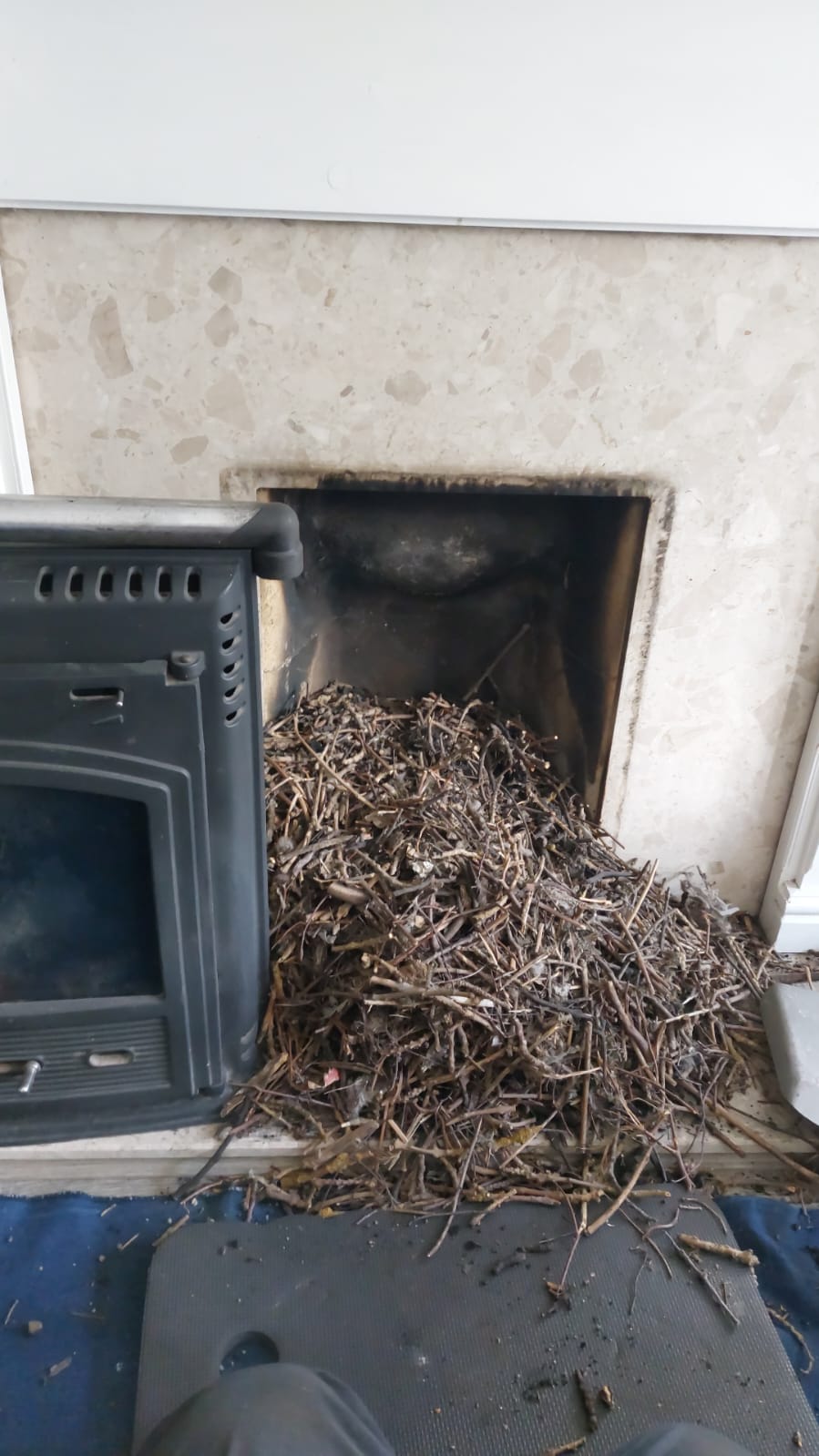
We don’t remove bird nests between 1 April and 31 August. Nest removal resumes from September. If you suspect nesting, tell us when you enquire so we can advise you appropriately. Our guide to bird nests in chimneys explains the signs, removal process and seasonal restrictions.
Does Every Chimney Problem Mean It Needs Sweeping?
No. This is an important distinction.
Exterior staining, deteriorated pointing, a leaning chimney stack, damp around the chimney breast or a damaged chimney pot are not simply signs that a chimney is overdue a sweep. They can indicate maintenance, ventilation, weatherproofing or structural problems that require a different response.
Similarly, sweeping removes soot and deposits from the flue, but it isn’t a structural survey or roof inspection.
If you’re not sure whether you’re looking at a sweeping issue or a wider chimney problem, describe what you’ve noticed when you contact us. In many cases we’ll recommend starting with a sweep because it allows us to clear the flue and see whether there are signs that further investigation is needed.
How Often Should a Chimney Be Swept?
There isn’t one sweeping interval that is right for every chimney. How often yours needs sweeping depends on factors including the appliance, the fuel you burn and how frequently you use it.
The important point is not to wait until the chimney gives you an obvious warning sign. Once you know your chimney is clean, establish a regular sweeping schedule appropriate to how it is used.
We’ve covered this separately in How Often Should You Sweep Your Chimney? so this guide can stay focused on recognising when a sweep may already be due.
What Happens When We Sweep Your Chimney?
During a normal chimney sweeping appointment, we protect the area around the appliance or fireplace and sweep the flue from ground level. A straightforward single-flue appointment typically takes around 20–40 minutes.
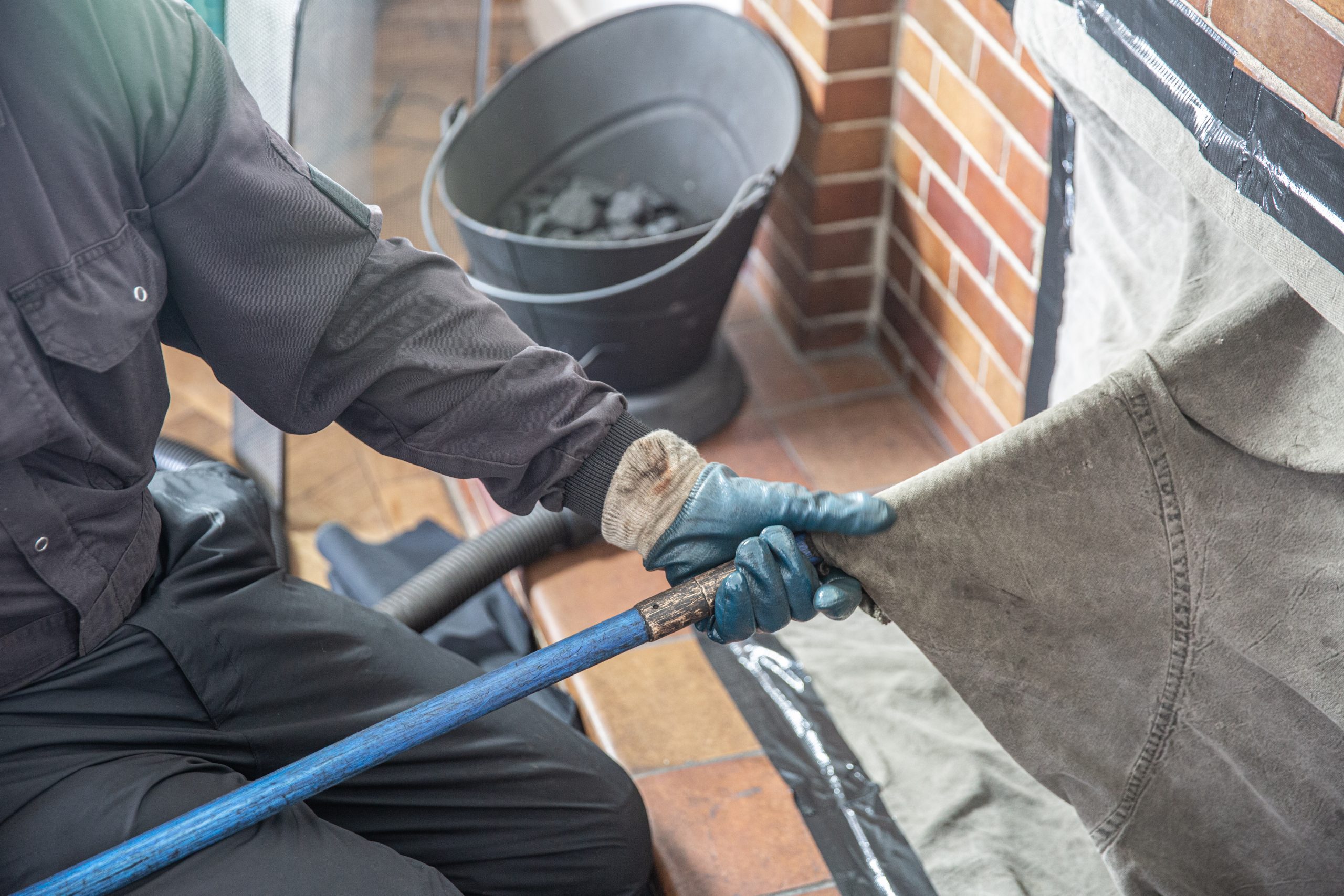
As we sweep, we can also flag things such as unusual debris, signs of bird nesting, excessive deposits or visible problems that may need further investigation. This doesn’t turn a routine sweep into a full chimney survey, but it means the appointment can often answer more than simply whether the flue needed cleaning.
Please don’t use your fireplace or appliance for at least 24 hours before your appointment. This allows the appliance and flue to cool fully before sweeping. After the sweep, we normally issue a Guild of Master Chimney Sweeps sweeping certificate. If we identify a problem that means we’re unable to issue a certificate, we’ll explain what we’ve found and what needs to happen next.
If you’d like to know exactly what to expect, read What Happens During a Chimney Sweep?.
Need to Book a Chimney Sweep?
Request appointment availability and let us know what type of fireplace or appliance you have.
Request Appointment AvailabilityFrequently Asked Questions
Should I have a chimney swept when I move into a new house?
If you’re planning to use the fireplace or appliance and don’t have a reliable record of when the chimney was last swept, we’d recommend having it swept before first use. That gives you a known starting point for its future sweeping schedule.
Can I use my fireplace if I don’t know when the chimney was last swept?
We wouldn’t advise using a fireplace or appliance if you don’t know when the chimney was last swept. Without a reliable sweeping history, you don’t know whether soot, debris or a blockage may have built up in the flue. We recommend having the chimney swept before using it.
Can you tell if a chimney needs sweeping just by looking at it?
Not reliably. You may be able to see soot, debris or other warning signs, but the absence of something visible from the fireplace doesn’t tell you when the flue was last properly swept. If the sweeping history is unknown, we’d recommend arranging a sweep before using it.
Does a chimney still need sweeping if it hasn’t been used very much?
Potentially. How often a chimney needs sweeping depends on the appliance, fuel and how it is used, but lack of use doesn’t tell you that the flue is clear. If you don’t know its condition or sweeping history, we’d recommend having it swept before use.
Will sweeping fix a chimney that smokes?
It depends on the cause. Sweeping can resolve restrictions caused by normal deposits and may reveal evidence of a blockage, but smoke entering the room can have several causes. If the problem remains after the flue is clear, further investigation may be needed.