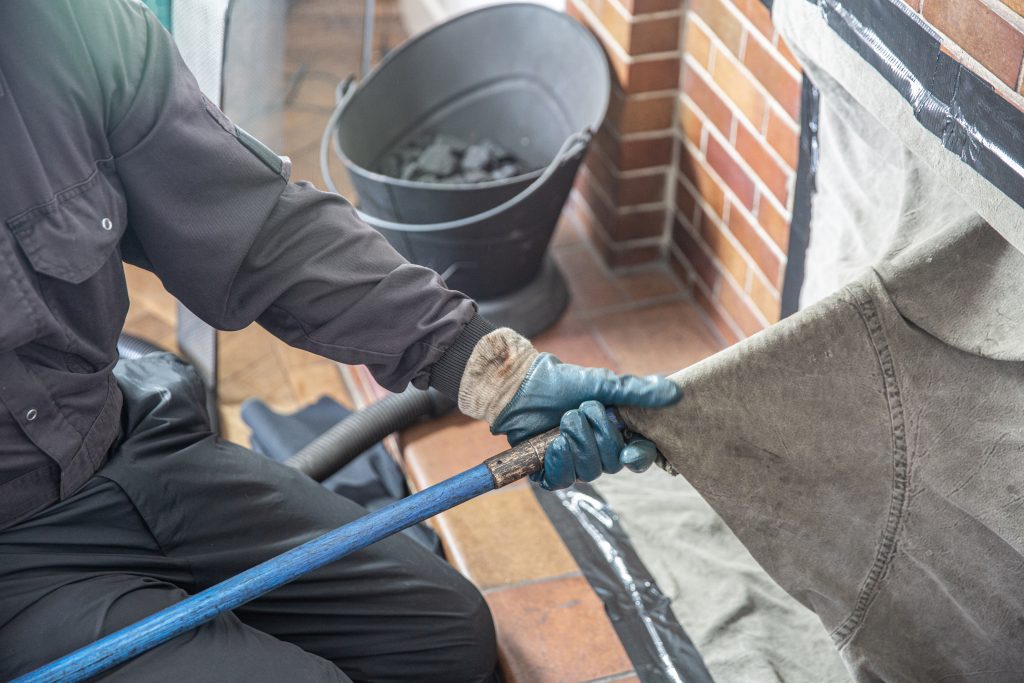
A professional chimney sweep protects the area around your fireplace or stove, accesses and contains the flue opening, removes soot and deposits with suitable brushes or rotary equipment, clears the loosened material, carries out a smoke test and explains anything unusual found during the work. A routine appointment for one flue typically takes 30–45 minutes, although access and what is found within the chimney can make it longer.
Modern chimney sweeping should be a controlled process. The aim is to clean the flue while containing soot and protecting the room, not to recreate the clouds of dust associated with the old image of the trade.
If you are considering booking a sweep in or around Cambridge, the steps below explain what normally happens and where a routine sweep ends.
View our professional chimney sweeping service.
IN THIS GUIDE
Before The Appointment
Do not use the appliance or fireplace for 24 hours before the appointment so that it and the flue are completely cold. Remove ornaments and fragile items from immediately around the fireplace and make sure there is a clear route to the appliance, moving furniture or other obstacles if necessary. If you have pets, it’s helpful to keep them away from the working area while the chimney is being swept. Please also let us know in advance about any unusual access, recent chimney fire, suspected nest, heavy tar or smoke entering the room.
If the appointment involves an Aga cooker, boiler or gas appliance, confirm the access arrangements when booking. We sweep gas-appliance and boiler flues but do not service those appliances. Some gas appliances must be disconnected by a Gas Safe registered engineer before the flue can be swept; other designs do not require disconnection. We sweep Aga cooker flues but the kitchen cooker itself must be serviced by an Aga service specialist.
What Happens During The Chimney Sweep?
Step One: Discuss The Appliance And Any Symptoms
The sweep will ask about the appliance, fuel, how often it is used, when the flue was last swept and whether you have noticed smoke, smells, poor draw or falling debris. These details help determine the appropriate method and whether the visit is likely to involve more than a routine sweep.
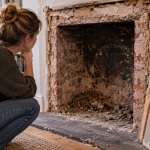
The accessible fireplace, stove and flue connection may be looked over for obvious issues before work begins. This is a practical pre-work assessment, not a full inspection of concealed parts of the chimney.
Step Two: Protect The Room And Contain The Opening
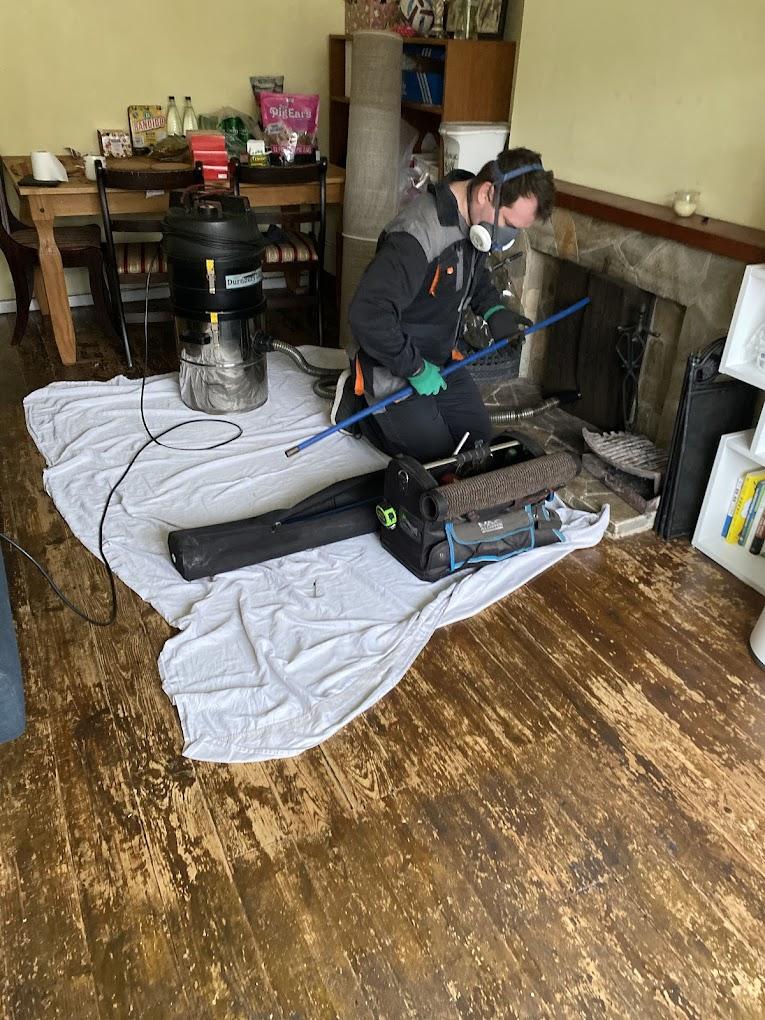
Protective sheets are placed around the working area. The fireplace or stove opening is then contained using a method suited to the appliance, with professional vacuum equipment used to control loosened soot and dust while the flue is swept.
Good preparation and containment are the main reasons a modern professional sweep should be much cleaner than many first-time customers expect.
Step Three: Gain Suitable Access To The Flue
Access varies by appliance. An open fireplace may provide direct access. A stove can require removable internal components, such as the baffle, to be taken out carefully. Some appliances need preparation or access work outside the normal scope of chimney sweeping, which should be agreed before the appointment.
In line with British Standards, chimney sweeping in the UK is carried out from ground level, working from the room containing the fireplace, appliance or access hatch. Roof access is not required for chimney sweeping.
Step Four: Sweep The Flue
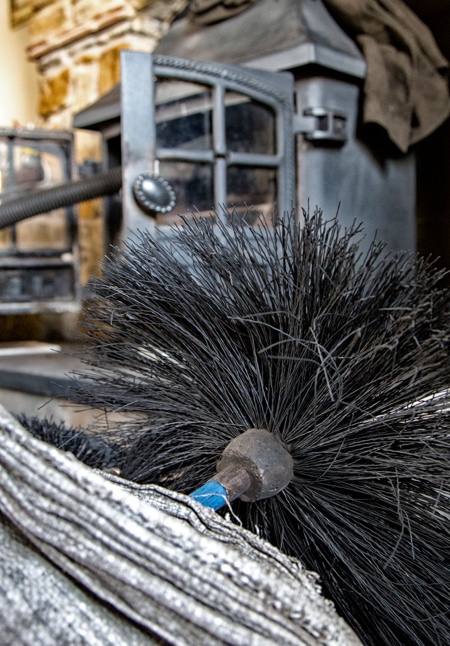
The sweep selects a manual brush or rotary power-sweeping head suited to the flue, liner, deposits and access. Flexible rods are passed through the flue in a controlled way so that soot and suitable deposits are loosened without damaging the system.
Power sweeping is useful in many circumstances, but it is not automatically the right method for every flue. The choice is based on the construction and condition encountered. Heavy tar or glazed creosote may require specialist treatment rather than an ordinary sweep.
Learn about our tar and creosote removal service.
Step Five: Remove Debris And Review The Result
Loosened soot and debris are collected and removed. The sweep reviews what has come down and the accessible parts of the system. The type and amount of material can reveal useful clues, but a routine sweep cannot show the hidden condition of the entire chimney.
If the sweep finds signs of a blockage, damage, excessive deposits or another issue that cannot be resolved or understood during the visit, they will explain it and recommend the next appropriate step. This might be specialist deposit removal, appliance attention or a CCTV chimney survey.
Material removed during a domestic chimney sweep is classed as household waste. Where relevant, we will bag the soot and deposits and leave the bag in your appropriate external bin.
Find out when a CCTV chimney survey may be needed.
Step Six: Smoke Test, Reassemble And Record The Work
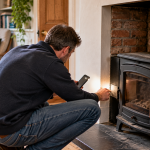
A smoke test is carried out as part of every sweep. Components removed as part of the agreed access are replaced, the containment is taken down carefully and the immediate work area is cleaned. If the chimney is safe to use, we explain any observations and provide a Guild of Master Chimney Sweeps sweeping certificate. If the chimney is not safe to use, we issue a warning notice instead.
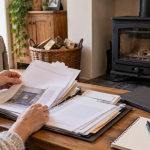
Keep the certificate with your household records and read any advisory notes recorded on it. These may identify non-urgent work or maintenance to consider even though the chimney is safe to use.
What A Routine Chimney Sweep Does And Does Not Cover
| Included | Separate or only when needed |
|---|---|
| Protecting the immediate work area | A full stove or appliance service |
| Sweeping the flue with suitable equipment | A CCTV survey of concealed flue surfaces |
| Removing loosened soot and ordinary debris | Specialist tar or glazed creosote treatment |
| Noting visible concerns encountered | A structural survey or confirmation of concealed flue condition |
| A smoke test and either a Guild sweeping certificate or warning notice | A separate investigation unless the findings indicate that it is needed |
Need Your Chimney Swept?
Ablewight Chimney Services has provided professional chimney sweeping in and around Cambridge since 1980. Request appointment availability using our contact form.
Frequently Asked Questions
Will chimney sweeping make a mess?
Professional containment, protective sheets and vacuum equipment are used to keep soot within the working area. It would be unrealistic to promise that no speck can ever escape, but the normal expectation is that the room is protected and the immediate area is left clean.
How long does a chimney sweep take?
A routine appointment for one flue typically takes 30–45 minutes. Multiple flues, difficult access, a nest, heavy deposits or an issue that needs discussion will take longer. The duration cannot be predicted precisely because it depends partly on what is found within the chimney. Bird-nest removal and specialist tar treatment are separate jobs and should not be booked as if they were routine sweeping.
How often should a chimney be swept?
HETAS encourages having chimneys swept at least twice a year when burning wood or bituminous house coal, and at least once a year when burning smokeless fuel. Cambridgeshire Fire and Rescue Service advises that chimneys used for burning wood may need sweeping up to four times a year. The appropriate frequency also depends on use, fuel, burning practices, manufacturer’s guidance and any relevant insurance terms.
What if the sweep finds a problem?
The sweep will explain what has been found, whether use must stop, and what kind of further investigation or specialist help is appropriate. A suspected chimney fire, carbon monoxide incident, serious blockage or appliance fault will not be treated as routine maintenance.
If a carbon monoxide alarm sounds or you suspect carbon monoxide, stop using the appliance, ventilate the property, leave the affected area and follow current emergency guidance.
Does the sweep need to go on the roof?
No. In line with British Standards, chimney sweeping in the UK is carried out from ground level, working in the room containing the fireplace, appliance or access hatch.
Should I use the fire the night before?
Do not use the appliance or fireplace for 24 hours before the appointment. This ensures it and the flue are completely cold.
Is stove servicing included in the chimney-sweeping price?
No. Stove servicing is a separately priced service. We can complete it during the same appointment, but it must be booked in advance so we allocate enough time for both services.
Does the certificate satisfy my insurer?
Yes. Guild of Master Chimney Sweeps sweeping certificates are recognised by insurance companies as evidence that the chimney has been professionally swept. Keep the certificate with your household records. Your policy may separately specify how often sweeping must take place, so check its maintenance requirements.
Can a routine sweep find every chimney defect?
No. A routine sweep is sufficient for most customers and may reveal warning signs, but it cannot show every concealed part of a chimney. Where there are signs of a hidden problem, a CCTV survey or other specialist inspection may be needed.