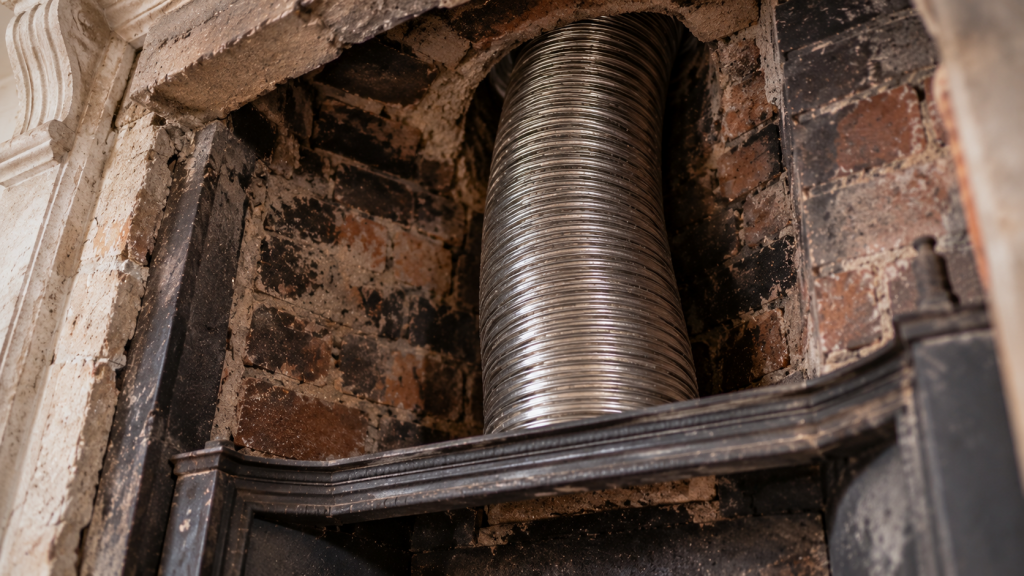
A chimney liner is the inner surface or lining of a chimney flue that comes into contact with the smoke and combustion gases travelling up the chimney. Depending on the chimney, that lining may be part of its original construction or a separate liner fitted later.
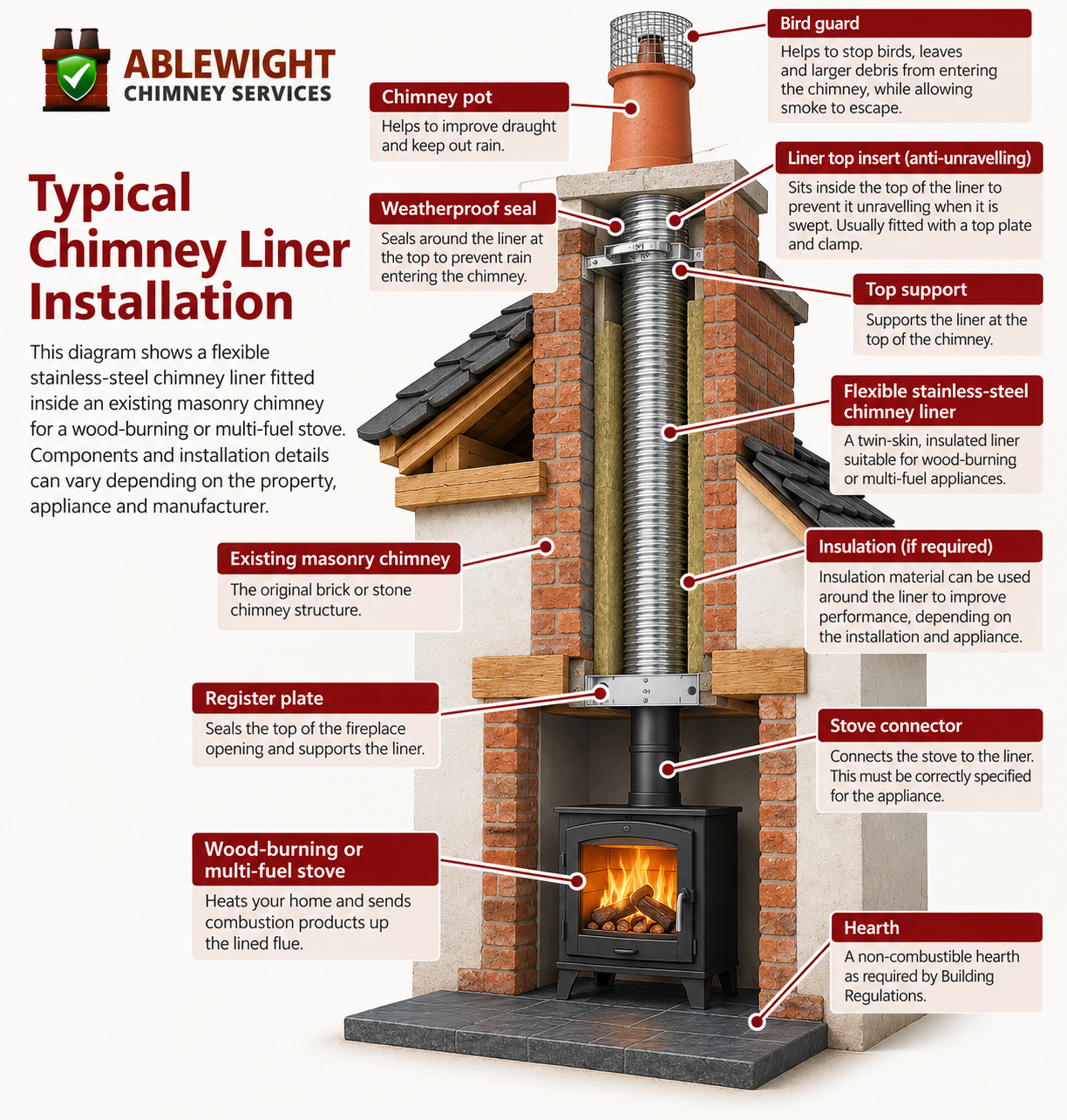
If you’re considering a wood-burning or multi-fuel stove, you may hear installers talk about fitting a flexible stainless-steel liner. That’s one type of chimney liner, but it isn’t the only type.
In This Guide
What does a chimney liner do?
The flue is the passage that carries the products of combustion from an appliance or fire to the outside. The liner forms the inner wall of that passage.
A suitable flue needs to safely contain and discharge those combustion products. The liner also needs to be appropriate for the appliance, fuel and temperatures involved. That’s why a liner intended for one application isn’t automatically suitable for another.
What types of chimney liner are there?
Chimneys and flues can be constructed in several different ways and from different materials. In domestic properties you may encounter masonry chimneys with clay or ceramic liners, other purpose-made chimney systems, or an existing masonry chimney that has subsequently been relined.
Flexible stainless-steel liners
These are commonly used to reline an existing chimney. For wood-burning and multi-fuel appliances, the flexible liner must be suitably designated for that use. Flexible liners designed only for gas applications must not be used for wood or multi-fuel appliances.
A flexible metal liner is therefore not simply a generic tube that can be put into any chimney. The proposed appliance, fuel and installation all matter, and the installer should specify the appropriate system.
Clay, ceramic and other masonry liners
Purpose-made clay, ceramic, pumice and other masonry chimney systems or liners are also used. Some form part of the chimney from construction, while others may be used as part of relining or refurbishment work.
The important point is that “chimney liner” doesn’t necessarily mean a flexible stainless-steel liner. The term describes the wall of the flue that is exposed to the combustion products.
Does every chimney have a liner?
Not every older chimney contains a modern purpose-made liner. Historic masonry flues were constructed differently, and some older flues were finished internally with mortar or parging rather than the type of liner people usually picture today.
Equally, you shouldn’t assume what is inside a chimney purely from the age of the house. Chimneys can have been altered, repaired or relined during their lifetime.
If you’re interested in older construction specifically, our separate guide looks at Victorian chimneys and their liners.
Do you need a chimney liner for a wood-burning stove?
In many stove installations, yes. One common reason is that the existing chimney flue was designed for an open fire and is considerably larger than the flue needed by a modern stove.
A traditional open fireplace can have a flue around 9" × 9" or larger, whereas many domestic wood-burning stoves use a much smaller flue outlet — commonly around 5" or 6", depending on the appliance.
This difference matters because a stove needs a flue that is correctly sized for the appliance. An unnecessarily large chimney contains a greater volume of air and can allow the flue gases to cool more quickly. Because natural chimney draught relies partly on the temperature difference between the hot gases inside the flue and the outside air, excessive cooling can reduce draught and contribute to poor stove performance, condensation and deposits.
For that reason, when a stove is installed into an existing chimney originally built for an open fire, a correctly sized liner is commonly fitted to create a flue that is suitable for the stove.
However, a liner isn’t automatically required in every installation. The correct flue size depends on the appliance, fuel, existing chimney and manufacturer’s instructions, so the installer needs to assess the chimney and specify the appropriate solution.
Ablewight doesn’t install stoves or chimney liners, although we can give general advice based on what we encounter while sweeping.
For the next step, see Do I Need a Chimney Liner?
Why should the chimney be swept before a new liner is fitted?
The existing chimney should be swept before it is relined because any soot and tar left behind will become inaccessible once the new liner is installed. Building Regulations guidance also states that flues should be swept to remove deposits before relining.
This isn’t simply about starting with a clean chimney. Soot can contain acidic compounds and, when moisture is present, deposits left against the inside of the original chimney can contribute to deterioration of the masonry and mortar over time. Once a flexible liner has been installed, those deposits are trapped in the space around the new liner and cannot be removed through normal chimney sweeping.
Tar is a separate concern because significant tar deposits are combustible. Removing as much sweepable soot and tar as possible before the liner goes in therefore reduces the amount of potentially corrosive and combustible material that is permanently left behind.
We’ve covered the reasons and what to arrange before installation in more detail in Should You Have Your Chimney Swept Before Installing a Stove or Chimney Liner?
Do chimney liners need sweeping?
Yes. Installing a liner doesn’t remove the need for chimney sweeping. Soot and other combustion deposits still build up inside the flue and need to be removed.
The appropriate sweeping frequency depends on the appliance, fuel and how the chimney is used. You should also follow the maintenance requirements supplied with the appliance and liner, particularly where these form part of warranty conditions.
Keep your sweeping certificates and other maintenance records. Our guide to stove and chimney liner warranties explains why those records can matter.
Can chimney liners become damaged?
Yes. Liners and flues can deteriorate or become unsuitable over time, but the possible problems depend heavily on the type of liner and installation.
A normal chimney sweep isn’t automatically a full condition survey of the liner. If there’s a particular reason to investigate the accessible flue more closely, a separate CCTV chimney survey may sometimes be appropriate.
For symptoms, causes and next steps, see our dedicated guide to chimney liner problems.
Planning a stove or liner installation?
The existing chimney should be swept before it is relined. If you’re planning an installation, you can arrange the sweep before you’ve chosen the stove.
Frequently asked questions
What is the difference between a chimney and a chimney liner?
The chimney is the overall structure. The flue is the passage through which combustion products travel, and the liner is the inner wall of that flue that is in contact with those combustion products.
Is a flue liner the same as a chimney liner?
In everyday domestic use, the terms are often used interchangeably. Building Regulations guidance defines a flue liner as the wall of the chimney that is in contact with the products of combustion.
Can a flexible chimney liner be used as a new chimney?
A flexible metal flue liner is intended for relining an existing chimney. It should not be used as the primary liner of a completely new chimney.
Can any stainless-steel liner be used with a wood-burning stove?
No. Flexible liners have different designations. A liner used with a wood-burning or multi-fuel appliance needs to be specifically suitable for that application; gas-only flexible liners must not be used for solid-fuel appliances.
Does a chimney liner still need sweeping?
Yes. A lined chimney still needs regular sweeping to remove soot and combustion deposits. Follow the requirements for your particular appliance and liner when deciding the appropriate maintenance schedule.
Can Ablewight install or replace my chimney liner?
No. Ablewight doesn’t install or replace chimney liners. We sweep chimneys and liners, can explain relevant findings from the sweep and can recommend suitable local installers where required.