A carbon monoxide alarm (CO alarm) is designed to detect carbon monoxide in the air and warn you when potentially dangerous levels are present. Because carbon monoxide cannot be seen, smelled or tasted, an alarm provides an important warning that you cannot rely on your senses to detect.
In This Guide
- What is a carbon monoxide alarm?
- How does a carbon monoxide alarm work?
- Do I need a carbon monoxide alarm?
- Where should a carbon monoxide alarm be positioned?
- What type of carbon monoxide alarm do I need?
- How often should you test and replace a carbon monoxide alarm?
- What should you do if your carbon monoxide alarm sounds?
What Is a Carbon Monoxide Alarm?
A carbon monoxide alarm is a safety device that monitors the air for carbon monoxide (CO), a poisonous gas produced when fuels such as wood, coal, gas or oil do not burn completely.
If the alarm detects carbon monoxide at a level and for a period that triggers its warning threshold, it sounds an audible alarm. A CO alarm is an additional safeguard: it does not replace correct appliance installation, servicing, ventilation or chimney sweeping and maintenance.
How Does a Carbon Monoxide Alarm Work?
Carbon monoxide alarms contain a sensor designed to respond to CO in the surrounding air. The alarm monitors exposure and sounds when its programmed thresholds are reached.
This is different from a smoke alarm. A smoke alarm is designed to detect signs of fire, while a CO alarm is specifically designed to warn of carbon monoxide. Homes with fireplaces, stoves or other combustion appliances may need both types of protection.
Do I Need a Carbon Monoxide Alarm?
Carbon monoxide alarms are an important safeguard in homes containing fuel-burning appliances, but the legal requirements depend on the property and circumstances.
New or Replacement Combustion Appliances in England
Approved Document J provides guidance for England when fixed combustion appliances are installed. The current guidance extends carbon monoxide alarm provision to qualifying fixed combustion appliances of any fuel type, excluding gas cookers.
Rented Homes in England
Separate rules apply to rented homes. Relevant landlords must ensure that a carbon monoxide alarm is provided in any room used as living accommodation that contains a fixed combustion appliance, other than a gas cooker.
Existing Owner-Occupied Homes
The landlord regulations are not aimed at owner-occupied properties, so it is misleading to say that every existing owner-occupied home with a fireplace or stove is covered by the same legal requirement. Nevertheless, a CO alarm is an important safety measure wherever a fuel-burning appliance is in use.
Where Should a Carbon Monoxide Alarm Be Positioned?
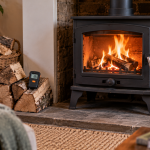
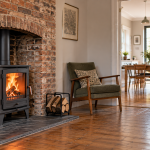
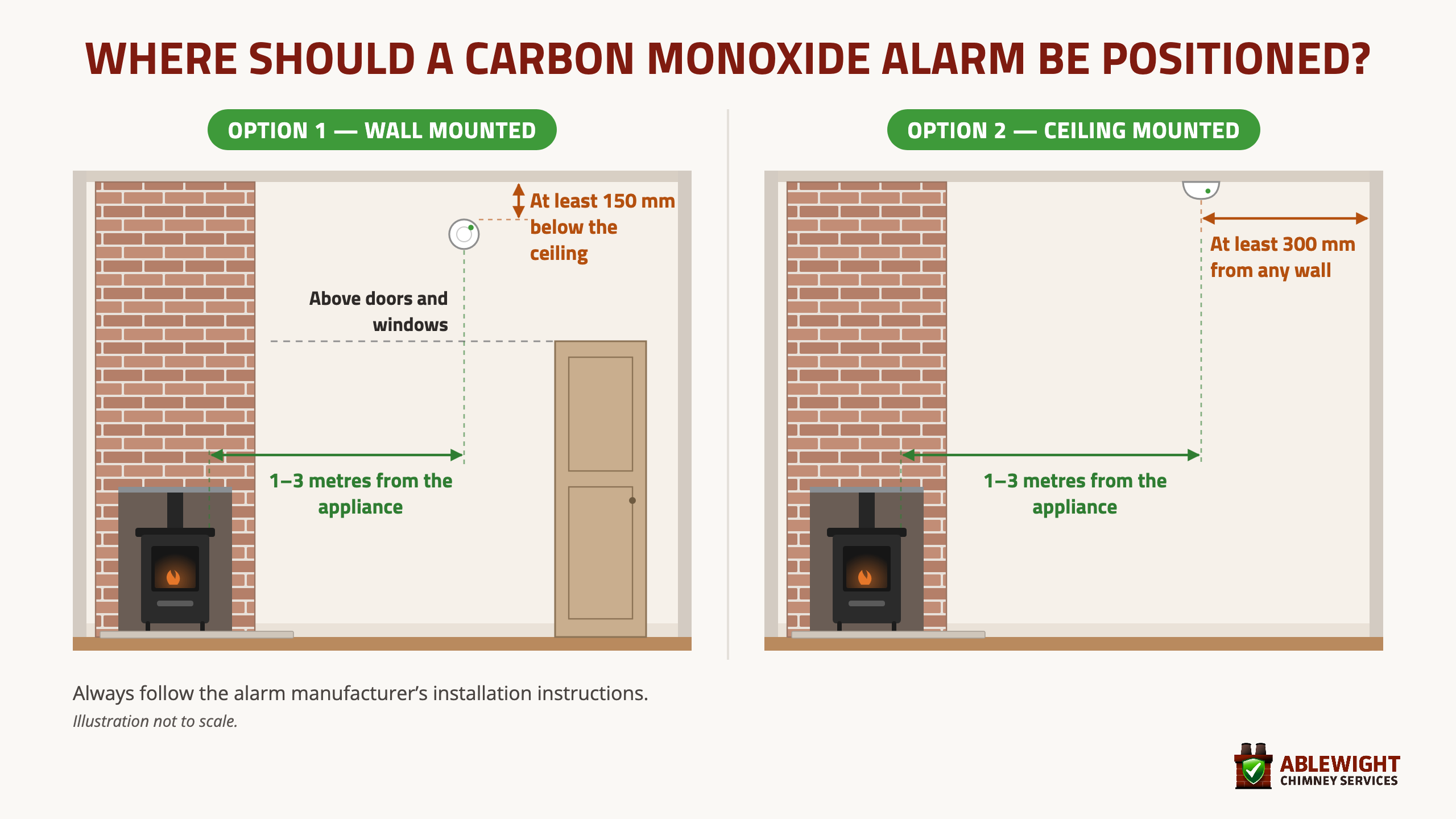
For new or replacement fixed combustion appliances in England, Approved Document J says the carbon monoxide alarm should be in the same room as the appliance and positioned between 1 and 3 metres horizontally from it.
If the alarm is ceiling-mounted, it should be at least 300mm from any wall. If it is wall-mounted, it should be positioned as high as possible, above doors and windows but at least 150mm below the ceiling.
For rented homes, separate government guidance gives more general advice that carbon monoxide alarms should be positioned at head height, either on a wall or shelf, approximately 1–3 metres from the potential source of carbon monoxide.
Always follow the instructions supplied with your particular alarm, as the correct positioning can depend on the alarm and the circumstances in which it is being installed.
What Type of Carbon Monoxide Alarm Do I Need?
Choose an alarm intended for domestic carbon monoxide detection and check that it complies with the appropriate current standard stated in the relevant guidance and manufacturer information. Government guidance for landlords refers to alarms compliant with BS EN 50291.
Features vary between models. Some use sealed long-life batteries, some have displays showing recorded or current CO information, and some include end-of-life warnings. The most important point is to choose a suitable compliant alarm and install, test and replace it according to the manufacturer’s instructions.
How Often Should You Test and Replace a Carbon Monoxide Alarm?
Follow the manufacturer’s instructions for testing your alarm. Use its test function at the recommended intervals and do not assume an alarm is working simply because it has not sounded.
Carbon monoxide alarms also have a finite working life. Check the replacement or expiry date on the unit and replace it when instructed by the manufacturer. If the alarm indicates a fault or end-of-life warning, follow the manufacturer’s instructions rather than relying on the unit for continued protection.
What Should You Do If Your Carbon Monoxide Alarm Sounds?
Treat a carbon monoxide alarm seriously. Stop using fuel-burning appliances if it is safe to do so, ventilate the property if this can be done quickly, and get everyone into fresh air. Follow the emergency instructions supplied with the alarm and seek urgent medical help if anyone has symptoms of carbon monoxide poisoning.
Do not continue using the suspected appliance until the cause has been investigated and it has been confirmed safe to use by an appropriately qualified professional.
Can a Stove, Open Fire or Chimney Cause Carbon Monoxide?
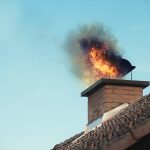
Yes. Fuel-burning appliances can produce carbon monoxide, and problems with combustion, ventilation or the route through which combustion gases escape can increase the risk. A blocked or restricted chimney is one possible cause.
Our guide to carbon monoxide and stoves, open fires and chimneys explains the causes, warning signs and ways to reduce the risk in more detail.
Keep Your Chimney Clear and Properly Maintained
Regular sweeping removes soot and other sweepable deposits, helping to keep the flue clear so combustion gases can travel through the chimney as intended.
Frequently Asked Questions
What Is a Carbon Monoxide (CO) Alarm?
A CO alarm is another name for a carbon monoxide alarm. It monitors the air for carbon monoxide and sounds a warning when its detection thresholds are reached.
Is a carbon monoxide alarm the same as a smoke alarm?
No. Smoke alarms and carbon monoxide alarms detect different hazards. A smoke alarm is designed to detect signs of fire, while a CO alarm detects carbon monoxide gas.
Can I put a carbon monoxide alarm next to my wood burner?
Do not position it immediately beside the appliance unless the manufacturer’s instructions specifically require that. Follow the instructions for your alarm and the relevant installation guidance; government guidance commonly refers to positioning around 1–3 metres from the potential CO source.
Does a carbon monoxide alarm mean I don’t need my chimney swept?
No. A carbon monoxide alarm is a warning device, not a substitute for chimney sweeping, appropriate appliance maintenance or adequate ventilation. Keeping the flue clear helps combustion gases escape through the chimney as intended.