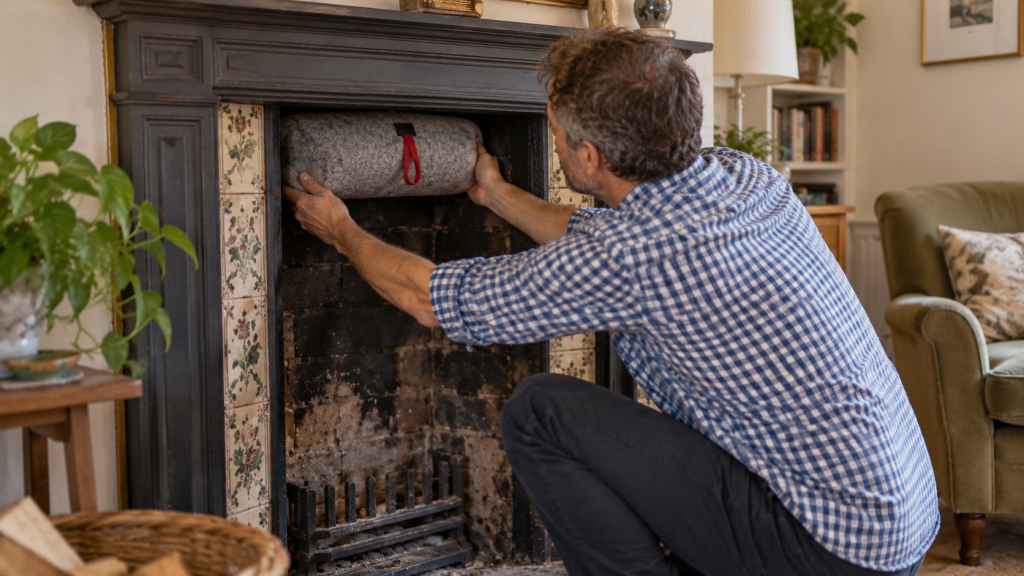
For most unused open fireplaces, a purpose-made removable draught excluder such as a chimney balloon or Chimney Sheep is the simplest way to temporarily block the chimney and reduce draughts.
Both sit inside the chimney above the fireplace and can be removed again if you want to use the fire. This guide explains how temporary chimney blocking works, the differences between the two options and what to consider before fitting one.
In This Guide
Why Temporarily Block a Chimney?
An open chimney is designed to allow air to move through it. That’s important when you’re using a fire, but an unused open fireplace can also create a noticeable draught.
A temporary draught excluder can be useful if:
- you don’t currently use the fireplace;
- you only use it occasionally;
- you want to reduce cold draughts during winter;
- you don’t want to make permanent alterations to the fireplace or chimney; or
- you may want to use the fireplace again in future.
The important distinction is that temporary blocking should remain removable. If you want to permanently close the fireplace instead, that’s a different job and needs to be approached differently. See our guide to permanently blocking a chimney or fireplace.
What Can You Use to Temporarily Block a Chimney?
There are various chimney draught excluders available, but two of the best-known options are chimney balloons and Chimney Sheep. Both are fitted inside the chimney above the fireplace rather than permanently altering the chimney itself.
Chimney Balloons

A chimney balloon is an inflatable draught excluder that sits inside the chimney. It is partially inflated, positioned above the fireplace opening and then inflated until it fits securely against the sides of the flue.
Because it’s inflatable, it can accommodate a range of chimney sizes and shapes. One practical consideration is that chimney balloons can gradually lose air over time, so they need checking periodically.
Most importantly, a chimney balloon must be removed before the fireplace is used.
Chimney Sheep

A Chimney Sheep works on the same basic principle but uses a thick piece of felted wool rather than an inflatable chamber. It is pushed into position inside the chimney and has a handle that remains accessible so it can be removed.
The wool reduces the draught while still allowing some airflow through the material. Again, it must be removed before lighting a fire.
Chimney Balloon vs Chimney Sheep: What’s the Difference?
| Feature | Chimney Balloon | Chimney Sheep |
|---|---|---|
| Material | Inflatable | Felted wool |
| Fit | Expands to fit a range of shapes | Choose the appropriate size for the opening |
| Airflow | Reduces airflow substantially | Wool allows some airflow |
| Checking | Check periodically for loss of air | No inflation to maintain |
| Before lighting a fire | Remove it | Remove it |
Whichever you choose, the key considerations are getting the correct size, positioning it securely, maintaining some ventilation, checking it periodically and making sure everyone in the property knows it must be removed before the fire is used.
Don’t Completely Seal an Unused Chimney Without Considering Ventilation
Reducing a draught is not the same as making the chimney completely airtight. Chimneys can contain moisture, and airflow helps the chimney dry. Completely sealing an unused chimney incorrectly can contribute to damp and staining problems.
That’s why we wouldn’t recommend simply stuffing the chimney with newspaper, fabric, insulation or another improvised material.
If you’re permanently closing a chimney, the ventilation arrangements at the top and bottom need to be considered together. Read How to Permanently Block a Chimney or Fireplace for the two correct approaches.
Should You Have the Chimney Swept First?
If the chimney has been used and is now going to remain unused, having it swept before fitting a long-term draught excluder is sensible.
Sweeping removes soot and debris left from previous fires and gives us an opportunity to identify anything obvious during the sweep that you should know about. If you’re still using the fireplace periodically, it should continue to be swept at the appropriate frequency for the appliance, fuel and level of use.
Need Your Chimney Swept?
If you’re planning to stop using a fireplace or want your chimney swept before fitting a draught excluder, we can help.
Request Appointment AvailabilityWhat If You Want to Use the Fireplace Again?
Remove the chimney balloon, Chimney Sheep or other draught excluder before lighting the fire.
Don’t rely on remembering that something is fitted out of sight. If several people use the property, make sure everyone knows that the chimney has been temporarily blocked.
If the fireplace hasn’t been used for some time, it’s also worth considering whether the chimney needs sweeping before you start using it again. Our First Fire of the Season guide explains what to check before lighting it.
What About Bird Guards?
A draught excluder fitted at the bottom of the chimney doesn’t prevent birds from entering the chimney pot at the top. If bird entry or nesting is the problem you’re trying to solve, that’s a separate issue from blocking a draught.
A suitable terminal or bird guard can help prevent birds entering certain chimneys while maintaining the required opening at the top. Read our guide to chimney cowls and bird guards.
Temporary or Permanent?
If the fireplace may be used again and you’re primarily trying to stop a cold draught, a removable chimney draught excluder may be enough.
If you’re removing the fireplace completely and intend never to use the chimney again, you may instead be considering permanent closure. Permanent closure involves more than putting something inside the chimney opening. It needs to be dealt with correctly at both the bottom and the top of the chimney.
See How to Permanently Block a Chimney or Fireplace for the full process.
What About Summer?
You generally don’t need to block an open fireplace simply because you’ve stopped using it for summer. Leaving the fireplace open allows airflow through the chimney, and cold draughts are usually much less of a concern during warmer weather. If you use a draught excluder during winter, you may choose to remove it during the warmer months.
Need Advice About Your Chimney?
If you’re unsure whether your chimney needs sweeping before you stop using it, we can inspect what is accessible during a normal sweep and explain anything relevant that we find.
Request Appointment AvailabilityFrequently Asked Questions
How do you temporarily block a chimney?
Use a purpose-made removable draught excluder such as a chimney balloon or Chimney Sheep. It fits inside the chimney above the fireplace and can be removed before the fire is used again. Avoid stuffing the chimney with improvised materials.
Can I block a chimney from inside?
For temporary draught reduction, removable products such as chimney balloons and Chimney Sheep are fitted from inside the property above the fireplace opening. Permanently blocking a chimney is different and shouldn’t simply involve sealing the opening from inside.
Can I stuff newspaper or insulation up my chimney?
We wouldn’t recommend it. A purpose-made removable chimney draught excluder is a better option and makes it much clearer that something has been fitted and needs removing before the fire is used.
Does a Chimney Sheep completely block the chimney?
No. The wool reduces the draught but isn’t a completely airtight seal.
Can I leave a chimney balloon in all year?
If the fireplace isn’t being used, a chimney balloon can remain in position, but it should be checked periodically and must be removed before lighting a fire. Follow the manufacturer’s instructions for the particular product you’re using.
Do I need to remove a Chimney Sheep before lighting a fire?
Yes. Remove it before using the fireplace.
Should I block my chimney during summer?
You generally don’t need to block an open fireplace simply because you’ve stopped using it for summer. Leaving it open allows airflow through the chimney, and cold draughts are usually less of a concern in warmer weather.