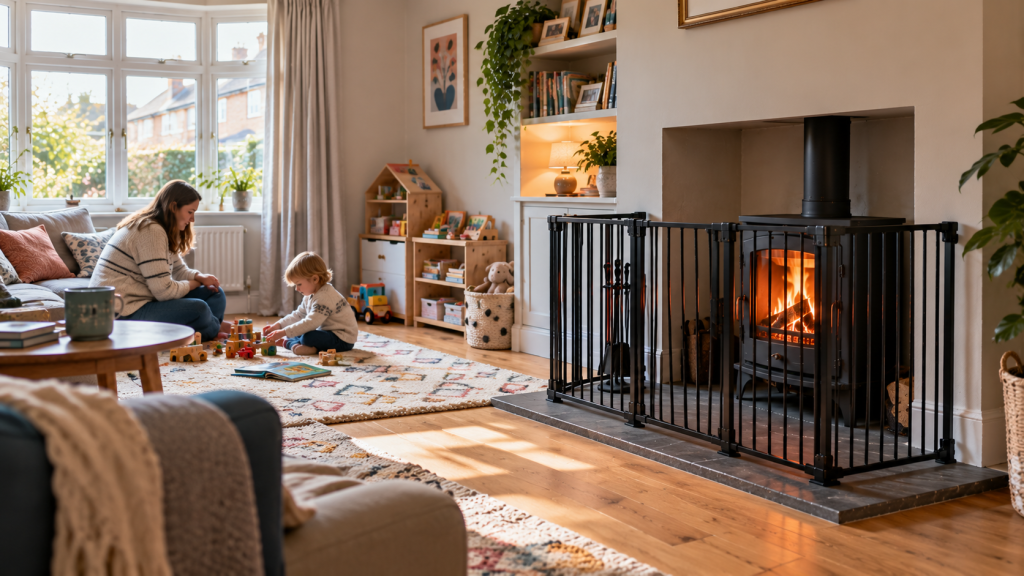
Open fires and stoves can be used in homes with young children, but they need careful supervision and suitable barriers. The main risks are burns from hot surfaces, sparks and embers from open fires, and children reaching fireplace tools, fuel, matches or firelighters.
The safest approach is to prevent young children from reaching the fire or stove in the first place, while also teaching them that the area is hot and not for play.
In This Guide
What Are the Main Fireplace and Stove Risks for Children?
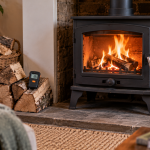
Open fires and stoves present slightly different hazards, but both can cause serious burns. With an open fire, children also need protection from sparks and hot embers. With a stove, the fire may be enclosed, but the stove body, door and glass can still become very hot.
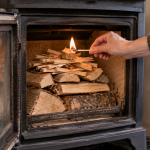
Other risks around the fireplace include matches, lighters, firelighters, pokers and other tools, as well as logs or other fuel stored too close to the appliance. Toys and furniture around the hearth can also encourage children to play or climb in an area that needs to remain clear.
How Do You Childproof a Fireplace or Stove?
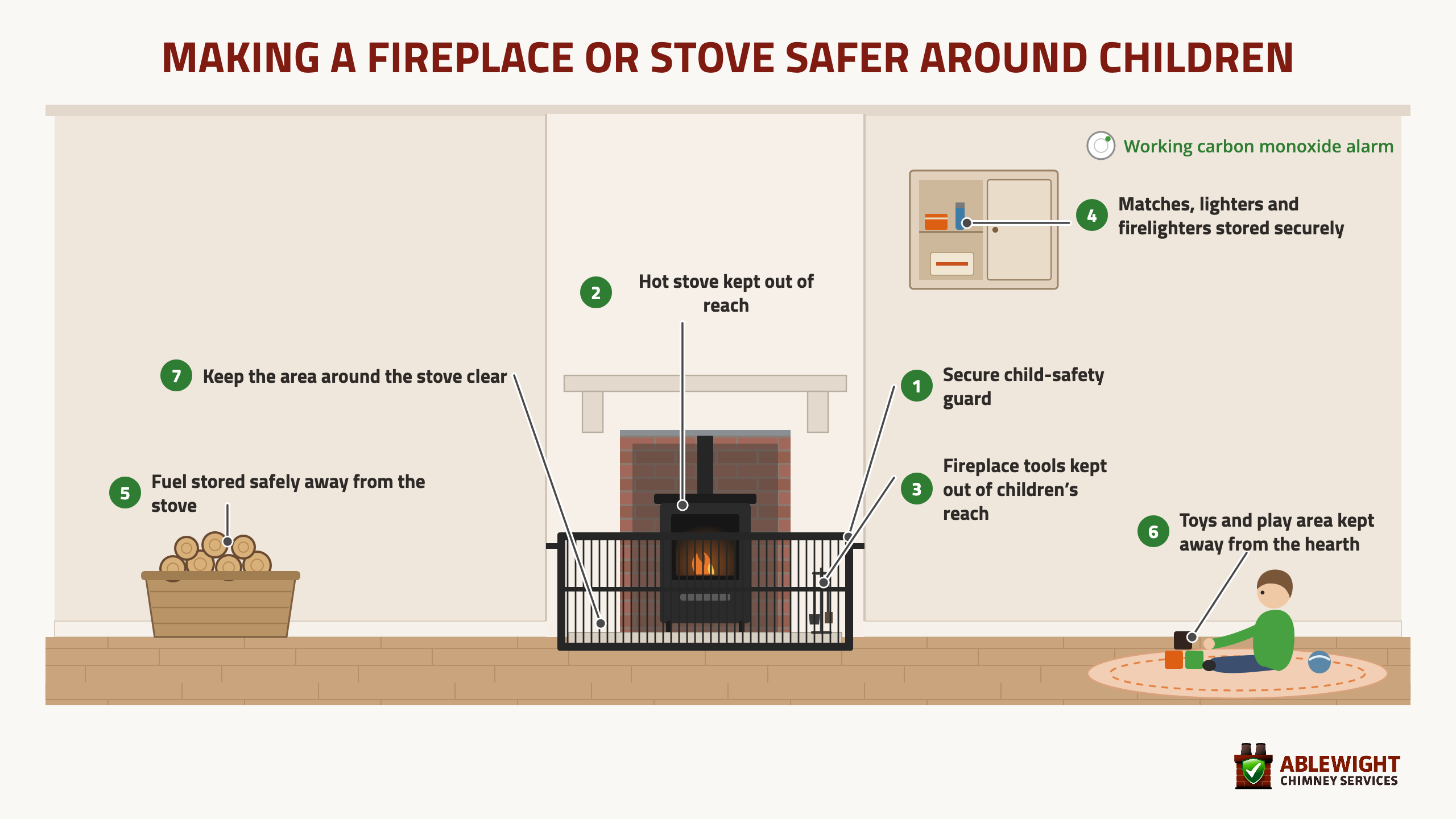
A suitable child-safety guard is one of the most important physical barriers you can put between a young child and an open fire or hot stove. UK government fire-safety guidance advises fitting a childproof guard in front of open fires or heaters, with guards that can be fixed to the wall described as the best option.
For a stove, use a guard that is suitable for the particular appliance and positioned in accordance with the stove and guard manufacturers’ instructions. A stove guard should prevent a child reaching the hot appliance without interfering with the clearances, ventilation or safe operation required for the stove.
Do not rely on a decorative firescreen as a child-safety barrier unless it is specifically designed and installed for that purpose.
How Do You Keep Babies and Toddlers Away From a Fireplace or Stove?
A guard is only one part of making the fireplace area safer. Young children should also be supervised whenever a fire or stove is in use, and the area around the hearth should not become part of their normal play space.
It is also sensible to:
- Keep toys and play areas away from the hearth, fire and stove.
- Keep matches, lighters and firelighters out of children’s sight and reach.
- Keep pokers, brushes and other fireplace tools where children cannot reach them.
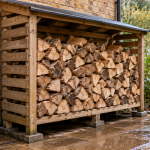
- Store logs, kindling and other combustible materials safely away from the appliance.
- Keep clothing, soft furnishings and other combustible items away from the fire or stove.
- Make sure hot embers are under control before leaving the room or going to bed.
With an open fire, a suitable guard also helps protect against sparks and hot embers leaving the fireplace.
How Should You Teach Children About Fireplace Safety?
Physical barriers and adult supervision remain important for young children, even when they have been taught not to touch the fireplace or stove.
Government guidance recommends giving younger children clear instructions about what they should and should not do, while older children can be given more explanation about why the rules matter. Simple, consistent rules such as not touching the fire, stove, guard or fireplace tools and not playing around the hearth are easier for children to understand and remember.
What Chimney and Carbon Monoxide Safety Measures Do Families Need?
Making the hearth child-safe does not replace the normal safety measures needed when using a fuel-burning appliance. Keep the chimney and flue appropriately maintained and swept, use the appliance correctly, and have working smoke and carbon monoxide alarms where required or recommended.
For detailed advice about carbon monoxide alarms, including where they should be positioned, read our carbon monoxide alarm guide. You can also read our guide to carbon monoxide and stoves, open fires and chimneys.
Using Your Fireplace or Stove? Keep the Chimney Swept
A suitable guard helps protect children from the fire or hot stove, but safe use also depends on looking after the chimney and appliance. Regular sweeping removes soot and other sweepable deposits and helps keep the flue clear.
Request Appointment AvailabilityFrequently Asked Questions
Can You Use a Stove With a Toddler in the House?
Yes, but a toddler should not be able to reach the stove. Use an appropriate physical barrier, supervise young children around the appliance and keep the surrounding area clear of toys, fuel and fireplace tools.
Do You Need a Childproof Fireguard Around a Stove?
If young children could reach a hot stove, a suitable childproof stove guard provides an important physical barrier. Choose one that is appropriate for the appliance and follow the manufacturers’ instructions so it does not interfere with safe stove operation.
Do You Need a Childproof Fireguard With an Open Fire?
A childproof fireguard helps prevent young children reaching an open fire and also provides protection from sparks and hot embers. UK government fire-safety guidance recommends fitting a childproof guard in front of open fires or heaters.
Is a Stove Safer Than an Open Fire for Children?
A stove contains the fire behind a door, removing some of the direct risks associated with an open flame and flying embers. However, the stove itself can become very hot and cause burns, so it should not be treated as child-safe without appropriate precautions.