If you are buying a house with a chimney, open fireplace or stove, it is worth finding out what you are inheriting before you rely on it. A normal property survey can identify visible concerns with chimney stacks, chimney breasts and fireplaces, but it does not necessarily establish the condition of the inside of the flue.
You do not need to turn every property purchase into a specialist chimney investigation. The sensible approach is to check the obvious things, ask for any relevant paperwork and maintenance history, and arrange further investigation where there is a particular concern or where you intend to use a fireplace or stove whose history is unknown.
In This Guide
What Should You Check When Buying a House With a Chimney, Fireplace or Stove?
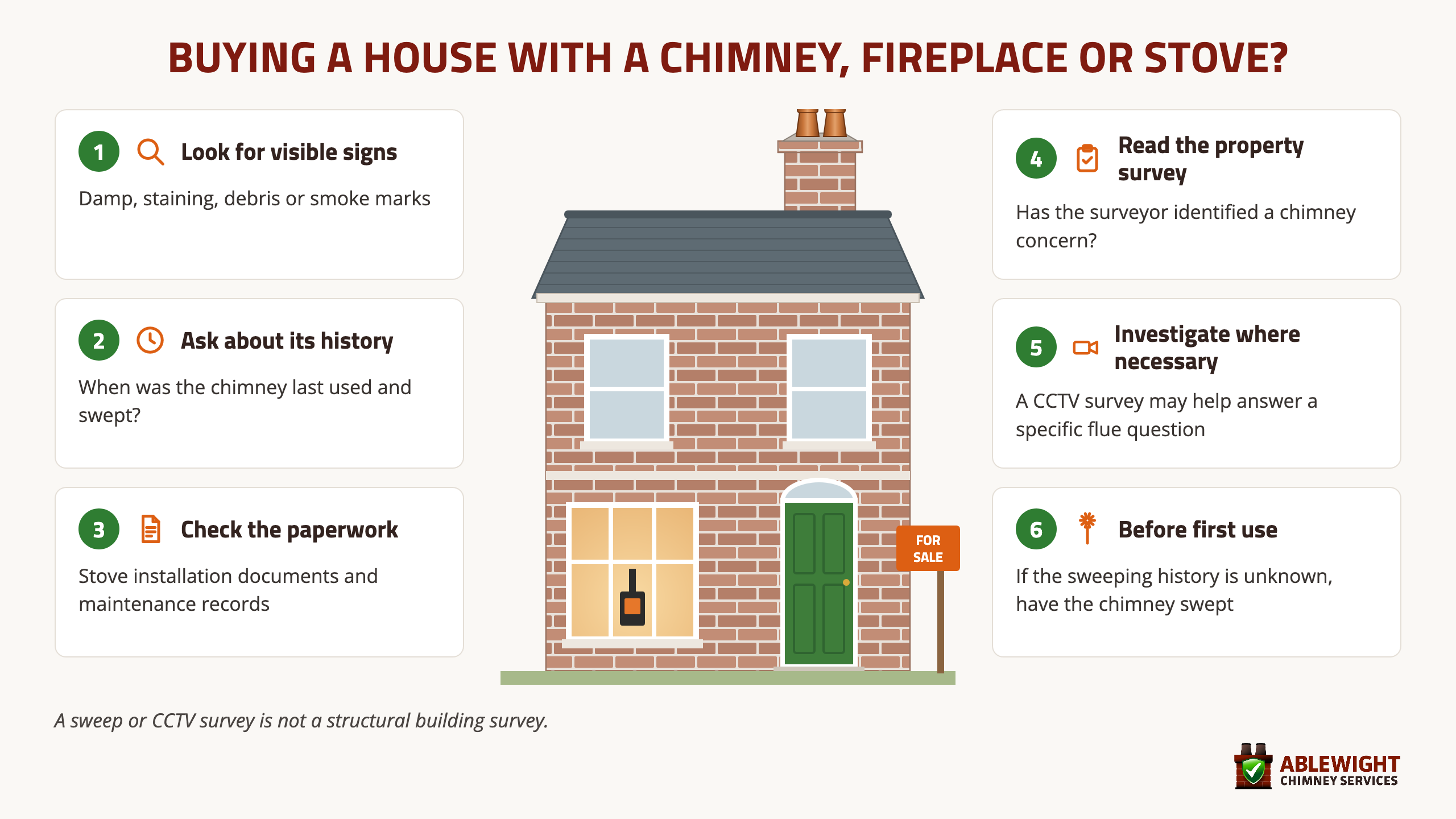
You can learn quite a lot without trying to assess the chimney yourself. During a viewing, look for visible signs that deserve further investigation rather than trying to diagnose the cause.
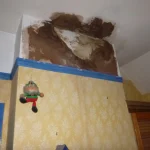
- Chimney breast staining or damp: brown staining, damp patches, peeling decoration or a persistent chimney smell may point to a moisture or historic deposit problem.
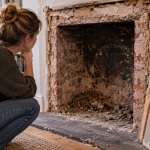
- Debris in the fireplace: soot, mortar or masonry falling into the fireplace can indicate that something higher in the chimney needs attention.
- Smoke staining: staining around an open fireplace or appliance may be worth asking about, particularly if the seller says the fire is regularly used.
- A blocked or altered fireplace: if a fireplace has been closed off or partly opened, establish what has been changed before assuming the chimney can simply be put back into use.
- A fitted stove: ask when it was installed, who installed it and whether the installation and maintenance paperwork is available.
Visible cracking, leaning, deteriorated masonry, problems with a chimney stack or concerns about a removed chimney breast are building matters rather than something a chimney sweep should diagnose. Raise those with your property surveyor or an appropriate building professional.
What Chimney and Stove Paperwork Should You Ask the Seller For?
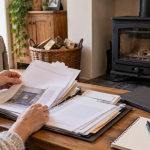
If there is a stove, ask for any installation documentation, appliance instructions, warranty information and servicing or maintenance records that are available. For the chimney itself, previous sweeping certificates can be useful because they give you some maintenance history, although a sweeping certificate is not the same thing as a stove installation certificate.
If the stove installation certificate cannot be found, do not assume that the installation was never properly notified. Paperwork can be lost and HETAS is not the only route through which installation work may have been notified. Our guide to missing stove installation certificates explains what to check and who to contact.
If documentation relating to alterations, Building Regulations or the property transaction is missing, your conveyancer and the relevant Building Control body are better placed to advise on what is required. A chimney sweep cannot retrospectively certify somebody else’s installation work.
Does a House Survey Check the Chimney?
A property survey and a chimney investigation are not the same thing. The scope depends on the level of survey and the property, but an RICS Home Survey can include visible chimney stacks, chimney breasts, fireplaces and related signs of defects.
What a standard home survey does not normally establish is the condition of the concealed internal parts of the chimney. For example, a surveyor cannot usually see the condition of internal midfeathers separating neighbouring flues or a chimney liner simply by examining the fireplace and chimney stack.
If there is a reason to investigate these areas more closely, a CCTV chimney survey can provide a view inside the accessible parts of the flue. It has limitations, but it can reveal issues that cannot be seen during a normal visual property survey.
If your surveyor identifies a chimney concern, read exactly what the report says and ask what further investigation is recommended. Depending on the issue, that may involve a chimney sweep, CCTV chimney survey, installer, structural professional or another specialist.
Do You Need a CCTV Chimney Survey Before Buying a House?
Not automatically. A CCTV survey is most useful when there is a particular question to answer about the accessible inside of the flue.
For example, it may be worth considering if a surveyor has raised a chimney concern, there is evidence of a blockage or internal defect, you want more information about an existing liner, or there is a reason to investigate the condition of internal flue walls or midfeathers.
The camera records the parts of the flue it can reach and see. It cannot see through masonry, beyond an obstruction or establish the condition of hidden building structure. It is therefore an investigation tool rather than a guarantee that an entire chimney system is sound.
Our CCTV chimney survey guide explains when we use a camera, why the chimney is normally swept first and what the footage can establish.
What Should You Do Before Using a Fireplace or Stove After Moving In?
If you have just bought the property and do not know when the chimney was last swept, arrange a professional sweep before using the fire. This clears sweepable soot and debris and gives you a known starting point for future maintenance.
During a sweep we can identify and report things that are visible or become apparent as part of the sweeping process. That is useful, but a routine sweep is not a structural survey, a stove installation inspection or a full assessment of concealed parts of the chimney.
If the fireplace has been blocked for years and you want to bring it back into use, more may be involved than simply sweeping it. See our guide to opening up a blocked fireplace before making assumptions about what is behind the opening.
If the property is in a smoke control area, also check the rules that apply to the appliance and fuel you intend to use. The position can vary by location and by appliance, so check the current requirements rather than relying on what a previous owner burned.
Moved Into a Property With a Fireplace or Stove?
If you do not know when the chimney was last swept, we can sweep it and let you know about anything relevant that becomes apparent during the appointment. If there is a specific reason to look inside the flue, we can also advise whether a CCTV survey would be useful.
Request Appointment AvailabilityFrequently Asked Questions
Should I Have the Chimney Swept Before Buying a House?
You may not have access to arrange a sweep before completion, and a sweep is not a substitute for your property survey. If a specific chimney concern is identified during the buying process, ask your surveyor whether further investigation is recommended. Once you move in, if you do not know when the chimney was last swept, have it swept before using the fireplace or stove.
Can a Chimney Sweep Tell Me Whether the Chimney Is Structurally Sound?
No. We can report relevant things that are visible or become apparent during our work, but we do not carry out structural building surveys. Structural concerns should be assessed by an appropriately qualified building professional.
Should a Seller Provide a Chimney Sweeping Certificate?
It is useful to ask for any available maintenance history, including previous sweeping certificates, but the absence of a recent sweeping certificate does not tell you the condition of the whole chimney. If you inherit a chimney with an unknown maintenance history, have it swept before use.
What if the House Has a Stove but No Installation Certificate?
Ask the seller whether the original paperwork can be located and who installed the stove. A missing certificate does not automatically mean the installation was never notified. The relevant competent person scheme, Building Control and your conveyancer can help establish what records exist and what is needed for the property transaction.