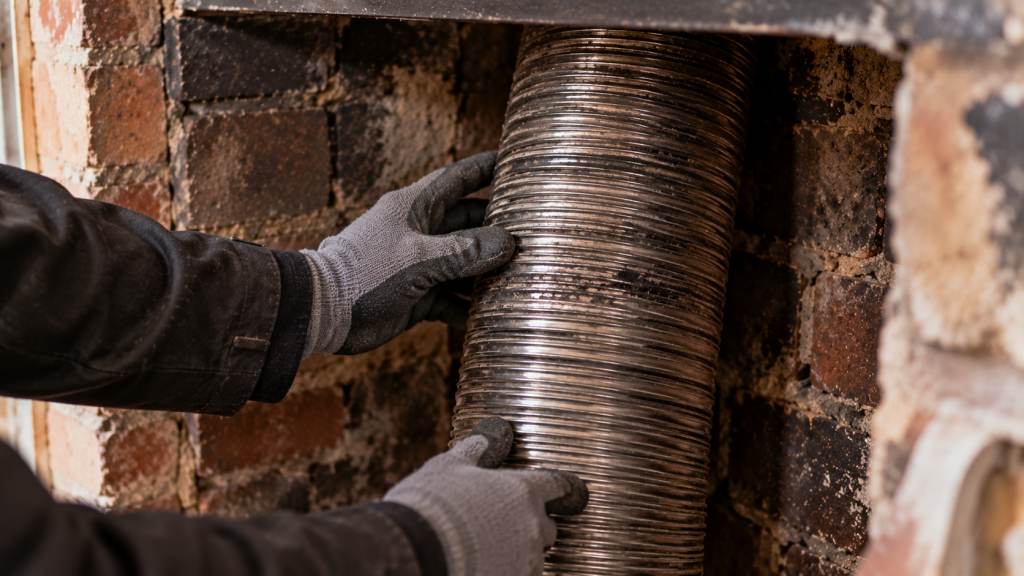
A flexible stainless-steel chimney liner can last 20–30 years when it has been installed correctly, the appliance is used properly and the chimney is swept regularly. But there is no fixed lifespan. We have also encountered liners that have needed replacing after only a few years because the conditions inside the flue caused much faster deterioration.
How you use and maintain the stove or fireplace can therefore make a substantial difference to how long the liner remains serviceable.
In This Guide
How long can a chimney liner last?
For a correctly installed flexible stainless-steel liner serving a solid-fuel appliance, 20–30 years can be a realistic lifespan when the system is treated well. We would not, however, promise that every liner will last this long.
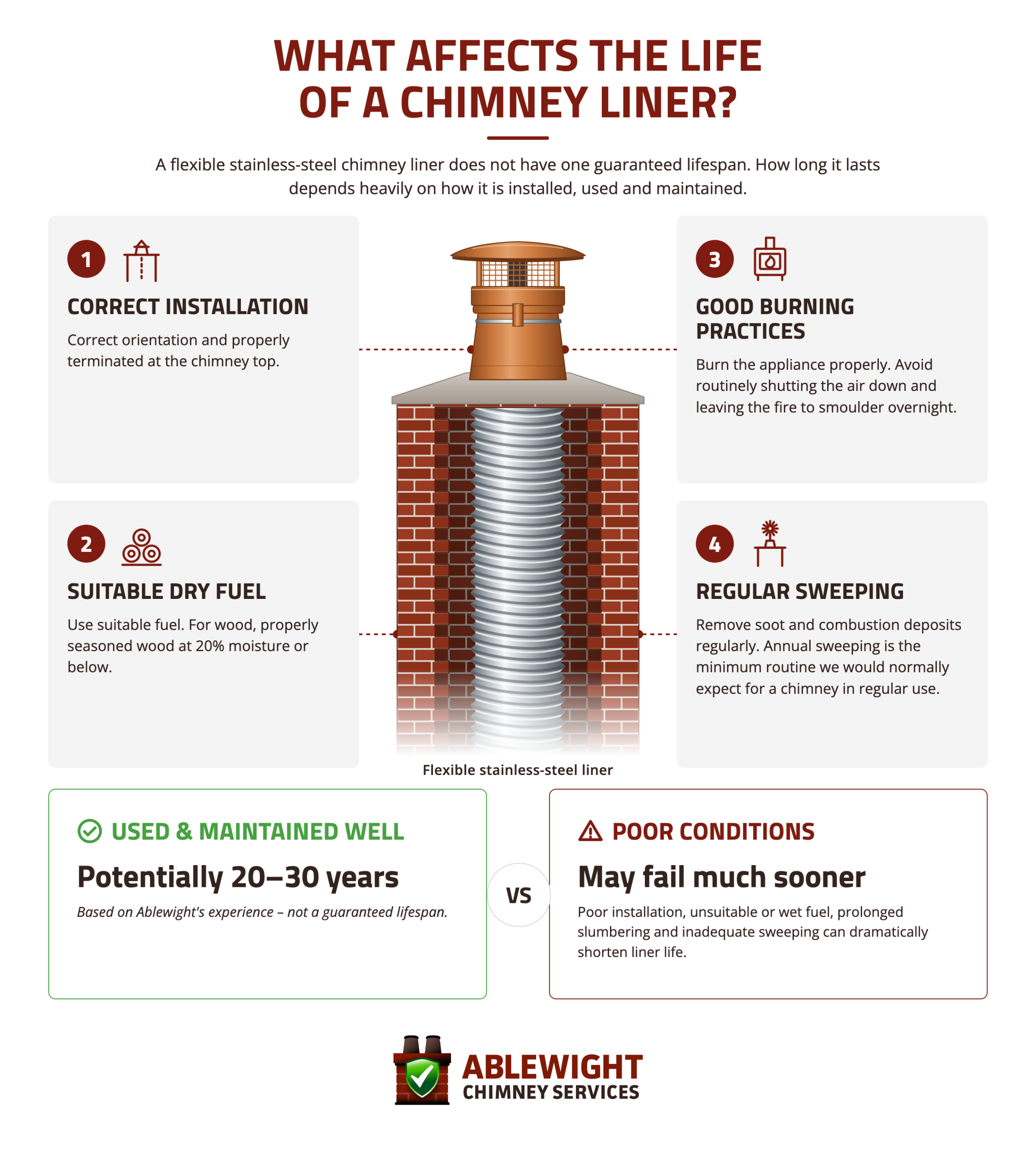
The age of a liner is only one part of the picture. Its lifespan is affected by the quality and suitability of the installation, the fuel being burned, the way the fire is operated and how regularly deposits are removed from the flue.
Manufacturer guarantees also vary. For example, Schiedel currently offers a guarantee of at least 20 years on certain flexible liner systems, subject to conditions including correct installation, suitable fuel and proper maintenance. A guarantee period should not be confused with a prediction of exactly how long every liner will last.
1. How installation affects chimney liner life
A liner can be compromised before the stove has had years of use if it was not installed correctly in the first place.
Some flexible liners have a specified installation direction and must be fitted the right way up. The cut liner at the top also needs to be correctly finished and terminated using components appropriate to that lining system.
One problem we encounter is an inadequately protected cut spiral at the chimney top. A sweeping brush can catch the exposed edge and, over repeated sweeps, progressively unravel the liner. In this situation, normal sweeping has exposed an underlying installation problem rather than caused a correctly installed liner to fail.
For more examples of faults we encounter, see Chimney Liner Problems: Signs, Causes and What to Do.
2. Why the fuel you burn matters
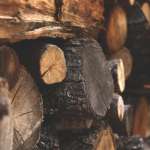
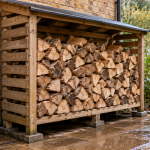
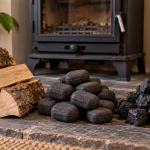
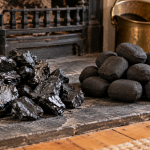
The products travelling through a chimney depend partly on what is being burned. For a wood-burning stove, dry, suitable firewood is important. Wet wood burns less efficiently and can contribute to heavier deposits and condensation within the flue.
Inappropriate fuels can create additional problems. Manufacturer instructions for both the appliance and liner should be followed, rather than assuming that anything combustible is suitable for a stove.
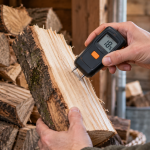
For wood sold in England in volumes under 2m³, the Ready to Burn scheme requires a moisture content of 20% or less. As a practical rule for a wood-burning stove, aim to burn properly seasoned wood at 20% moisture or below and follow the appliance manufacturer’s fuel instructions.
3. Why slumbering a fire can shorten liner life
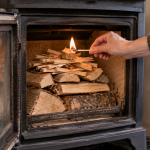
Some stove owners shut the air controls down at night in an attempt to keep the fire burning until morning. This prolonged low-temperature or ‘slumbering’ burn can be particularly hard on a flue system.
Cooler, incomplete combustion encourages deposits and can allow combustion products to condense within the flue. Those conditions can contribute to corrosion and premature liner failure.
This isn’t just an Ablewight observation. Current Schiedel installation guidance states that prolonged slumbering is a contributing factor to liner failure and explains the importance of sufficiently high flue-gas temperatures in reducing condensate and acid-corrosion problems.
4. How regular sweeping helps protect a chimney liner
Sweeping is not only about keeping a passage clear for smoke. It removes soot and other combustion deposits that have accumulated inside the flue.
Some deposits can retain moisture and contribute to corrosive conditions. Removing them regularly therefore helps reduce the amount of potentially corrosive material left in prolonged contact with the stainless steel.
For the households we look after, annual sweeping is the minimum routine we would expect for a chimney in regular use, with frequency adjusted where the appliance, fuel or level of use means more frequent sweeping is appropriate. Always follow the appliance and liner manufacturer’s instructions, as some manufacturers recommend more frequent sweeping for solid-fuel systems.
Keeping your sweeping certificates also provides a dated maintenance record, which can be important where a liner warranty has maintenance conditions.
A real example: a liner that needed replacing after around five years
At the opposite end of the 20–30-year example, we have encountered a flexible liner that needed replacing after only around five years.
In that case, several factors were working against it. The household had been burning high-moisture fuel and inappropriate material, including old telephone poles containing creosote. The chimney had not been swept annually and the stove’s air supply was being shut down at night to keep the fire smouldering while the household slept.
That combination created heavy tar and creosote deposits and conditions that contributed to rapid deterioration of the liner.
The useful comparison: a well-installed liner that is used and maintained correctly may remain serviceable for decades, while poor fuel, prolonged slumbering and inadequate maintenance can dramatically shorten its life.
What are the signs that a stainless-steel liner may be deteriorating?
One of the clearest things we sometimes encounter during sweeping is small flakes or fragments of stainless steel coming down the chimney. These can sometimes have a rusty or reddish-brown appearance.
That does not tell us everything about the condition of the liner, and a routine chimney sweep is not a full liner-condition survey. But liner fragments are not something we would simply dismiss as ordinary chimney debris.
Other symptoms such as smoke or poor draught do not automatically prove that the liner is failing because blockages, appliance problems, ventilation and other chimney faults can cause similar symptoms.
Does an old chimney liner automatically need replacing?
No. We would not recommend replacing a flexible liner simply because it has reached a particular birthday.
A liner that has been correctly installed, properly used and regularly maintained may still be serviceable after many years. Equally, a much newer liner can have problems if its installation or operating conditions have been poor.
If there is a specific reason to investigate the liner further, the appropriate next step depends on what has been found. In some cases a CCTV chimney survey may provide useful additional information, but CCTV is not automatically required simply because a liner is old.
How can you give your chimney liner the best chance of a long life?
- Have the liner correctly specified and installed for the appliance and fuel.
- Follow the liner and appliance manufacturers’ instructions.
- Burn suitable fuel; for a wood-burning stove, use properly seasoned dry wood.
- Avoid routinely shutting a stove down to smoulder overnight.
- Have the chimney swept regularly and increase the frequency where your usage requires it.
- Keep your sweeping and maintenance records, particularly if your liner has a warranty.
- Act on signs of deterioration rather than waiting for a more serious problem to develop.
Need your chimney swept or concerned about your liner?
Tell us about your appliance and anything you’ve noticed. We can arrange chimney sweeping and advise whether there is a specific reason for further investigation.
Frequently asked questions
How many years does a stainless-steel chimney liner last?
There is no fixed lifespan. Based on our experience, a correctly installed flexible stainless-steel liner that is used and maintained properly can last 20–30 years. Poor installation, unsuitable fuel, prolonged slumbering and inadequate sweeping can shorten that considerably.
Does a 20-year-old chimney liner need replacing?
Not solely because it is 20 years old. Age is one factor, but the condition of the liner and how it has been installed, used and maintained matter more than reaching a particular number of years.
Can burning wet wood damage a chimney liner?
Wet wood contributes to cooler, less efficient combustion and can increase deposits and condensation within the flue. Over time, these conditions can contribute to corrosion and shorten the life of a stainless-steel liner.
Does slumbering a stove damage the liner?
It can contribute to premature liner failure. Prolonged low-temperature burning encourages incomplete combustion, deposits and condensation. Liner manufacturer guidance also identifies prolonged slumbering as a factor in liner failure.
Does a chimney liner need sweeping every year?
Regular sweeping is important for removing combustion deposits and maintaining the flue. For chimneys in regular use, annual sweeping is the minimum routine we would normally expect, but the appropriate frequency depends on the appliance, fuel and level of use. Manufacturer instructions should also be followed.