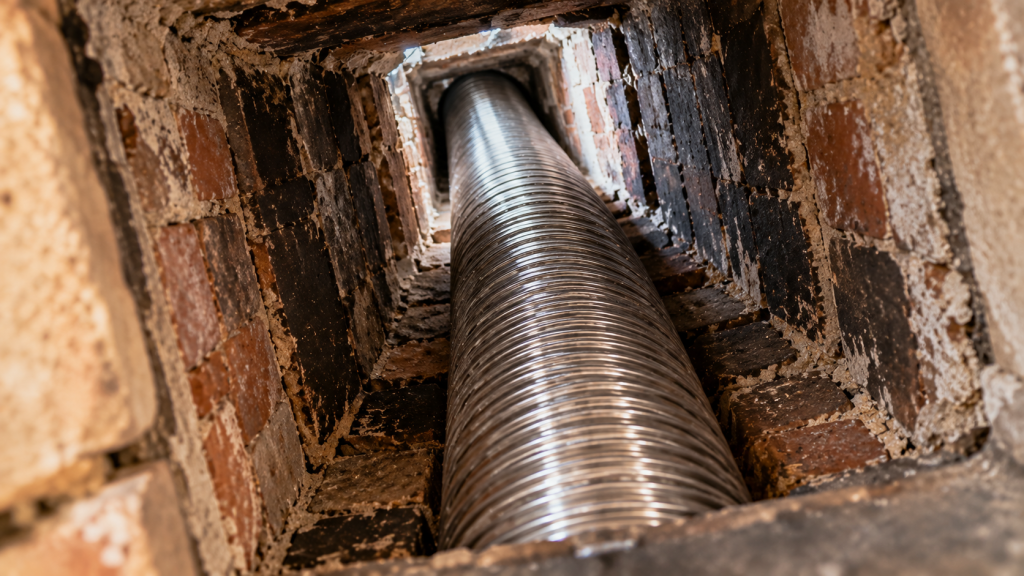
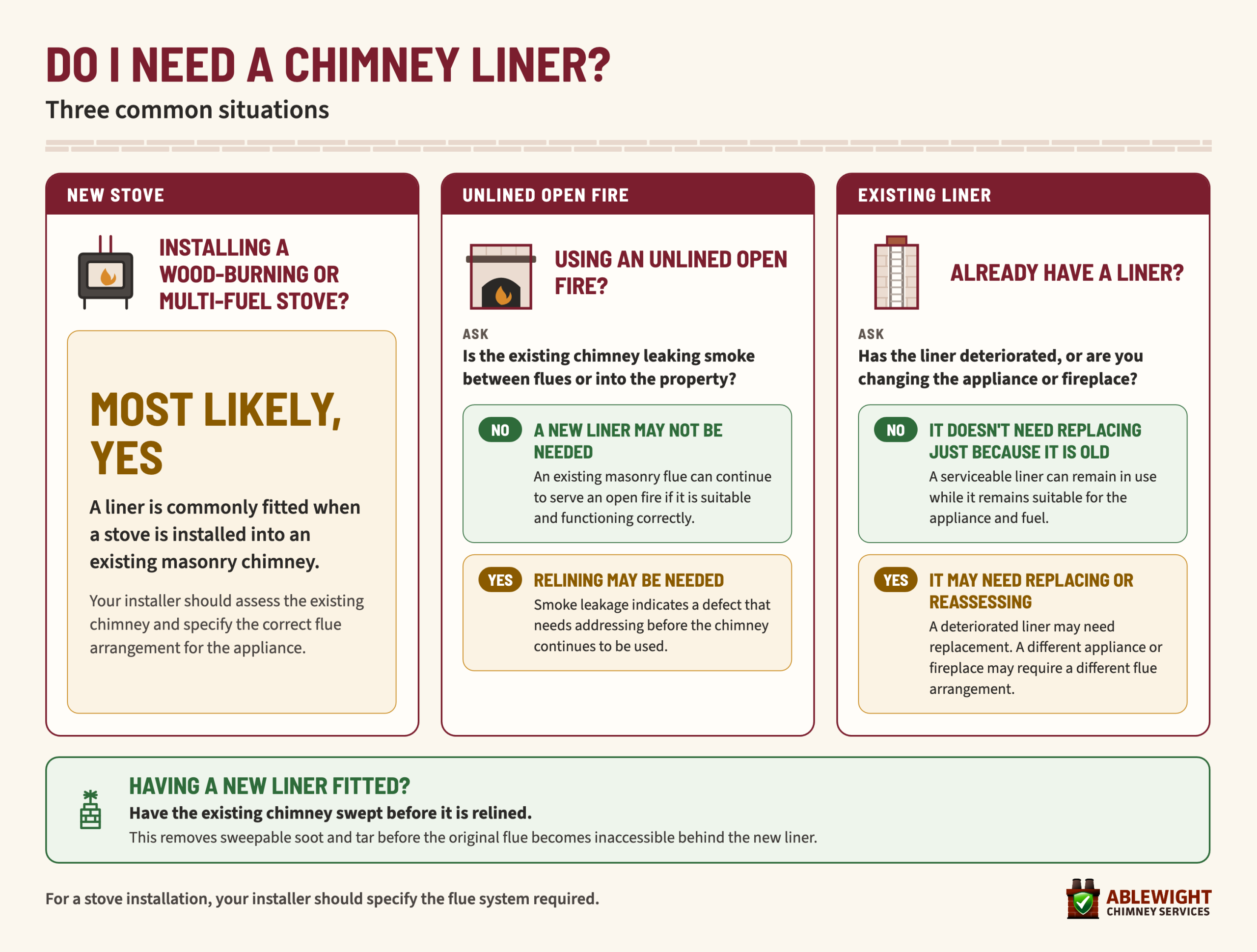
You do not need a chimney liner simply because your chimney is old. Whether a chimney needs relining depends on how it will be used, the appliance being connected, the existing flue and its condition. If you are installing a wood-burning or multi-fuel stove, a liner is commonly fitted, but it is not automatically required in every installation.
If you are planning a new stove, the installer should assess the chimney and specify the appropriate flue arrangement for the particular appliance.
In This Guide
When do you need a chimney liner?
A chimney may need to be lined or relined when the existing flue is not suitable for the appliance being connected, or where the condition or construction of the existing flue means a new lining system is required.
Common situations include installing a stove into a chimney previously used for an open fire, replacing an unsuitable or deteriorated existing liner, or carrying out work to a chimney where the proposed appliance requires a different flue arrangement.
That does not mean every chimney needs a new liner. The answer depends on the individual chimney and what you intend to connect to it.
Does an old chimney automatically need a liner?
No. The age of the property alone does not tell you whether the chimney needs lining.
Older chimneys were built in different ways, and they may also have been repaired, altered or relined during their lifetime. Two apparently similar period houses can therefore have very different flues.
If you want to understand what may already be inside an older chimney, see our guide to Victorian chimneys and their liners.
Do you need a chimney liner for a wood-burning stove?
A liner is commonly fitted when a wood-burning or multi-fuel stove is installed into an existing masonry chimney, but not every installation automatically requires one.
One reason is that a chimney originally designed for an open fire can be considerably larger than the flue required by a modern stove. A correctly sized flue helps the appliance establish and maintain suitable draught and keeps the combustion gases warmer as they travel up the chimney.
The stove manufacturer’s instructions, the existing chimney and the proposed installation all need to be considered. The installer should therefore assess the chimney and specify whether a liner is required and which system is appropriate.
For a fuller explanation of what a liner actually is and why flue sizing matters, see What Is a Chimney Liner?
What if your chimney already has a liner?
Having an existing liner does not necessarily mean it is suitable for a new appliance. Different liners are designed for different fuels and applications, and an older liner may also have deteriorated.
Equally, the presence of an older liner does not automatically mean it needs replacing. If there is a specific concern about the condition of an accessible flue, further investigation may be appropriate.
Our guide to chimney liner problems covers some of the issues that can affect existing liners. Where there is a particular reason to investigate internally, a separate CCTV chimney survey may sometimes be useful.
Who decides whether you need a chimney liner?
If you are having a stove installed, the installer should assess the chimney and specify the flue system required for that appliance and installation.
Ablewight does not install stoves or chimney liners. During chimney sweeping we can explain relevant findings and give general advice based on what we encounter, but a routine sweep is not a full structural or installation survey and we do not specify the liner for a proposed stove installation.
We can recommend suitable local installers where required.
Should the chimney be swept before a new liner is fitted?
Yes. The existing chimney should be swept before it is relined. This removes sweepable soot and tar before the original flue becomes inaccessible behind the new liner.
If you are at the planning stage, you do not need to wait until you have chosen the stove to arrange the sweep. Our guide Should You Have Your Chimney Swept Before Installing a Stove or Chimney Liner? explains what to arrange before installation.
Planning a stove or liner installation?
The existing chimney should be swept before it is relined. You can arrange the sweep before you have chosen the stove, and we can explain relevant findings from the sweep.
Frequently asked questions
Does every chimney need a liner?
No. Whether a chimney needs a new liner depends on its construction and condition, how it will be used and the appliance being connected. Age alone is not enough to determine this.
Do I need a chimney liner for an open fire?
Not simply because you have an open fire. Existing masonry chimneys can have different forms of lining or internal construction. If there is concern about the flue’s condition or suitability, it should be assessed for that particular fireplace and use.
Do I need a new liner if my chimney already has one?
Not automatically. The existing liner needs to be suitable for the appliance and fuel and in an appropriate condition. A new appliance should not simply be connected on the assumption that an existing liner is suitable.
Can a chimney sweep tell me whether I need a liner?
A sweep can explain relevant findings encountered while sweeping, but a routine chimney sweep is not the same as an installation survey. If you are installing a stove, the installer should assess the chimney and specify the appropriate flue arrangement.
Does a new chimney liner need sweeping?
Yes. A lined chimney still accumulates combustion deposits and needs regular sweeping. Follow the maintenance requirements for your particular appliance and liner, especially where these form part of warranty conditions.