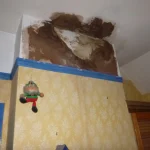
A chimney can look perfectly ordinary from the fireplace while something higher up the flue is causing trouble. If smoke keeps coming into the room, debris is falling down or a problem remains unexplained after a sweep, it helps to be able to see inside.
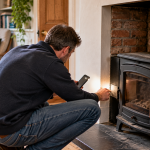
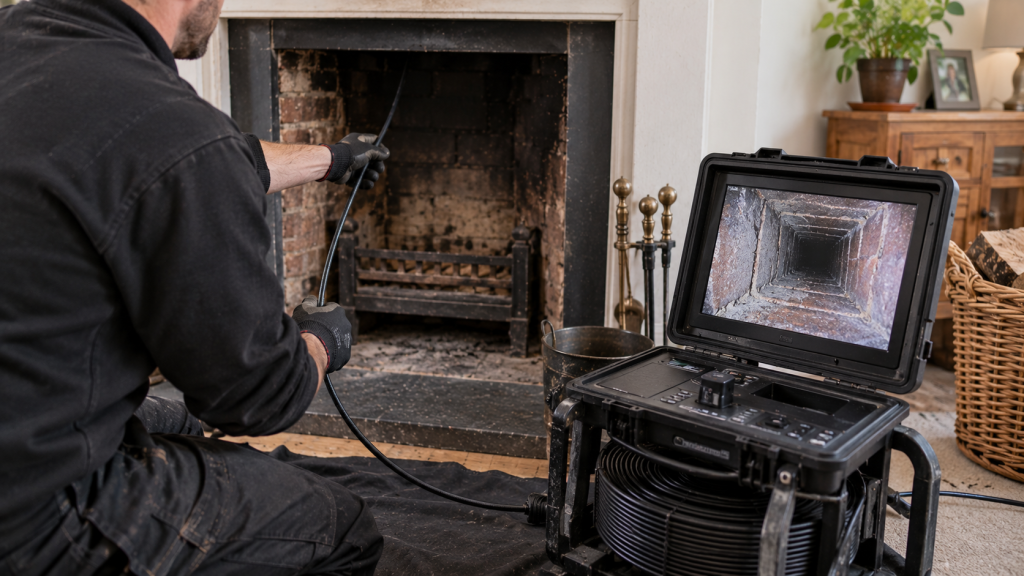
That is what a CCTV chimney survey is for. We pass a camera into the chimney from the fireplace or appliance access point and examine the areas it can reach. The footage can help us locate an obstruction, take a closer look at a liner or investigate a visible defect. We can then talk you through what we have found and give you a copy of the recording.
IN THIS GUIDE
When is a camera survey worth considering?
A camera survey is most useful when there is a particular question to answer. For example, a fireplace may continue to smoke despite the chimney being swept, or the sweep may have found something that needs a closer look. It can also help when you suspect a blockage, are planning changes to a fireplace or want to know more about a chimney before buying a property.
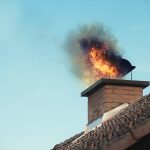
After a chimney fire, the accessible flue may need closer examination once it is safe to investigate. What happens next will depend on the chimney and the nature of the fire; footage is one part of that assessment.
You do not need a CCTV survey every time you have your chimney swept. If you are unsure whether one would help, tell us what you have noticed. We can discuss the problem and advise on a sensible next step.
See our CCTV survey service and booking details
Why do we usually sweep before using the camera?
For the camera to be useful, it needs a clear view. Soot and debris can cover the flue surface. As the camera moves through the chimney, it may dislodge loose material and stir up dust, making the picture harder to see.
We therefore normally sweep the chimney at the same appointment, before carrying out the camera survey. If it has been swept recently, let us know when you book. We can then assess whether another sweep is needed to get a useful view.
What happens during the survey?
We begin by discussing the issue and checking the available access. The camera is then passed into the flue from the fireplace or appliance access point, so the survey does not require us to go onto the roof.
As we move through the chimney, we look at anything relevant to the concern you have raised. We might find a build-up of material, a visible gap or displaced section, or the point at which something prevents the camera from going further. Sometimes the footage answers the question quite clearly. At other times, it shows us where the problem is likely to be but further investigation is needed to understand it fully.

Chimneys vary in shape and construction, and the camera can only record what it can reach and see. Bends, deposits and blockages can all limit the view. We will explain those limits alongside the findings, so you know what the footage does and does not establish.
What if we find a blockage?
The camera can help us see where an accessible blockage is and what it appears to contain. That is useful because the next step depends on the cause. Loose soot may be dealt with by sweeping, while a bird nest, hard deposits, fallen masonry or a damaged component may need a different approach.
The survey records the blockage; it does not necessarily remove it. If you suspect your chimney is obstructed, stop using the fireplace or appliance until the cause has been assessed. Material falling into the fireplace does not mean the rest of the flue has cleared. Our blocked chimney guide explains the warning signs and what to do.
An active bird nest is different from other obstructions. We cannot carry out the camera survey while an active nest is present, because it must not be disturbed. Once the nest is no longer active and it can be lawfully removed, the chimney can be cleared and swept. We can then decide whether a survey is still useful. You can read more in our bird nests in chimneys guide.
What happens afterwards?
We will talk you through what we can see and give you advice at the appointment. You will also receive a copy of the footage.
The recording provides a view of the accessible areas of the flue. It cannot show what is hidden behind masonry or beyond an obstruction, and it does not on its own confirm that the whole chimney is safe to use. If the footage points to another problem, we will explain what further work, testing or assessment may be needed.
Request a CCTV chimney survey appointment
If you would like us to investigate your chimney, get in touch. We will arrange the survey and, where needed, sweep the chimney at the same appointment before using the camera.
Frequently asked questions
Does a CCTV chimney survey require roof access?
No. We carry out the survey from the fireplace or appliance access point inside the property.
Will the chimney be swept at the same appointment?
Normally, yes. We sweep first so soot and loose debris do not obscure the camera’s view. If your chimney has been swept recently, tell us when you book so we can assess whether another sweep is needed.
What do I receive from the CCTV survey?
We explain what the camera shows and give you advice at the appointment. You also receive a copy of the survey footage afterwards.
Can a CCTV survey find the cause of smoke entering the room?
It may help if the cause is visible inside the part of the flue the camera can reach, such as an obstruction or a damaged section. Smoke problems can have other causes too, so we will explain what the footage shows and whether further assessment is needed.
Can you survey a chimney with an active bird nest?
No. We cannot carry out a camera survey while an active nest is present. Once the nest is no longer active and the chimney has been lawfully cleared, we can review whether a survey is still needed.