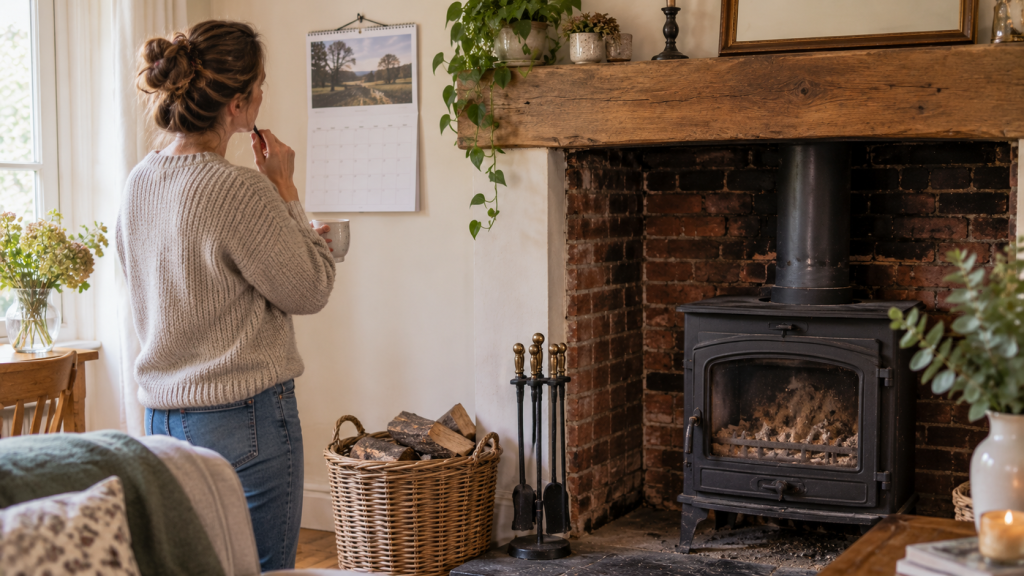
The frequency with which a chimney should be swept depends principally on the fuel being burned, how regularly the fireplace or appliance is used, and the way it is operated.
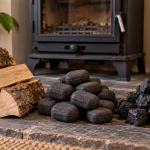
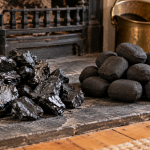
HETAS encourages having chimneys swept at least twice a year when burning wood or bituminous house coal, and at least once a year when burning smokeless fuel. Cambridgeshire Fire and Rescue Service advises that chimneys used for burning wood may need sweeping up to four times a year.
These are published safety guidelines rather than a guarantee that every chimney will accumulate deposits at the same rate. The appropriate schedule can also be affected by the appliance, flue construction, fuel quality, burning habits, manufacturer’s instructions and home-insurance requirements.
The Quick Answer
- Wood: at least twice a year according to HETAS; potentially up to four times a year according to Cambridgeshire Fire and Rescue Service
- Bituminous house coal: at least twice a year
- Smokeless fuel: at least once a year
- Oil and gas: once a year according to Cambridgeshire Fire and Rescue Service
Heavy use, unsuitable fuel, poor burning practices or the deposits found may make more frequent sweeping appropriate.
IN THIS GUIDE
Recommended Chimney-Sweeping Frequencies
| Fuel | Published sweeping guidance |
|---|---|
| Wood | At least twice a year according to HETAS; up to four times a year according to Cambridgeshire Fire and Rescue Service |
| Bituminous house coal | At least twice a year |
| Smokeless fuel | At least once a year |
| Oil | Once a year according to Cambridgeshire Fire and Rescue Service |
| Gas | Once a year according to Cambridgeshire Fire and Rescue Service |
If different fuels are burned in the same appliance, the schedule appropriate to the fuel requiring the most frequent sweeping should normally be followed. These frequencies may need to be increased where an appliance is used heavily, deposits accumulate quickly or problems are identified during a sweep.
Why Does Wood Require More Frequent Sweeping?
Burning wood can produce soot, tar and creosote. These deposits form when combustible gases and particles within the smoke cool and condense inside the chimney.
- The moisture content of the wood
- How frequently the appliance is used
- Whether fires are allowed to burn at a suitable temperature
- Whether a stove is repeatedly operated with insufficient air
- The size, construction, temperature, route and length of the flue
- The condition of the appliance and chimney system
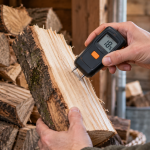
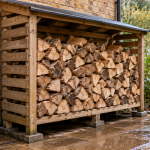
Damp wood and slow, cool burning can contribute to heavier deposits. Wood sold for domestic burning in England should contain no more than 20% moisture, but correct fuel alone does not remove the need for regular sweeping.
Hard, glazed deposits cannot always be removed by an ordinary chimney sweep and may require a separate tar or creosote-removal treatment.
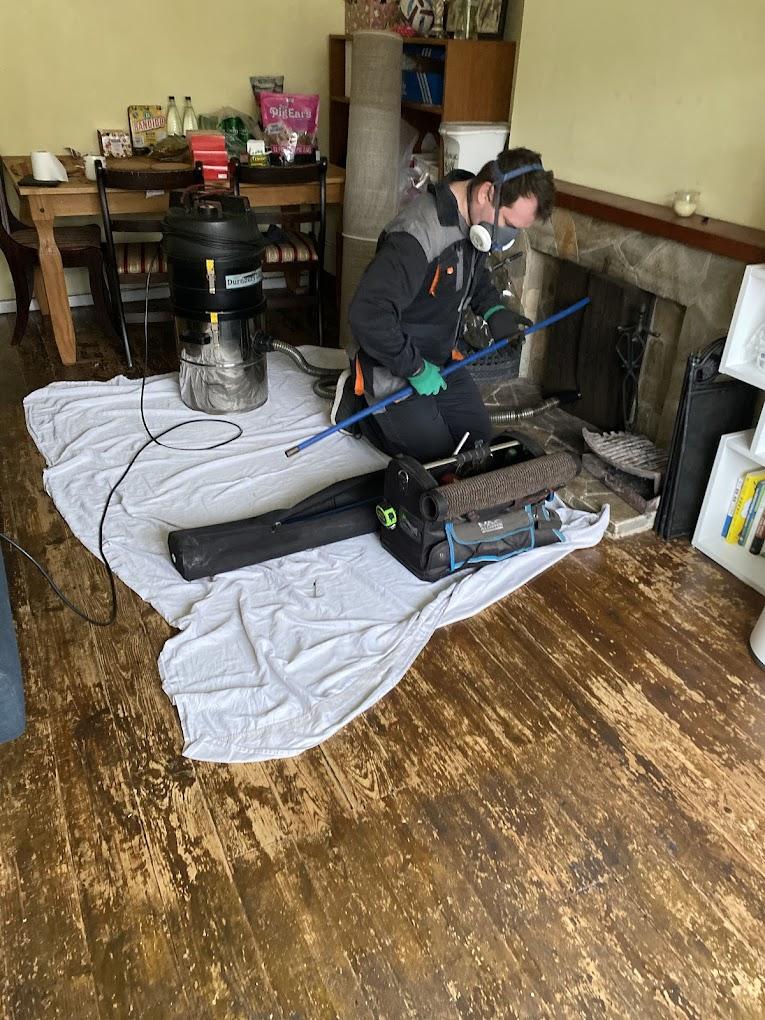
Sweeping Frequency For Occasionally Used Chimneys
A chimney can still accumulate soot, debris or obstructions even when the fireplace or appliance is used infrequently. Light use should not automatically be taken to mean that sweeping can safely be skipped.
- The fuel being burned
- How long it has been since the chimney was last swept
- Whether the appliance manufacturer specifies a maintenance schedule
- Whether the home-insurance policy includes sweeping requirements
- Whether birds, nesting material or other debris could have entered the chimney
- Whether there have been any changes in draw, smell or performance
Your chimney sweep can advise on an appropriate future sweeping schedule based on how the chimney is used and the deposits found during the appointment.
Why Regular Sweeping Matters
It reduces the risk of chimney fires
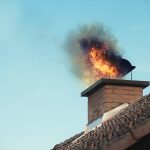
Soot, tar and creosote can be combustible. If these deposits ignite, the resulting chimney fire can reach extremely high temperatures and damage the flue, chimney or surrounding parts of the property.
It helps prevent dangerous blockages
A clear flue allows smoke and combustion gases to escape. Soot, fallen masonry, nesting material and other debris can restrict the flue and increase the risk of smoke or carbon monoxide entering the property. A carbon monoxide alarm should be installed and maintained where required, but it is not a substitute for sweeping and proper appliance maintenance.
It helps extend the life of the chimney
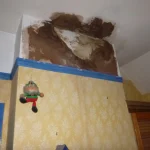
Soot and combustion deposits can be acidic. When deposits are left within a chimney, particularly where moisture is present, they can contribute to deterioration of the internal chimney surfaces. Over time, this erosion may lead to leaks or the need for substantial remedial work, including lining. Regular sweeping helps remove deposits and can contribute to extending the serviceable life of the chimney.
It supports effective appliance performance
A restricted or heavily contaminated flue may affect draw and combustion. Regular sweeping helps keep the flue clear, although poor performance can also result from appliance faults, ventilation problems, chimney design or weather conditions.
It provides a maintenance record
Some home-insurance policies specify how frequently a chimney must be swept or require evidence of professional maintenance. When a chimney is safe to use following our work, we issue a Guild of Master Chimney Sweeps sweeping certificate. Guild certificates are recognised by insurance companies as evidence of professional sweeping. Customers should retain the certificate, read any advisory notes and check the particular maintenance requirements in their own insurance policy. If the chimney is not safe to use, we issue a warning notice instead.
Signs That A Chimney May Need Attention Sooner
- Smoke entering the room
- A carbon monoxide alarm activating
- A significant deterioration in draw
- Falling soot or debris
- Unusual or persistent chimney smells
- Visible tar or glazed deposits
- A bird or suspected nest in the chimney
- A sudden change in how the appliance burns
- Evidence of a chimney fire
A suspected carbon monoxide incident, chimney fire or appliance fault requires appropriate immediate action and should not be treated as routine maintenance.
Not sure whether your chimney is due? See our guide to how to tell if your chimney needs sweeping.
When Is The Best Time To Have A Chimney Swept?
The best time to have a chimney swept is normally at the end of the burning season.
Sweeping at this point removes as much accumulated soot and combustion deposit as possible before the chimney sits unused during the warmer months. Soot can be acidic, particularly when combined with moisture, and leaving it within the chimney over the summer can contribute to erosion of the internal chimney surfaces.
Having the chimney swept during spring or early summer also means it is clean and ready before the next burning season begins, while avoiding the busiest autumn appointment period.
A chimney can still be swept at another time of year when necessary, provided the fireplace or appliance has not been used for at least 24 hours and is completely cold. More frequently used chimneys may also require an additional sweep during the burning season.
Ready To Arrange Your Chimney Sweep?
Complete our contact form and we’ll send you our available appointment dates.
Sweeping Gas, Oil, Boiler And Aga Flues
Cambridgeshire Fire and Rescue Service includes annual sweeping within its published guidance for gas and oil flues.
We sweep suitable gas-appliance and boiler flues, but we do not service gas appliances or boilers. These appliances must be serviced by an appropriately registered engineer. Some gas appliances must be disconnected by a Gas Safe registered engineer before we can sweep the flue, while other designs do not require disconnection.
We can sweep Aga cooker flues, but we do not service kitchen Aga cookers. The cooker itself requires an appropriate Aga service specialist.
We can sweep and service suitable wood-burning and multi-fuel stoves, including Rayburn stoves. Stove servicing is a separate service and must be booked in advance so that sufficient appointment time is allocated.
Chimneys That Are No Longer In Use
An unused chimney does not accumulate fresh combustion deposits, but that does not necessarily mean it will remain clear or in good condition. Unused chimneys can contain fallen soot, deteriorating internal material, bird nesting material, leaves, moisture-related deposits or other obstructions.
Whether an unused chimney requires attention depends on its condition, how it is ventilated and whether it may be brought back into use. A chimney that has been unused for a prolonged period should be professionally assessed before a fire or appliance is connected or used.
Ready To Arrange Your Chimney Sweep?
Complete our contact form and we’ll send you our available appointment dates.
Frequently Asked Questions
Can I tell how much soot is inside my chimney?
Not reliably. The deposits visible at the fireplace or appliance opening may not represent what is present higher within the flue. Changes in smell, smoke movement or appliance performance can indicate a problem, but an absence of obvious symptoms does not prove that the chimney is clear.
Is chimney sweeping the same as a chimney survey?
No. A routine chimney sweep removes suitable deposits and debris from the flue, includes a smoke test and records relevant observations encountered during the work. It is not a structural chimney survey and cannot confirm the condition of every concealed part of the chimney.
Where the findings suggest a hidden obstruction, damage or another issue that cannot be understood through normal accessible checks, we may recommend a CCTV chimney survey or another appropriately qualified specialist.
How long does a chimney sweep take?
A routine appointment for one straightforward flue typically takes approximately 30 to 45 minutes. The appointment may take longer depending on access, the appliance and what is found within the chimney. Bird-nest removal, specialist tar treatment and stove servicing are separate services rather than part of a routine sweep.
Is once a year enough for a wood-burning stove?
Not necessarily. HETAS encourages sweeping at least twice a year when burning wood. Cambridgeshire Fire and Rescue Service advises that wood-burning chimneys may need sweeping up to four times a year. The appropriate schedule depends on use, fuel, burning practices and the deposits found.
Should I sweep more frequently if I use my stove every day?
Daily or heavy use can require more frequent sweeping. Follow the published guidance as a starting point and discuss the deposits and condition found with your sweep during the appointment.
Can I skip a sweep if I have only used the fire a few times?
Light use does not automatically mean that sweeping can safely be skipped. Consider the fuel, time since the previous sweep, manufacturer’s instructions, insurance requirements and the possibility of debris or obstructions.
Should the chimney be swept before or after winter?
We generally recommend sweeping at the end of the burning season. This removes accumulated soot and deposits before the summer, helping to reduce the acid erosion that can occur when soot and moisture remain inside the chimney.
If the chimney was not swept after the previous burning season, it should be swept before regular use begins again. Chimneys requiring more frequent sweeping may also need an additional mid-season appointment.
Does a Guild sweeping certificate satisfy insurers?
Guild of Master Chimney Sweeps sweeping certificates are recognised by insurance companies as evidence of professional sweeping. However, individual policies can specify their own sweeping frequency, so customers should check the maintenance terms of their policy.
Do I need to stop using the fire before the appointment?
Yes. Do not use the appliance or fireplace for 24 hours before the appointment. It and the flue must be completely cold because heat can damage or melt sweeping equipment.
Does chimney sweeping include stove servicing?
No. Stove servicing is a separately priced service. We can complete a suitable stove service during the same visit, but it must be booked in advance so enough time is allocated for both services.