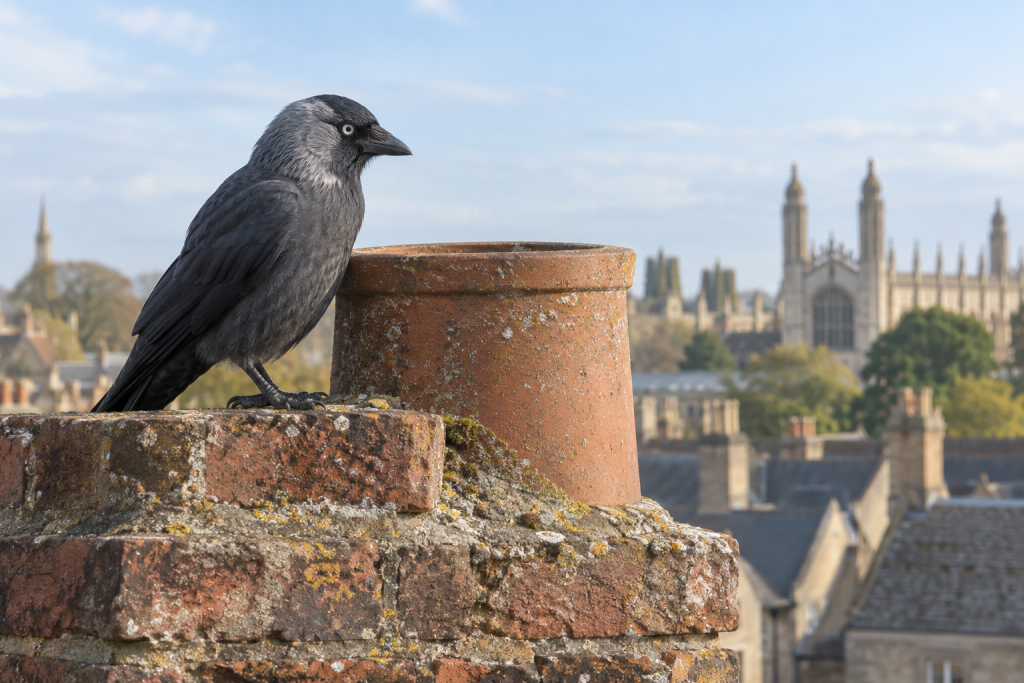
Jackdaws frequently choose chimneys because they provide a sheltered, enclosed space similar to the tree hollows and cavities these birds naturally use. Unfortunately, a jackdaw nest can form a substantial blockage, preventing smoke and combustion gases from escaping safely.
If you suspect jackdaws are nesting in your chimney, stop using the fireplace or appliance. Do not light a fire to drive the birds away or attempt to push the nest further up the flue.
This guide explains when jackdaws nest, how their nests are built, the signs to look for and what must happen before a chimney can safely be used again.
IN THIS GUIDE
WHY DO JACKDAWS NEST IN CHIMNEYS?
Jackdaws are intelligent, adaptable birds that naturally nest in cavities. An open chimney pot can offer shelter, height and protection from predators, making it an attractive nesting site.
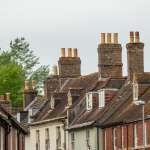
Traditional chimneys in Cambridge and the surrounding towns can be particularly suitable. Period properties often have tall stacks and internal surfaces that give twigs somewhere to lodge. A chimney that has been used before may also become a familiar nesting site to returning birds.
Jackdaws may use a chimney even when the fireplace below is used during winter. Once spring arrives and the chimney becomes quieter, they can begin dropping material into the flue.
WHEN IS JACKDAW NESTING SEASON IN THE UK?
Jackdaws normally begin investigating nesting sites and carrying material during spring. Activity can vary with weather and location, so behaviour at the chimney is more important than relying on one precise calendar date.
A nest is legally protected while it is being built or used. That protection applies whenever there are eggs, chicks or continuing nesting activity; it is not limited to one fixed national “nesting season”.
ABLEWIGHT’S NEST-REMOVAL PERIOD
We do not undertake routine bird-nest removal between 1 April and 31 August. Our removal appointments operate from 1 September to 31 March.
This is our operating policy and should not be confused with the legal protection of an active nest. If a nest is still being built or used outside those dates, it remains protected. Current legal guidance is available from GOV.UK.
HOW DO JACKDAWS BUILD NESTS IN CHIMNEYS?
Jackdaws create a foundation by dropping and wedging twigs into the chimney. Some pieces catch against the internal surfaces or one another, allowing further layers to accumulate above them.
The visible nest may represent only a small part of the obstruction. Material can extend a considerable distance down the chimney and may include:
- Twigs and small branches
- Leaves, grass and moss
- Feathers and softer nesting material
- String, paper or other objects collected by the birds
- Older nesting material from previous seasons
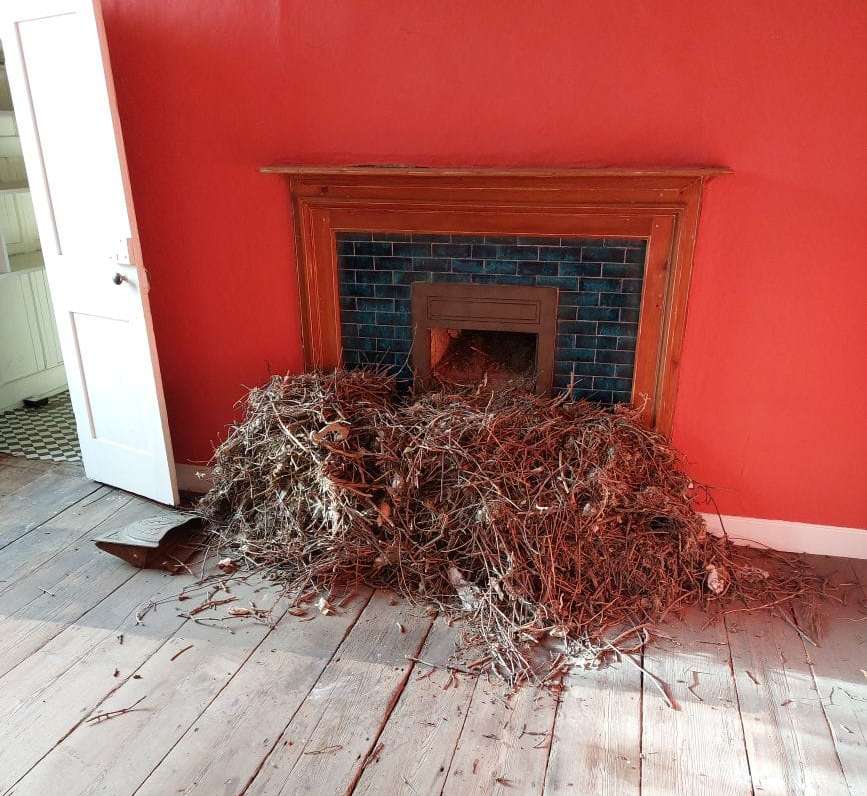
Nests vary enormously. Some are approximately the size of a hand, while others can fill much or almost all of the chimney. Repeated use over several seasons can produce a dense, tightly packed obstruction.
SIGNS OF JACKDAWS NESTING IN A CHIMNEY
Possible signs include:
- Jackdaws repeatedly landing on or entering the chimney pot
- Twigs, leaves or feathers falling into the fireplace
- Calls, scratching or movement within the flue
- Birds carrying material towards the chimney
- A reduction in chimney draw
- Smoke entering the room
- Persistent or unusual smells from the chimney
- Flies or other insects appearing around the fireplace
- A carbon monoxide alarm activating
An absence of noise does not prove that a nest is inactive. Adult birds can leave while feeding, and chicks may become quiet when people are nearby.
WHAT SHOULD I DO IF JACKDAWS ARE NESTING IN MY CHIMNEY?
If you suspect a nest:
- Stop using the fireplace or appliance
- Do not try to burn the nest
- Do not insert rods or other objects into the chimney
- Keep ornaments and furnishings away if material is falling into the room
- Look and listen for signs of continuing bird activity
- Ensure working carbon monoxide alarms are installed where required
- Arrange professional help when the nest can lawfully and safely be removed
Tell us what you have heard or observed, whether material has fallen into the room and whether you believe there may be a trapped live bird.
A bird can occasionally enter a chimney and become unable to escape even where there is no established nest. We can remove live birds trapped within accessible chimney systems. This is different from disturbing an active nest containing eggs or chicks.
CAN I USE THE FIRE IF THERE IS A JACKDAW NEST?
No. A nest can block or restrict the flue and prevent smoke and combustion gases from escaping. It can also create a chimney-fire hazard and allow carbon monoxide to enter the property.
Do not assume that the chimney is clear because some twigs have fallen into the fireplace. A substantial quantity of material may remain higher within the flue.
HOW IS A JACKDAW NEST REMOVED FROM A CHIMNEY?
Bird-nest removal and chimney sweeping are carried out from ground level, working from the room containing the fireplace, appliance or suitable access hatch. Roof access is not required.
Suitable rods, brushes and specialist equipment are used to loosen and remove the nesting material. The time required depends on:
- The size of the nest
- How tightly the material has been packed
- The length and construction of the chimney
- The fireplace or appliance arrangement
- Access to the flue
- Whether the nest occupies one section or much of the chimney
Most nests are removed during the initial appointment time, although a large or heavily compacted nest may take longer.
WHY DOES THE CHIMNEY NEED SWEEPING AFTERWARDS?
Jackdaw-nest removal cannot be completed independently of chimney sweeping. Once the nest has been loosened, the chimney must be fully swept to remove remaining twigs, feathers, leaves, soot and debris.
The complete service also allows a smoke test to be carried out. If the chimney is safe to use, we issue a Guild of Master Chimney Sweeps sweeping certificate. If it is not safe to use, we issue a warning notice and explain the appropriate next step.
Where appropriate, removed nesting material, soot and debris will be bagged and placed in the customer’s suitable external household-waste bin.
Read about our professional bird-nest removal service.
CAN JACKDAWS RETURN TO THE SAME CHIMNEY?
Yes. Jackdaws may return to a previously used nesting site, particularly where the chimney remains accessible and offers suitable shelter. Removing an old nest does not prevent another nest from being built later.
Once the chimney has been cleared and confirmed safe, an appropriately selected bird guard or terminal may help prevent future access. It must be suitable for the chimney, appliance and fuel and must not restrict the safe escape of combustion gases.
Preventive work must never disturb an active nest.
REQUEST A JACKDAW-NEST REMOVAL APPOINTMENT
Complete our contact form and tell us your postcode, fireplace or appliance type, what you have heard or observed, when the chimney was last used and whether nesting material has entered the room.
We will respond with suitable appointment availability.
FREQUENTLY ASKED QUESTIONS
WHEN DO JACKDAWS START NESTING?
They normally begin investigating nest sites and carrying material during spring. Timing varies with weather and location, so signs of current activity matter more than a fixed date.
WHEN DO JACKDAWS LEAVE THE NEST?
There is no reliable date for every nest. Eggs, chicks or adults may remain present after activity appears to reduce. A nest must be treated as active whenever it is being built or used.
CAN AN OLD JACKDAW NEST BE REMOVED?
Yes, provided it is no longer active and removal can be completed lawfully. Ablewight’s routine removal appointments operate from 1 September to 31 March.
CAN I REMOVE A JACKDAW NEST MYSELF?
We do not recommend it. DIY removal may disturb a protected active nest, leave material inside the chimney, damage the flue or appliance, release debris into the room and leave the chimney unswept and untested.
CAN A JACKDAW NEST BE REMOVED WITHOUT ROOF ACCESS?
Yes. Professional jackdaw-nest removal is normally completed from ground level through the fireplace, appliance or a suitable access hatch. Roof access is not required for Ablewight’s bird-nest removal and chimney-sweeping service.
WHY MUST A CHIMNEY BE SWEPT AFTER A JACKDAW NEST IS REMOVED?
A full chimney sweep is required because removing the main nest may leave twigs, feathers, leaves, soot and loose debris inside the flue. Sweeping clears the remaining material and allows the required smoke test to be completed before the chimney is confirmed safe to use.