
If you’ve recently had a wood-burning or multi-fuel stove installed, it can be tempting to think you won’t need to worry about sweeping or servicing for a few years. After all, everything is new.
But a new stove and chimney liner still need regular maintenance. In fact, the first few years are particularly important because your stove and liner may still be covered by manufacturer warranties — and those warranties can come with maintenance conditions.
Your chimney should normally be swept at least once a year, even when the stove and liner are relatively new. Stove manufacturers also commonly recommend annual servicing.
Failing to follow the maintenance requirements attached to your particular stove or chimney liner could affect your ability to make a warranty claim later.
In This Guide
A New Chimney Liner Still Needs Sweeping
One misconception we regularly hear is:
“The liner was only installed last year, so surely it doesn’t need sweeping yet?”
Unfortunately, the age of the liner isn’t what determines whether the chimney needs sweeping.
Every time you use your stove, combustion deposits can build up inside the flue. How quickly that happens depends on factors including:
- how often you use the stove;
- what fuel you burn;
- how dry your wood is;
- how efficiently the stove is being operated; and
- the chimney and appliance set-up.
That’s why a newly installed chimney liner shouldn’t simply be left for several years before its first sweep.
As a general rule, a chimney serving a solid-fuel stove should be swept at least annually. Some chimneys may need sweeping more frequently depending on use and fuel.
Regular sweeping removes soot and other combustion deposits from the flue and gives your chimney sweep an opportunity to identify anything apparent during the sweep that may need further attention.
Does This Apply to Lined Open Fireplaces Too?
Yes. Chimney liners aren’t only used with wood-burning stoves. If you have an open fireplace with a lined chimney, that liner still needs appropriate sweeping and maintenance.
The exact maintenance and warranty conditions will depend on the liner installed, so check the manufacturer’s documentation and retain your sweeping certificates.
This article focuses primarily on wood-burning and multi-fuel stoves because they have the additional consideration of servicing the appliance itself, but the principle of maintaining a lined chimney applies to open fires too.
Sweeping May Also Be a Condition of Your Chimney Liner Warranty
A chimney liner can carry a manufacturer’s warranty, but the length and conditions of that warranty vary between products and manufacturers.
Those conditions may include requirements concerning maintenance, sweeping, the fuel being burned and how the system is used.
This is why we recommend checking the warranty paperwork supplied with your liner rather than assuming that the number of years printed on the warranty means the liner is covered regardless of how it is used or maintained.
If regular professional sweeping is stipulated and you cannot demonstrate that it has been carried out, this could affect a future warranty claim.
When we sweep your chimney and it is safe to use, we issue a Guild of Master Chimney Sweeps sweeping certificate. Keep these certificates together with your installation paperwork and invoices so you have a dated record of the chimney’s maintenance history.
Does a New Stove Need Servicing Every Year?
Stove manufacturers commonly recommend annual servicing, particularly while the appliance is under warranty.
It’s useful, however, to distinguish between warranty requirements and what may be necessary from a practical maintenance perspective.
While your stove is under warranty, we’d recommend following the manufacturer’s servicing schedule. Skipping required servicing may compromise the warranty if you subsequently need to make a claim.
Outside the warranty period, a stove that receives normal rather than heavy use may not necessarily need a full service every year. In our experience, every two to three years is usually sufficient for many normally used stoves, although heavily used appliances may benefit from more frequent servicing.
Your chimney still needs sweeping at the appropriate frequency regardless of how often the stove itself is serviced. For more guidance, see How Often Should You Sweep Your Chimney?
What’s Included in an Ablewight Stove Service?
Stove servicing is a separate service from chimney sweeping and needs to be booked in advance.
We service solid-fuel stoves, including both wood-burning and multi-fuel appliances.
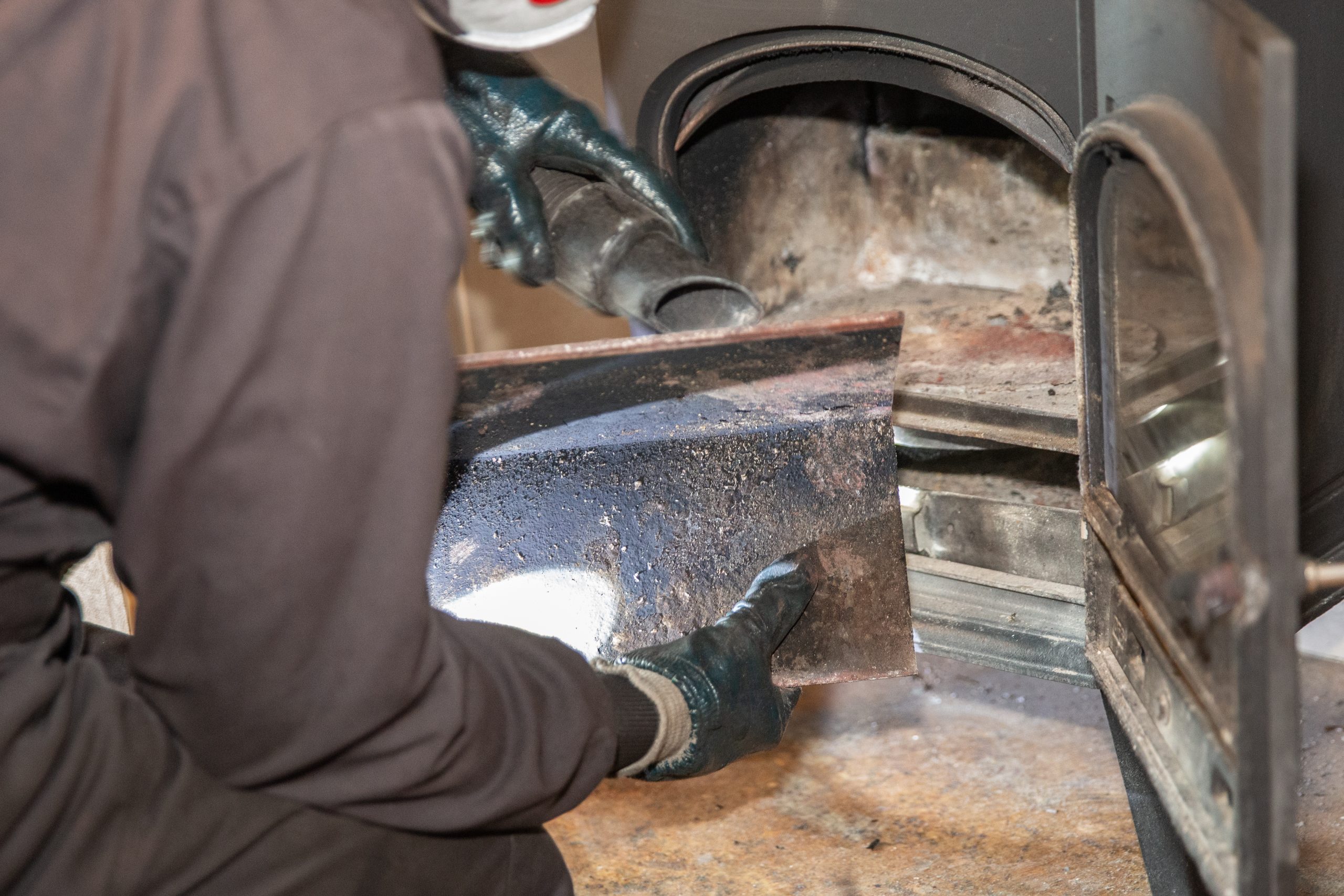
During the service we:
- remove, clean and check the internal parts;
- clean the stove and glass;
- check the seals around the door, access hatches and stove pipe;
- replace rope, cement or silicone seals where required;
- check the air controls and lubricate them if they’re stiff; and
- replace fire bricks or door glass where required, provided you have supplied the replacement parts.
The service is recorded on your documentation and invoice, giving you a record of the maintenance carried out. You can find more information on our wood-burning stove servicing page.
Need a Chimney Sweep and Stove Service?
If you’d like your chimney swept and your stove serviced during the same visit, please request both when you contact us so we can allow sufficient time for the appointment.
What About Cracked Fire Bricks or Damaged Stove Glass?
Fire bricks line the inside of the stove and help protect the stove body from the heat of the fire. Over time they can crack, deteriorate or break and may eventually need replacing.
Door glass can also occasionally need replacement.
We can fit replacement fire bricks and door glass as part of a stove service, but we don’t supply these parts.
If you know that a part needs replacing, order the correct replacement directly from your stove manufacturer and have it ready for your appointment.
If you’re unsure who manufactured your stove, taking a clear photograph and using an image-search tool such as Google Lens can often help you identify it. You can then contact the manufacturer with photographs and details of the part you need.
Keep Your Sweeping and Servicing Records
If your stove or liner is still under warranty, don’t wait until something goes wrong to start looking for your paperwork.
It’s worth keeping together:
- your stove and chimney-liner installation paperwork;
- the manufacturer’s warranty information;
- Guild chimney-sweeping certificates;
- stove-servicing records; and
- invoices for sweeping, servicing or relevant maintenance.
If you ever need to make a warranty claim, these records can help demonstrate how the appliance and chimney have been maintained.
They can also be valuable when you sell your home.
We regularly hear from sellers who need their chimney swept so they can provide up-to-date information about it before a property changes hands. If your home has a stove or chimney liner, being able to provide the installation paperwork, warranty information and a continuous record of sweeping and servicing can also demonstrate to a potential buyer that the system has been properly cared for.
For buyers, the same paperwork can help establish what has been installed, how it has been maintained and whether anything may need attention before the fireplace or stove is used.
Don’t Assume “New” Means “Maintenance-Free”
A stove that’s only one or two years old may look almost new, particularly if it hasn’t been heavily used. The inside of the chimney is different.
Deposits can begin accumulating from the first time the appliance is used, which is why the sweeping schedule starts when you start using the stove — not several years after installation.
The same principle applies to servicing.
Your stove may not develop a problem for many years. In our experience, we don’t often encounter significant problems with correctly used stoves that are less than ten years old.
But if a fault does occur while the appliance is under warranty, discovering at that point that the required servicing hasn’t been carried out may make a warranty claim more difficult.
That’s why it’s worth understanding the maintenance conditions when the stove is installed, rather than when something goes wrong. If you’re still at the installation stage, read Should You Have Your Chimney Swept Before Installing a Stove or Chimney Liner?
What Should You Check When a New Stove Is Installed?
When your stove or chimney liner is installed, ask your installer for the relevant paperwork and check the maintenance requirements from the outset.
How frequently should the chimney be swept?
A chimney serving a solid-fuel stove should normally be swept at least once a year, although more frequent sweeping may be appropriate depending on how heavily the appliance is used and the fuel being burned.
You should also check the conditions of your particular stove and chimney-liner warranties, as these may specify maintenance requirements. Keep your sweeping certificate afterwards as part of your maintenance record.
How frequently should the stove be serviced?
Stove manufacturers commonly recommend annual servicing, and you should follow the schedule specified by your particular manufacturer while the appliance is under warranty.
For a normally used stove outside its warranty period, we generally find that servicing every two to three years is sufficient, although heavily used appliances may require more frequent attention.
Are there restrictions on the fuel you can burn?
Check the manufacturer’s instructions for your particular appliance.
Using unsuitable fuel or burning wood with too much moisture can affect how the stove operates and increase deposits within the chimney. Your warranty may also contain conditions concerning appropriate fuel and operation.
What maintenance records should you keep?
Keep your installation documentation, warranty information, Guild sweeping certificates, stove-servicing records and relevant invoices together.
Don’t assume an invoice alone will necessarily satisfy every manufacturer’s warranty conditions. Check the terms supplied with your particular stove or liner to understand what evidence may be required.
Who should service the stove?
Requirements may vary between manufacturers, so check whether your particular warranty specifies who should carry out servicing or any competency requirements.
Ablewight is HETAS Approved and provides professional chimney sweeping and solid-fuel stove servicing in Cambridge and the surrounding area.
Sweeping and Servicing Are Two Different Jobs
It’s important to understand that having your chimney swept doesn’t mean your stove has automatically been serviced.
During a chimney sweep, our primary job is cleaning the chimney or flue.
A stove service involves more detailed work on the appliance itself, including removing and checking internal components, checking seals and air controls, and carrying out the cleaning and maintenance described above.
If you’d like the stove serviced as well as the chimney swept, please request the stove service when arranging your appointment so sufficient time can be allocated.
Chimney Due for a Sweep or Stove Service?
If your stove or chimney liner is due for maintenance, tell us whether you require chimney sweeping, stove servicing or both when you contact us.
Frequently Asked Questions
Does a new chimney liner need sweeping every year?
Yes. A new liner still collects soot and other combustion deposits whenever the appliance or fire is used. We recommend at least annual sweeping for a chimney serving a solid-fuel appliance, although more frequent sweeping may be appropriate depending on the fuel and how heavily it is used. You should also check the maintenance requirements of your particular liner warranty.
Does a chimney liner need sweeping if it’s connected to an open fire?
Yes. A chimney liner needs appropriate sweeping whether it serves a stove or an open fireplace. The frequency will depend on the fuel and use, and you should also check the maintenance requirements attached to your particular liner.
Will not sweeping my chimney invalidate the liner warranty?
It can affect your warranty if the manufacturer requires regular sweeping or maintenance and those conditions haven’t been followed. Warranty terms differ between manufacturers and liner products, so check your individual documentation. Keeping your professional sweeping certificates provides a dated maintenance history if you later need to make a claim.
Does my wood-burning stove need servicing every year?
Manufacturers commonly recommend annual servicing, particularly while the appliance is under warranty. You should follow the servicing schedule specified by your particular manufacturer. Outside the warranty period, we generally find that servicing every two to three years is sufficient for many normally used stoves, while heavily used appliances may need more frequent attention.
Can I claim on my stove warranty if I haven’t had it serviced?
That depends on the terms of your particular warranty and the circumstances of the claim. If the manufacturer requires regular servicing and it hasn’t been carried out, this could affect your warranty cover. It’s much better to check the maintenance requirements when the stove is installed than discover them after a problem develops.
Is stove servicing included with a chimney sweep?
No. Chimney sweeping and stove servicing are separate services. Sweeping cleans the chimney or flue, while a stove service involves more detailed cleaning, inspection and maintenance of the appliance itself. If you’d like both carried out, request the stove service when arranging your appointment.
Do you service multi-fuel stoves?
Yes. We service solid-fuel appliances, including both wood-burning and multi-fuel stoves. Stove servicing is booked separately from chimney sweeping.
Can you replace cracked fire bricks?
Yes. We can fit replacement fire bricks as part of a stove service, but we don’t supply the parts. You’ll need to obtain the correct replacement bricks from your stove manufacturer and have them available for the appointment.
Can you replace stove door glass?
Yes. We can fit replacement door glass during a stove service provided you have obtained the correct glass beforehand. We don’t supply the glass, so it should be ordered from your stove manufacturer.
Do I need to keep my chimney-sweeping certificates?
We recommend keeping them. Your Guild of Master Chimney Sweeps certificates provide a dated record of professional sweeping and may be useful for warranty records, insurance purposes and when selling your property. You should still check what documentation your particular manufacturer, insurer or other party requires.
What records should I keep for my stove and chimney-liner warranty?
Keep the installation paperwork, manufacturer warranty information, chimney-sweeping certificates, stove-servicing records and relevant invoices together. Warranty conditions vary, so check the documentation for your particular stove and liner to see what maintenance and evidence the manufacturer requires.