Bird Nest Removal From Chimneys

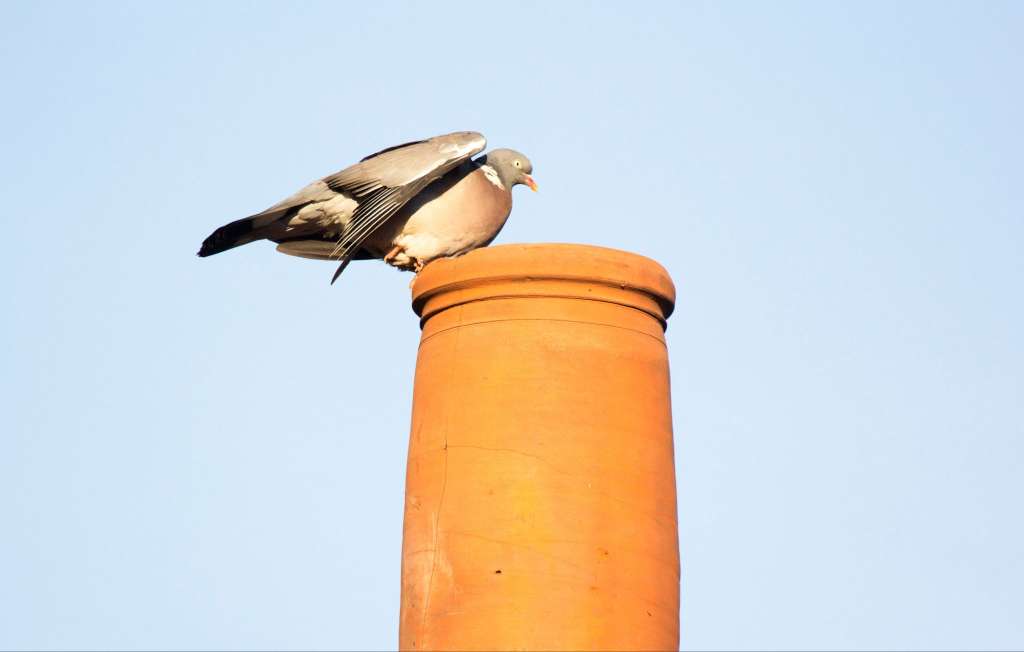
Wood pigeon perched on a chimney pot
FROM £50 + VAT (per flue)

Bird nests can completely obstruct a chimney, preventing smoke and combustion gases from escaping safely. We provide professional bird-nest removal for domestic properties and suitable commercial premises throughout our service area.

Every bird-nest removal includes a full chimney sweep. This is necessary because nesting material can extend much further down the chimney than is visible from the fireplace.

This bird-nest removal charge is added to the cost of the required chimney sweep.

The appointment includes the first 30 minutes needed to sweep the chimney and remove the nest. Most nests are removed within this time. If additional time is required, it is charged at £40 + VAT per additional 15 minutes.

Bird nests vary considerably—from approximately the size of a hand to material filling most or all of the chimney—so the total time cannot always be established before work begins.

Important: Nesting-Season Restrictions

We do not remove bird nests between 1 April and 31 August.

Wild birds, their eggs and active nests are protected by law. Restricting our nest-removal work during this period helps ensure that active nests are not disturbed.

Nest removal can be booked from September onwards.

If a live bird has become trapped inside a chimney, we may be able to remove it safely. This is different from removing an active nest and will be assessed according to the circumstances.

Signs There May Be A Bird Nest In Your Chimney

Possible signs include:

  • Birds repeatedly entering or leaving the chimney
  • Scratching, movement or bird calls within the flue
  • Twigs, leaves, feathers or other nesting material falling into the fireplace
  • A sudden reduction in chimney draw
  • Smoke entering the room
  • Persistent or unusual smells from the chimney
  • A chimney that appears completely blocked

Do not use a fireplace or appliance if you suspect that its chimney is obstructed. Burning beneath a nest can create a serious fire risk and prevent smoke or carbon monoxide from escaping properly.

Why A Bird Nest Must Be Removed Before The Chimney Is Used

A bird nest can:

  • Block the escape of smoke and combustion gases
  • Increase the risk of carbon monoxide entering the property
  • Create a significant chimney-fire hazard
  • Restrict the chimney’s draw
  • Cause smoke to spill back into the room
  • Introduce insects, odours and organic debris
  • Leave large quantities of material throughout the flue

Even after the birds have left, nesting material can remain tightly packed inside the chimney. It will not necessarily fall away or clear itself naturally.

What Our Bird-Nest Removal Service Includes

The service includes:

  • A discussion about the fireplace or appliance and the signs you have noticed
  • Protection around the fireplace or appliance
  • Access to the chimney from within the property
  • Removal of the bird nest and accessible nesting material
  • A full chimney sweep
  • Collection of loosened soot and debris
  • A smoke test following the completed sweep
  • Reassembly of any components removed as part of the agreed access
  • An explanation of anything significant found during the work
  • A Guild of Master Chimney Sweeps sweeping certificate when the chimney is safe to use
  • A warning notice instead of a sweeping certificate if the chimney is not safe to use

Where appropriate, removed soot and nesting material will be bagged and placed in the customer’s suitable external household-waste bin.

How Bird Nests Are Removed From Chimneys

Chimney sweeping and bird-nest removal are carried out from ground level, working from the room containing the fireplace, appliance or access hatch. Roof access is not required.

We use suitable rods, brushes and specialist equipment to loosen and remove nesting material from the flue.

The time required depends on factors including:

  • The size of the nest
  • How tightly the material has been packed
  • The length and construction of the chimney
  • The appliance or fireplace arrangement
  • The accessibility of the flue
  • Whether the nest occupies one section or much of the chimney

Some nests can be removed relatively quickly. Others may have been built up over several seasons and can extend for a considerable distance through the chimney.

Large bird nest removed from a chimney

A Full Chimney Sweep Is Always Required

Bird-nest removal cannot be completed independently of chimney sweeping.

Once the nesting material has been loosened, the chimney must be swept to remove remaining twigs, feathers, leaves, soot and debris. This also allows us to assess the accessible arrangement and complete the required smoke test.

What Happens If A Live Bird Is Trapped?

A bird may occasionally enter a chimney and become unable to escape, even when there is no established nest.

We can remove live birds trapped within accessible chimney systems. The appropriate approach will depend on where the bird is located, the fireplace or appliance arrangement and whether there is also nesting material present.

Please describe what you have heard or observed when completing the contact form so that we have useful information before the appointment.

Can We Remove An Active Nest?

No. We do not remove active bird nests.

If eggs or chicks are present, the nest must be left undisturbed. Removal can only take place once the nest is no longer active and our seasonal restriction has ended.

Our bird-nest removal appointments operate from 1 September to 31 March.

After The Nest Has Been Removed

Following removal, the chimney is swept and smoke-tested.

If the chimney is safe to use, we issue a Guild of Master Chimney Sweeps sweeping certificate. Guild certificates are recognised by insurance companies as evidence of professional sweeping. Customers should read and retain any advisory notes recorded on the certificate.

If the chimney is not safe to use, we issue a warning notice and explain the next appropriate step.

Domestic And Suitable Commercial Properties

We remove bird nests from chimneys in homes and suitable commercial settings such as pubs, restaurants and colleges.

We do not work on large industrial chimney systems such as those serving hospitals or crematoriums.

Why Choose Ablewight?

  • Ablewight Chimney Services was established in 1980.
  • Our founder authored the City & Guilds Chimney Sweeping Qualification.
  • Our founder established the Guild of Master Chimney Sweeps.
  • We are members of the Guild of Master Chimney Sweeps.
  • We are HETAS Approved Chimney Sweeps.
  • We are Trading Standards Approved through Buy With Confidence.
  • We have extensive experience removing bird nests from domestic chimneys.
  • We provide practical advice based on decades of work in local properties.

Areas We Cover

We provide chimney bird-nest removal throughout our service area, including Cambridge, Ely, Newmarket, Royston, Saffron Walden, St Ives, Huntingdon, St Neots, Bishop’s Stortford and surrounding villages.

Availability is subject to location, seasonal restrictions and appointment scheduling.

Request A Bird-Nest Removal Appointment

Complete our contact form and tell us:

  • Your postcode
  • The type of fireplace or appliance
  • What you have heard or observed
  • Whether nesting material has fallen into the room
  • When the chimney was last used and swept
  • Whether you believe there is a trapped live bird

We will respond with suitable appointment availability.

Frequently Asked Questions

Can you remove a bird nest during spring or summer?

No. We do not undertake bird-nest removal between 1 April and 31 August. Our bird-nest removal period runs from 1 September to 31 March.

Can you remove a live bird trapped in my chimney?

Yes, we can remove live birds that have become trapped in accessible chimney systems. This is different from disturbing an active nest. Tell us what you have heard or observed when completing the contact form.

Does the chimney need sweeping after the nest is removed?

Yes. A full chimney sweep is always required as part of the nest-removal service. This removes remaining nesting material, soot and debris and allows the smoke test to be completed.

Do you need to go onto the roof?

No. Chimney sweeping and bird-nest removal are completed from ground level through the fireplace, appliance or suitable access hatch.

How long does bird-nest removal take?

Most nests are removed within the initial appointment time. However, a large or heavily compacted nest may require longer. The time cannot always be established before removal begins because a nest may occupy only a small section or extend through much of the chimney.

Can I use the fire if I think there is a nest in the chimney?

No. Do not use the fireplace or appliance if you suspect that the chimney is obstructed. A nest can increase the risk of a chimney fire, smoke entering the room and carbon monoxide being unable to escape safely.

Will I receive a sweeping certificate?

Yes. If the chimney is safe to use after the nest removal, sweep and smoke test, we issue a Guild of Master Chimney Sweeps sweeping certificate. If it is not safe to use, we issue a warning notice instead.

What happens to the nesting material?

Where appropriate, we bag the removed nesting material, soot and debris and place it in the customer’s suitable external household-waste bin.

Get in touch

Booking Form