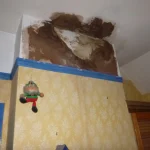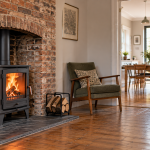
Water staining on your ceiling near the chimney breast, damp patches on interior walls, or moisture around your fireplace opening—these problems rarely originate where you see them. The leak is almost certainly at the top of your chimney, not at fireplace level. Understanding why water enters from above and how it travels down through your chimney system helps you address the actual problem rather than treating symptoms.
Why Chimneys Leak from the Top
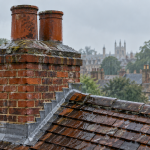
Your chimney extends above your roofline and sits exposed to weather year-round. Rain, snow, wind-driven moisture, and freeze-thaw cycles all affect the structure. Unlike your roof, which has continuous weatherproofing, a chimney has multiple penetration points and material transitions where water can enter.
The top of a chimney takes the full force of weather. Rain doesn’t just fall on it—wind drives moisture into any gaps, cracks, or degraded areas. Once water penetrates the outer defences, gravity pulls it downward through the chimney structure until it emerges inside your home, usually at the weakest point in the internal construction.
The Three Primary Entry Points
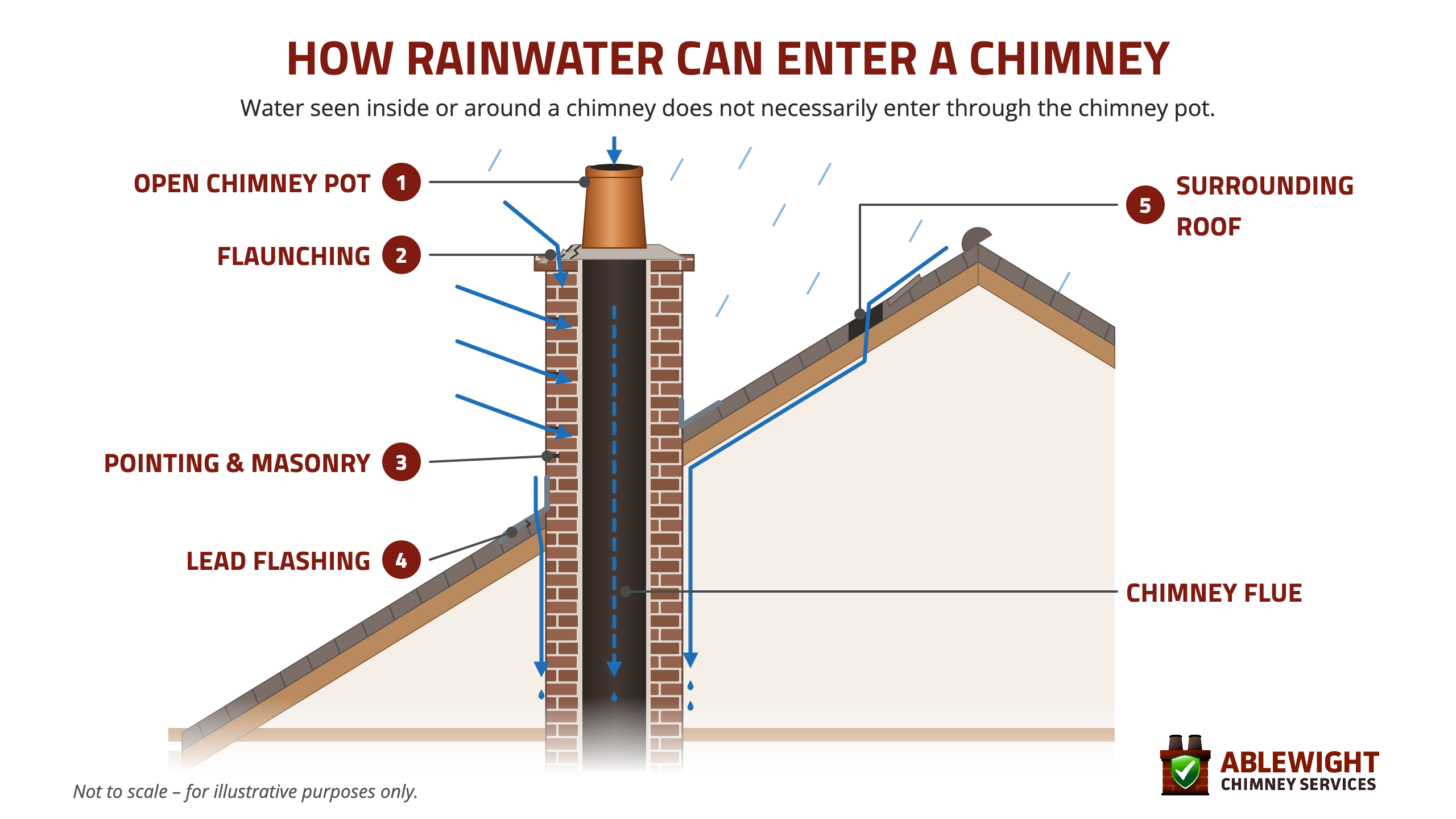
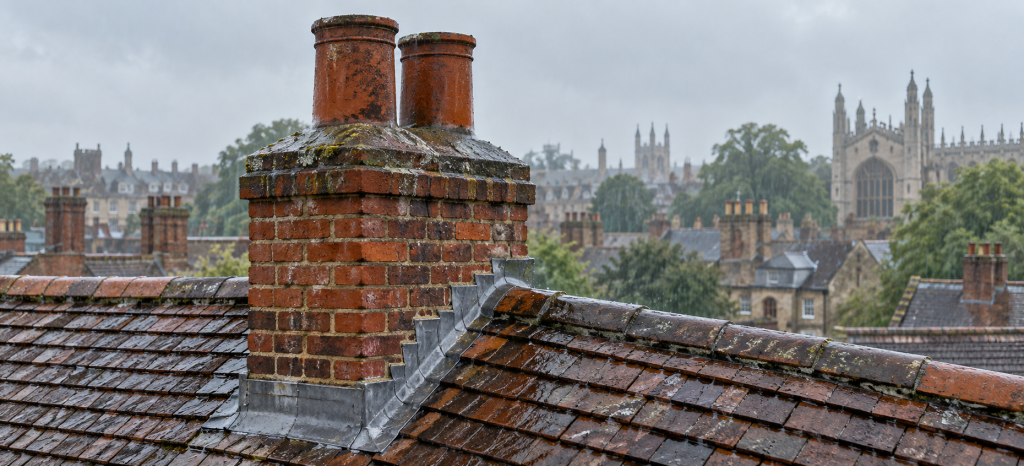
Water enters chimneys through three main areas: the chimney crown or flaunching, the flashing where the chimney meets the roof, and the brick or stone stack itself. Each represents a different type of failure, but all have the same result—water inside your chimney system.
The chimney crown is the mortar or concrete cap at the very top of the stack. It slopes away from the flue opening to shed water and protects the brick edges from moisture. When the crown develops cracks—typically from freeze-thaw damage or settlement—water runs straight into these gaps. Even hairline cracks allow significant water penetration over time, and once moisture gets beneath the crown surface, the damage accelerates rapidly.
Flashing forms the waterproof seal where your chimney passes through the roof. It consists of metal (usually lead or zinc) tucked into mortar joints on the chimney and lapped under roof tiles. When pointing around the flashing deteriorates, or when the lead itself cracks or pulls away from the brickwork, water flows behind the flashing and into the roof space. This type of leak often appears as dampness on the ceiling near the chimney rather than on the chimney breast itself.
How Pointing Failure Causes Leaks
The mortar between bricks—the pointing—serves as your chimney’s first line of defence against water. Mortar is porous and somewhat sacrificial by design. It’s softer than the bricks themselves, which means it weathers first and can be replaced without damaging the structural elements.
Over decades, weather erodes pointing. Frost action is particularly destructive: water seeps into tiny cracks, freezes, expands, and breaks the mortar structure apart. Wind-driven rain washes away degraded material. Eventually, you’re left with gaps between bricks that allow direct water penetration into the chimney’s interior.
Poor original workmanship accelerates this process. Mortar that’s too strong (harder than the bricks) prevents natural moisture movement and causes brick face failure instead of mortar failure. Mortar that’s too weak simply crumbles prematurely. Insufficient depth of pointing or gaps left during original construction become obvious once weather begins its work.
In Cambridge, where many chimneys date from Victorian or Edwardian construction, you’re often looking at pointing that’s performed adequately for a century or more. At some point, it simply reaches the end of its service life. The question isn’t whether repointing will be needed, but when—and whether it happens before or after water damage begins.
The Path Water Takes Inside Your Chimney
Once water penetrates the exterior, it doesn’t simply run straight down the flue. It travels through the chimney structure itself—between brick courses, through cracks in the render, along the surface of the flue liner if one exists, and through any voids in the construction.
Older chimneys often have no flue liner at all. They’re simply stacks of brick with a flue-shaped void running through them. Water entering from above can seep directly through the mortar joints and emerge on the interior surface of your chimney breast. This explains why you might see damp patches that appear and disappear with weather patterns—the brickwork becomes saturated during heavy rain and then slowly dries out.
Even with a liner, water can still cause problems. If the liner has cracks or gaps, moisture enters and becomes trapped between the liner and the surrounding brickwork. This creates persistent dampness that never fully dries because it’s enclosed. Salt deposits from the brickwork can appear on interior walls as the moisture evaporates—those white crystalline patches that indicate ongoing water movement through the structure.
How Water Affects Your Stove’s Performance
A damp chimney doesn’t draw properly. The temperature differential that creates draught relies on warm air rising through cooler air. When your flue is saturated with moisture, it takes longer to warm up, reducing the pressure differential and weakening the draw. You’ll notice this as difficulty lighting fires, smoke spillage into the room, or fires that struggle to establish themselves.
Moisture in the flue also affects the combustion deposits. Creosote and tar—already present from normal burning—become semi-liquid when combined with water. This creates a corrosive mixture that attacks both the flue liner and the surrounding brickwork. The acid content accelerates mortar deterioration from the inside, complementing the weather damage happening on the exterior.
If you’re burning smokeless fuel or operating a stove that produces sulphurous emissions, water amplifies the problem considerably. Sulphur compounds combine with moisture to form sulphuric acid. This is why chimneys serving oil boilers or certain solid fuel appliances deteriorate faster than wood-burning installations—the chemistry of damp flue gases is actively destructive.
Identifying the Source of Your Leak
Water staining patterns provide clues about entry points. Dampness on the ceiling near the chimney, particularly if it’s worse on one side, often indicates flashing failure. The water is entering where the chimney meets the roof and tracking along roof timbers before appearing as ceiling damage.
Staining on the chimney breast itself, especially if it runs in vertical lines or appears symmetrically on both sides of the breast, suggests water entering through the crown or through deteriorated pointing on the stack. The water is running down through the chimney structure and emerging on the interior wall surface.
Dampness around the fireplace opening, particularly if it’s accompanied by a sooty smell, often means water is running down the inside of the flue itself. This might be from a failed crown allowing direct water entry into the flue void, or from a crack in the flue liner that’s admitting moisture.
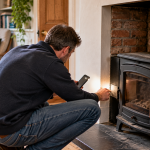
Professional inspection with a camera survey provides definitive answers. A CCTV examination shows the condition of the flue interior, identifies cracks or gaps, and reveals whether you have adequate liner protection. This information is essential for determining whether you’re dealing with external pointing failure, internal liner damage, or both.
Why External Repairs Come First
Many homeowners focus on internal repairs—redecorating damp patches, fitting new plaster, or attempting to seal the chimney breast from inside. This addresses cosmetic damage whilst ignoring the source. The leak continues, the moisture keeps entering, and within months you’re facing the same problems.
Effective repair starts at the top. Fix the crown, repoint the stack, repair or replace flashing, and ensure water cannot enter the structure. Only then does it make sense to address internal damage, because only then will the repairs remain dry and effective.
This approach costs more initially because scaffolding and high-level work is expensive. However, it’s substantially cheaper than repeated internal repairs that never solve the underlying problem. More importantly, it prevents the progressive structural damage that occurs when water continues penetrating your chimney for years.
What Proper Repairs Involve
Crown repair or rebuilding requires removing damaged material back to sound substrate, then creating a proper sloped cap using appropriate mortar mix or concrete. The crown should overhang the brick edge and include proper drainage details. Cutting corners here—using incorrect mortar or insufficient slope—means premature failure and repeated repairs.
Stack repointing means raking out deteriorated mortar to adequate depth (typically 20mm minimum), cleaning the joints properly, and repointing with mortar that matches the original in composition and hardness. Modern cement-heavy mortars are often too hard for older brickwork and cause more problems than they solve. A lime-based mortar is usually more appropriate for period properties.
Flashing work requires removing failed sections, cutting new material to correct sizes, and forming proper weathering details. The lead must be adequately tucked into the chimney (not just surface-applied), the soakers under roof tiles must overlap correctly, and the whole assembly needs to accommodate building movement without cracking.
These aren’t DIY projects. They require working at height, using proper materials, and understanding traditional construction methods. Poor workmanship doesn’t just fail to solve the problem—it can make things worse by trapping moisture or creating new entry points.
The Cost of Delayed Repairs
Water damage accelerates once it begins. A small crack in the crown becomes a large void. Deteriorated pointing in a few joints spreads to surrounding areas as water undermines adjacent mortar. Failed flashing causes rot in roof timbers, which then requires structural carpentry work in addition to the original chimney repairs.
Inside your home, persistent moisture damages plaster, decorative finishes, and any furnishings near the affected areas. More seriously, it creates conditions for mould growth. Once mould establishes itself in porous building materials, removal becomes expensive and may require specialist treatment.
For properties with woodburners or stoves, ongoing water penetration means reduced efficiency, increased fuel consumption, and accelerated deterioration of flue components. The combination of moisture and combustion deposits creates conditions that can eventually necessitate full liner replacement—a cost that proper external weatherproofing would have prevented.
Preventive Maintenance
Annual chimney inspection should include visual examination of the crown, stack, and flashing. Addressing minor pointing deterioration costs far less than waiting until significant sections have failed. Small crown cracks can be sealed; extensive crown damage requires complete rebuilding.
After severe weather—particularly freeze-thaw cycles or storm damage—check for new cracks or displaced materials. Water damage often accelerates following harsh winters because frozen moisture expands and breaks apart already-weakened structures. Catching this early limits repair costs and prevents water from establishing permanent pathways into your chimney.
When to Seek Professional Assessment
Any visible moisture problems inside your home warrant immediate professional inspection. Waiting to see if they improve means allowing ongoing damage whilst hoping the problem resolves itself—which it won’t. Water will continue entering until the entry point is repaired.
If your stove’s performance has declined without obvious cause—poor draw, difficulty lighting, smoke spillage—consider damp chimney issues alongside other potential factors. A camera survey reveals whether moisture is present in the flue and helps identify the source.
For period properties in Cambridge where chimneys may not have been maintained for decades, a comprehensive structural assessment provides a baseline understanding of condition. This allows you to budget for necessary work and prioritise repairs based on actual deterioration rather than guesswork.
Chimney leaks originate at the top because that’s where weather attacks the structure and where defensive elements—crown, pointing, flashing—eventually fail. Understanding this directs repair efforts to the actual problem rather than its symptoms. Proper external weatherproofing stops water entry, protects the structure, maintains stove efficiency, and eliminates the internal damage that brings most leaks to homeowners’ attention.
Frequently Asked Questions
Why does water damage appear inside my home when the leak is at the top of the chimney?
Water travels through the chimney structure—between bricks, through mortar joints, and along any voids—until it reaches a point where it can emerge. This is usually at the weakest point in the internal construction, often appearing as ceiling stains near the chimney or damp patches on the chimney breast. The leak location and the damage location are rarely the same place.
How can I tell whether my leak is from the crown, flashing, or pointing?
Damage patterns provide clues: ceiling stains near the chimney suggest flashing failure, vertical staining on the chimney breast indicates crown or pointing issues, and dampness around the fireplace opening often means water entering the flue directly. However, professional inspection with a camera survey provides definitive diagnosis rather than educated guessing.
Can I repair chimney leaks from inside my home?
Internal repairs address symptoms rather than causes. You can redecorate and replaster, but if water continues entering from above, the damage will return. Effective repair requires fixing the external entry points—crown, pointing, and flashing—before addressing internal cosmetic damage.
How does water in my chimney affect my woodburner’s performance?
A damp flue takes longer to warm up, reducing draught and making fires difficult to light. Moisture also combines with combustion deposits to form corrosive compounds that damage the flue liner and surrounding brickwork. The result is poor burning efficiency, increased fuel consumption, and accelerated deterioration of your chimney system.
What is chimney crown, and why does it fail?
The crown is the mortar or concrete cap at the very top of your chimney stack. It slopes away from the flue opening to shed water and protects the brick edges from moisture. Crowns fail primarily through freeze-thaw damage—water enters small cracks, freezes, expands, and breaks the structure apart. Once cracked, the crown admits significant water directly into the chimney structure.
How long does chimney pointing typically last?
Quality pointing can last 50-100+ years depending on exposure, original workmanship, and mortar composition. However, it’s not permanent. Weather gradually erodes mortar, particularly through freeze-thaw cycles. Many Cambridge chimneys have original Victorian or Edwardian pointing that’s simply reached the end of its service life after a century of exposure.
Why is proper mortar composition important for repointing?
Mortar must be softer than the bricks to weather sacrificially—the mortar deteriorates first and can be replaced without damaging bricks. Modern cement-heavy mortars are often too hard for older brickwork, preventing natural moisture movement and causing brick face failure instead. Lime-based mortars better match the original composition and allow proper moisture management.
Should I wait to see if the damp patches dry out on their own?
No. Damp patches that appear and disappear with weather indicate active water penetration. The problem won’t resolve itself—water will continue entering until the entry point is repaired. Delaying allows progressive damage to brickwork, internal plaster, and potentially roof timbers if the leak involves failed flashing. Early intervention limits damage and repair costs.
Expert Chimney Services for Clean, Compliant Burning
Getting the most from your chimney while meeting UK emission standards requires professional expertise. As authors of the City & Guilds Chimney Sweeping Qualification and certified Guild of Master Chimney Sweeps, Ablewight Chimney Services combines industry-leading knowledge with practical experience.
Our comprehensive chimney services ensure optimal performance, legal compliance, and safety:
- Professional chimney sweeping – Annual cleaning and maintenance
- CCTV chimney surveys – Advanced inspection technology
- Stove servicing – Complete maintenance and performance optimisation
- Bird nest removal – Wildlife-compliant clearance
- Bee nest removal – Safe clearance
- Tar and creosote removal – Specialist cleaning for heavy deposits
- Compliance certification – Insurance-valid documentation
- Expert advice – Personalised solutions for your heating system
Why Choose Ablewight:
- HETAS Approved for professional standards
- Trading Standards Approved for consumer protection
- Guild of Master Chimney Sweeps certified
- £5 million public liability insurance
- No-mess guarantee on all work
Get Professional Chimney Care Today:
- 01223 627012
- hello@ablewight.co.uk
Service Areas: Cambridge • Ely • Newmarket • Royston • Saffron Walden • St Ives • Huntingdon • St Neots • Bishop’s Stortford • All surrounding villages within 25 miles
Don’t compromise on safety, performance, or compliance. Contact Ablewight Chimney Services today for professional expertise you can trust.