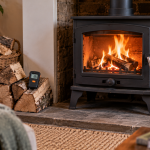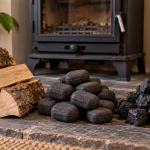
Cold January nights mean wood burners are working overtime across Cambridge. But whilst a roaring fire feels wonderful on a winter evening, improper burning technique creates a serious fire risk that many homeowners don’t recognise until it’s too late.
Most people associate chimney fires with lack of sweeping, and regular maintenance is essential. But how you burn matters just as much as how often you sweep. Burning too cool or using wet wood creates dangerous creosote deposits that can ignite without warning.
This guide explains what causes chimney fires, how to recognise the warning signs before disaster strikes, and what to do if you suspect a fire in your chimney.
What Actually Causes Chimney Fires

Every time you burn solid fuel, combustion creates byproducts. When burning happens efficiently at proper temperatures, these byproducts are mostly carried out of the chimney as gases. But when combustion is incomplete—due to restricted air supply or wet fuel—those byproducts condense on cooler chimney surfaces as creosote and tar.
Creosote is highly flammable, igniting at around 260°C. Once a chimney fire starts, temperatures can rapidly reach 1000°C or more, cracking flue liners, damaging mortar, and even igniting structural timbers in older properties.
The Two Main Culprits
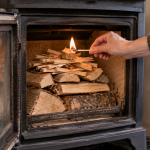
Burning too cool happens when people restrict their stove’s air supply to make fuel “last longer,” especially overnight or during milder weather. This creates what’s called a “slumbering” fire—slow, smouldering combustion rather than active burning with visible flames.
Whilst this seems economical, slumbering fires operate at much lower temperatures. Instead of burning wood compounds completely, the fire produces smoke laden with unburnt particles that deposit as creosote. This is the single most effective way to create dangerous build-up in your chimney, and it’s actually a false economy—you’re not extracting full heat value, you’re creating more pollution, and you’re dramatically increasing maintenance needs.
Burning wet or unseasoned wood causes similar problems for different reasons. Wood above 20% moisture content wastes energy evaporating water rather than producing heat, resulting in lower combustion temperatures and more smoke. The excess moisture creates steam that mixes with smoke to form tar, which condenses readily on chimney surfaces.
“Seasoned” doesn’t simply mean old wood—it specifically means wood dried to below 20% moisture content. Wood can sit in a pile for years and still be too wet if stored improperly.
Winter makes these risks worse. Intensive daily use accelerates creosote accumulation, cold nights tempt people to slumber fires overnight, and accumulated deposits from autumn compound through winter. Many chimney fires occur in January and February precisely because these factors combine.
Warning Signs of Dangerous Creosote Build-Up
Creosote build-up gives you warning signs long before it reaches fire-risk levels. Learning to recognise these signs means you can take action early.
Physical Signs in Your Chimney
Look for black, sticky deposits visible when looking up the flue, or tar actually dripping down inside the stove. Hard, shiny, glass-like coating on chimney interior (Stage 3 creosote) is the most dangerous form and very difficult to remove. You might see flakes or chunks of creosote falling into your stove, visible reduction in flue diameter, or heavy black deposits on the flue connector.
If you actually see tar dripping, this is Stage 2 creosote indicating serious, dangerous build-up. Stop using your chimney immediately and book a professional inspection.
Signs During Burning
Watch for excessive smoke from your chimney top even when fire is established, or white smoke continuing beyond the lighting phase. Smoke smell inside the room during burning, or smoke puffing back when opening the stove door, indicates problems.
Your stove’s performance tells you a lot: glass blackening within hours of cleaning, difficulty establishing or maintaining a fire, poor draft where the fire struggles to draw properly, or needing to leave air controls more open than usual all suggest developing problems.
Strange smells when burning (different from normal wood smoke), excessive condensation on windows near the stove, or staining appearing on your chimney breast all warrant investigation.
What a Chimney Fire Actually Looks Like
Not all chimney fires announce themselves dramatically. Understanding both types helps you recognise what’s happening.
Dramatic Chimney Fires
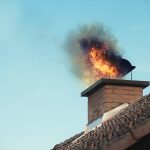
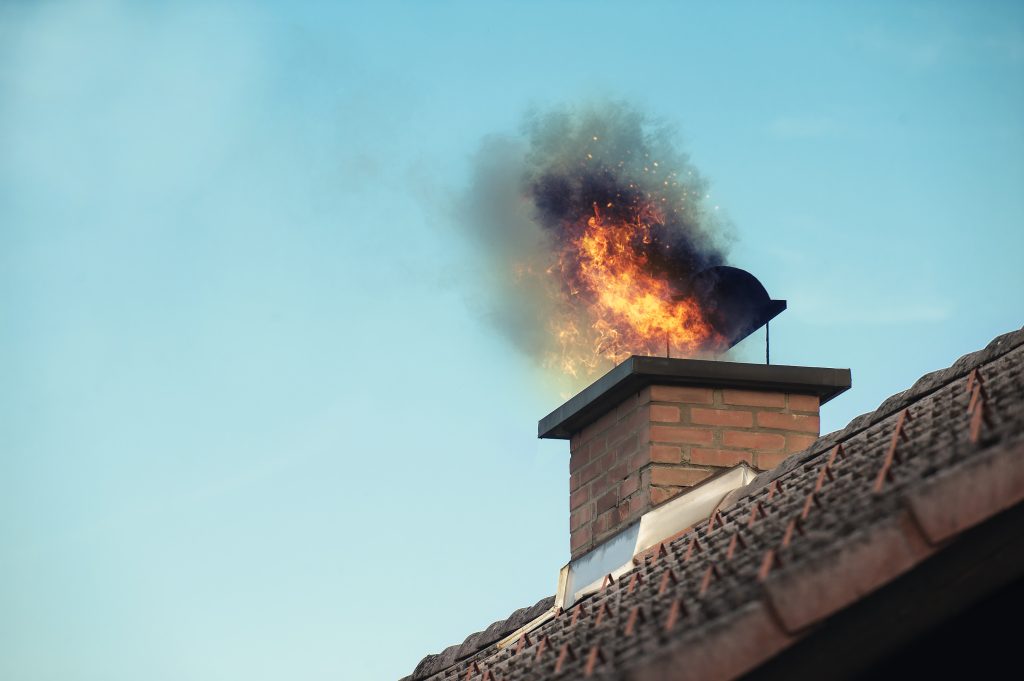
These include loud roaring or rumbling often compared to a freight train or jet engine, dense smoke pouring from the chimney top, visible flames or sparks shooting from the chimney, and intense heat that can make metal flue pipes glow red. The chimney structure itself may vibrate, and there’s typically a strong, acrid, chemical smell quite different from normal wood smoke.
If you experience these symptoms, you’re having a serious chimney fire and need to act immediately.
Slow-Burning Chimney Fires
These are far more common and often go undetected. There may be little external indication—perhaps a slight increase in draft where the fire suddenly burns more vigorously, extra heat radiating from the chimney breast, or subtle changes in how the fire behaves. These are often only discovered during the next professional sweep.
The danger is that slow-burning fires still reach temperatures high enough to crack liners, damage mortar joints, and weaken chimney structure. Even if you never knew it happened, the damage accumulates and increases future fire risk.
Damage Even After It’s Out
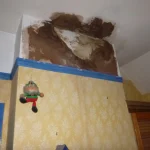
Whether dramatic or slow-burning, chimney fires cause damage. Flue liners can crack or separate, mortar deteriorates in joints, masonry cracks, and the chimney’s structural integrity becomes compromised. Damaged liners can’t contain future fires safely, gaps allow heat to reach combustible materials, and weakened structures become more vulnerable to catastrophic failure.
This is why professional inspection after any suspected chimney fire—even a minor one—is absolutely essential. You cannot safely assess damage yourself, and continuing to use a damaged chimney puts your property at serious risk.
Immediate Actions If You Suspect a Chimney Fire
If You’re Certain There’s a Fire
Call 999 immediately—this is a genuine emergency. Get everyone out of the house without waiting to see if it resolves. Close stove or fireplace doors and air vents only if safe to do so, as this reduces oxygen. Don’t use water, which can crack the liner catastrophically and create a steam explosion. Wait outside and don’t go back in until the fire service gives the all-clear.
If You’re Not Sure
Uncertainty is common—strange sounds, increased draft, unusual smells, but no visible flames. In these situations, err on the side of caution. Close air vents to reduce oxygen supply and monitor carefully. Call the fire service if you have any doubt—they’d rather check and find nothing than arrive too late. Don’t go to sleep hoping it resolves, as chimney fires can escalate rapidly.
After Any Suspected Fire
Even if the fire seemed to go out quickly or wasn’t dramatic, do not use your chimney again until professionally inspected. Book a CCTV survey to assess internal damage, assume liner damage until proven otherwise, notify your insurance even if you’re not making a claim, and get a written report from a professional sweep or inspector.
Many people restart using their chimney after a minor fire, assuming if the house didn’t burn down everything’s fine. This is dangerous—internal damage you can’t see may have compromised the chimney’s safety.
Understanding Temperature and Creosote Formation
Temperature directly determines how much creosote forms. Below 120°C, you get maximum creosote formation with gases condensing readily and depositing heavy tar. Between 120-230°C there’s moderate formation—better than slumbering but still producing significant deposits. Above 230°C, creosote formation is minimal as gases remain hot enough to be carried out of the chimney. This is your target range.
Restricting air supply to make fuel last longer keeps you firmly in the maximum-creosote zone. You’re not extracting full heat value, you’re wasting money through inefficient combustion, you’re creating dangerous deposits at the fastest rate, and you’re dramatically increasing fire risk.
Some people believe running very hot fires will “clean out” creosote deposits. This is dangerous misinformation. What actually happens is that very hot fires can ignite existing deposits, causing a chimney fire—the exact thing you’re trying to prevent. Professional removal by sweeping or chemical treatment is the only safe way.
Wood Moisture Content Matters
In Smoke Control Areas, wood must be below 20% moisture content, but this is a safety requirement everywhere, not just a regulatory one. “Seasoned” specifically means wood dried to below 20% moisture—it’s not about storage time but actual dryness.
When you burn wood above 20% moisture, energy is wasted evaporating water, combustion temperature drops, more smoke is produced, tar formation accelerates, and visible smoke increases. Even the difference between 25% and 15% moisture is dramatic.
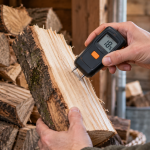
Visual inspection is unreliable. The only reliable method is using a moisture meter (£15-30 from hardware stores). Test the split face interior, not the bark, pushing pins 5-10mm deep. Test multiple pieces from different parts of your stack. Below 20% is safe to burn; above 20% will create excess smoke and deposits.
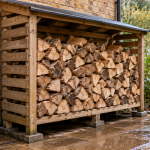
Wood moisture content isn’t permanent. Properly dried wood can re-absorb moisture if stored poorly—directly on the ground, against walls, uncovered, or in damp sheds. Even wood dried to 15% can climb back to 25%+ if stored poorly through winter.
Real Warning Signs to Never Ignore
Call a professional immediately if you notice tar dripping inside your stove or fireplace, heavy creosote flakes falling into the stove, smoke smell when the fire is not burning, staining on the chimney breast, or any cracking or rumbling sounds from the chimney during use.
Performance issues that warrant immediate attention include dramatic reduction in draft, smoke puffing back into the room, excessive smoke despite proper burning technique, extreme difficulty establishing fires despite good fuel, or strange chemical smells during burning.
After any suspected chimney fire—even if it seemed minor, you heard unusual sounds but couldn’t confirm a fire, neighbours reported seeing excessive smoke from your chimney, or the fire service was called—get professional inspection before using the chimney again.
Don’t wait until glass stays black despite cleaning, you can’t establish fires even with dry fuel, the room fills with smoke every time you open the stove door, neighbours regularly comment on smoke, you see flames from the chimney top, or the chimney breast radiates excessive heat. These are advanced warnings that problems have progressed significantly.
Insurance and Legal Implications
Most home insurance policies require annual sweeping by a qualified professional, with certificates retained as proof. Negligence can mean claim denial if a chimney fire occurs without evidence of proper maintenance. Keep all sweep certificates from installation onwards, documentation of repairs, CCTV survey reports, and any correspondence about chimney condition.
Beyond insurance, you have legal duties. There’s a duty of care to prevent foreseeable risks, responsibility for fire damage to neighbouring properties if due to negligence, and in Smoke Control Areas, compliance requirements. Excessive smoke is a statutory nuisance that the council can take action against even outside SCAs.
Cambridge-Specific Considerations
Cambridge’s housing stock presents specific challenges. Victorian and Edwardian properties often have original chimneys lacking liners, narrow flues more prone to restriction, and shared chimneys common in terraces where one neighbour’s poor burning affects the whole system.
Local weather patterns matter too. January’s mild spells tempt people to bank down fires for background heat, creating maximum creosote risk. Temperature variations affect draft, and Cambridge’s low-lying river valley location can affect air pressure. The damp climate means wood can re-absorb moisture even when covered, making regular moisture testing more important.
The coming Smoke Control Area expansion (expected 2027) is relevant to fire prevention. SCA rules requiring approved fuels or DEFRA-approved stoves inherently encourage hotter, cleaner burning. Compliance with SCA rules naturally reduces creosote formation, and wood must be below 20% moisture in SCAs.
Frequently Asked Questions
How often should I have my chimney swept to prevent fires?
At minimum, once per year for any solid fuel appliance. If you burn wood daily throughout winter, twice per year is recommended—once in the middle of the heating season (January/February) and once at the end of the season (spring). The frequency should increase if you notice warning signs like rapid glass blackening or poor draft. Heavy users burning 12+ hours daily should consider sweeping every 4-6 months.
Can I tell by looking if my wood is dry enough to burn safely?
No. Visual inspection is unreliable. Wood can have cracks, look old, and feel dry but still contain 25%+ moisture. The only reliable method is using a moisture meter. Test the split face interior, not the bark. Test multiple pieces from different parts of your stack. Wood below 20% moisture is safe; above 20% will create excess creosote and smoke.
What’s the difference between Stage 1, Stage 2, and Stage 3 creosote?
Stage 1 is dry, flaky soot that brushes away easily. Stage 2 is sticky, tar-like deposits that may drip—this requires immediate professional attention. Stage 3 is hardened, glazed, shiny deposits that look like glass coating the interior. This is most dangerous, very difficult to remove, and often requires chemical treatment. Standard sweeping cannot remove Stage 2 or 3 effectively.
Is it okay to restrict air overnight to make the fire last longer?
No. “Slumbering” fires create maximum creosote deposits. The fire burns at very low temperatures, producing smoke that condenses as tar. This is a primary cause of dangerous build-up. It’s better to let your fire burn out overnight and restart in the morning, or use much less fuel with adequate air if you must maintain overnight heat.
I think I had a chimney fire but I’m not certain. What should I do?
Do not use your chimney again until professionally inspected. Even if the fire seemed minor or you’re not certain it happened, chimney fires cause internal damage that isn’t visible. Book a CCTV survey to assess condition. Notify your insurance even if you’re not making a claim. Never assume “if the house didn’t burn down, everything’s fine.”
Does cleaning my stove glass regularly prevent chimney fires?
No, but how quickly glass blackens tells you about burning quality. If glass stays relatively clean, you’re burning well. If it blackens within hours, you’re burning too cool or with too-wet fuel—meaning you’re also creating creosote in your chimney. Address the underlying problem: improve burning temperature, use drier fuel, or increase air supply.
My neighbour burns the same wood I do but doesn’t have problems. Why do I?
Burning technique matters as much as fuel quality. Two people burning identical wood can have completely different results based on how they operate their stoves. If your neighbour burns hotter with better air supply whilst you slumber overnight, they’ll create minimal deposits whilst you create heavy build-up. Chimney and stove design also matter—don’t assume your setup will work the same as someone else’s.
Stay Safe This Winter
Chimney fires are preventable. The warning signs appear long before disaster strikes, giving you time to take action. Understanding what causes dangerous creosote build-up and recognising when your burning technique needs adjustment can prevent serious fires.
Cold January nights don’t have to mean compromised safety. If you’re experiencing any of the warning signs we’ve discussed, or if it’s been more than a year since your last sweep, don’t wait. We’ve been keeping Cambridge chimneys safe since 1980.
Expert Chimney Services for Clean, Compliant Burning
Getting the most from your chimney while meeting UK emission standards requires professional expertise. As authors of the City & Guilds Chimney Sweeping Qualification and certified Guild of Master Chimney Sweeps, Ablewight Chimney Services combines industry-leading knowledge with practical experience.
Our comprehensive chimney services ensure optimal performance, legal compliance, and safety:
- Professional chimney sweeping – Annual cleaning and maintenance
- CCTV chimney surveys – Advanced inspection technology
- Stove servicing – Complete maintenance and performance optimisation
- Bird nest removal – Wildlife-compliant clearance
- Bee nest removal – Safe clearance
- Tar and creosote removal – Specialist cleaning for heavy deposits
- Compliance certification – Insurance-valid documentation
- Expert advice – Personalised solutions for your heating system
Why Choose Ablewight:
- HETAS Approved for professional standards
- Trading Standards Approved for consumer protection
- Guild of Master Chimney Sweeps certified
- £5 million public liability insurance
- No-mess guarantee on all work
Get Professional Chimney Care Today:
- 01223 627012
- hello@ablewight.co.uk
Service Areas: Cambridge • Ely • Newmarket • Royston • Saffron Walden • St Ives • Huntingdon • St Neots • Bishop’s Stortford • All surrounding villages within 25 miles
Don’t compromise on safety, performance, or compliance. Contact Ablewight Chimney Services today for professional expertise you can trust.