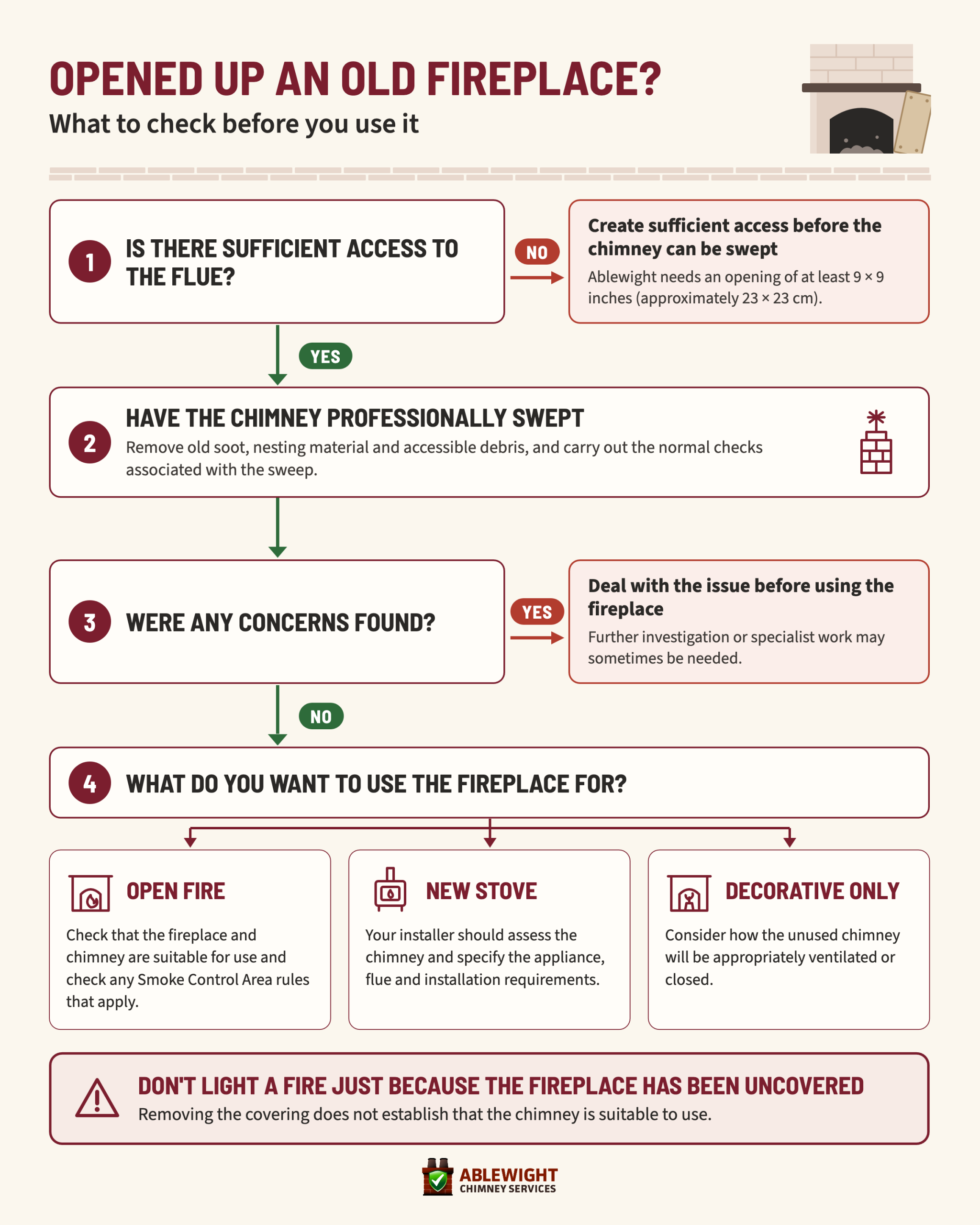
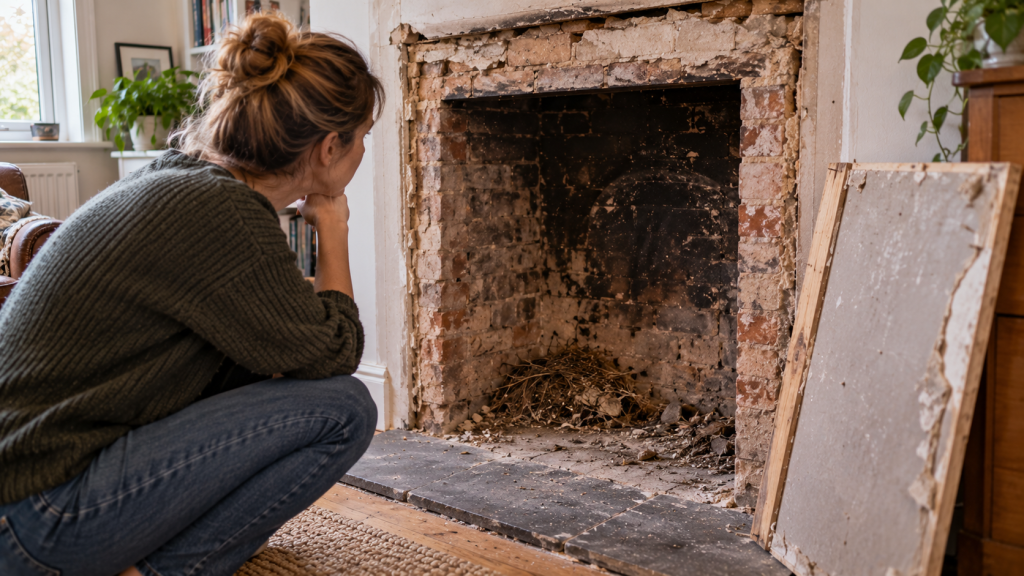
Many Cambridge homes have fireplaces that were blocked up decades ago—often when central heating arrived or during renovations. If you’re considering opening one back up, you’re probably wondering what’s actually behind that plaster, whether it’s safe to use, and what the whole process will cost.
The answer isn’t always straightforward. Some blocked fireplaces hide perfectly serviceable chimneys. Others conceal structural problems, missing parts, or modifications that make reopening complicated. Here’s what you need to know before you start knocking through plasterboard.
Why Fireplaces Get Blocked
Fireplaces were blocked for various reasons, and understanding why yours was closed can give clues about what you’ll find:
Central heating installation (1960s-1980s)
When central heating became standard, many homeowners blocked fireplaces to improve room insulation and eliminate draughts. These were often quick jobs—a sheet of plasterboard over the opening, perhaps some ventilation bricks added to prevent damp. The chimney itself usually remained intact.
Clean Air Act compliance (1950s-1970s)
In areas covered by early smoke control legislation, some fireplaces were blocked rather than converted. This was particularly common in rental properties where landlords chose the simplest option.
Room reconfiguration
Victorian and Edwardian houses often had fireplaces in every room. When layouts changed—knocking through walls, adding bathrooms, creating open-plan spaces—excess fireplaces were closed up. Sometimes the chimney breast was removed entirely, though more often just the opening was covered.
Practical problems
Some fireplaces were blocked because they smoked badly, had structural cracks, or the chimney had become unsafe. These cases require more investigation before reopening is advisable.
The Discovery Process
Before committing to a full reopening, you need to understand what’s actually there. This usually happens in stages.
Initial Investigation
Start by examining the room and the exterior of the house. Look for:
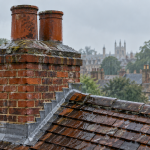
- Chimney stack visible on the roof directly above the blocked fireplace
- Evidence of a chimney breast bulge in the wall—blocked fireplaces usually leave this intact
- Ventilation bricks in the covering—these suggest the chimney may still be viable
- Original mantelpiece removed or still in place behind covering
If the chimney stack has been removed, the breast has been fully demolished, or the flue has been used for other services (boiler flue, soil pipe), reopening becomes significantly more complicated or impossible.
Making an Opening
Once you’ve confirmed there’s likely a fireplace to uncover, the next step is creating an opening to inspect properly. This is usually a small investigative hole rather than removing the entire covering immediately.
What you might find:
- Complete fireplace intact: Opening, fireback, and throat all present. Best-case scenario.
- Opening present but fireback removed: Common if the fireplace hadn’t been used for years before blocking. Brickwork may be damaged or sooty.
- Partial infill: Some blockages involve brick or concrete infill partway up the opening. This needs removing but doesn’t necessarily indicate problems.
- Debris accumulation: Decades of blocked chimneys can accumulate soot, nest material, fallen mortar, or even builder’s rubble from renovations.
- Structural modifications: Previous repairs, lintel replacement, or alterations to the breast that affect how you proceed.
This investigation phase usually takes a builder or specialist an hour or two. It provides the information needed to quote accurately for the full reopening.
Chimney Condition Assessment
Just because you can see a fireplace doesn’t mean the chimney is usable. A proper assessment requires inspection from both ends—the fireplace opening and the chimney top.
What a Chimney Sweep Checks
Once the fireplace is accessible, a professional chimney sweep can clear decades of accumulated debris and assess the basic condition of the flue. This initial sweep is essential before anyone can properly evaluate the chimney’s suitability.
The sweep removes:
- Accumulated soot from previous use
- Debris, fallen mortar, and nest material
- Blockages that prevent proper assessment of the flue
After sweeping, the builder or specialist assessing your reopening project can properly evaluate:
- Flue integrity and visible defects
- Whether the chimney structure is sound enough to use
- Terminal condition and external repairs needed
- Flue size and suitability for your intended use
- Whether a liner is necessary or advisable
If more detailed investigation is needed—for example, to examine areas that aren’t visible from the fireplace opening or roof—CCTV chimney inspection can be arranged as a separate service. This uses cameras to inspect the entire flue length and identify issues that aren’t obvious during visual assessment.
Common Problems Found
Many blocked chimneys have been unused for 30-50 years. Long periods of disuse can create issues:
Deteriorated pointing
Mortar between bricks degrades over time, particularly when exposed to weather without the drying effect of regular fires. Repointing the stack is often needed.
Damp penetration
Blocked chimneys can develop damp issues, especially if ventilation wasn’t maintained. This usually manifests as staining on chimney breasts or musty smells when the covering is removed.
Missing or damaged pots
Chimney pots sometimes fall or get removed. Without a proper terminal, rain enters directly and the flue doesn’t draw properly.
Flue degradation
Older chimneys sometimes have internal damage that wasn’t apparent when they were last used. Smoke testing or camera inspection reveals these issues.
Not all problems are dealbreakers. Many can be resolved with targeted repairs or by installing a liner. But you need to know what you’re dealing with before proceeding.
Structural Considerations
Reopening a fireplace isn’t usually a structural issue—the fireplace was built to be open, so you’re returning it to its original state. However, some situations require structural input.
When You Need a Structural Engineer
You’ll typically need structural assessment if:
- The chimney breast has been partially removed above or below your property
- There’s evidence of settlement, cracks, or movement around the chimney
- You’re in a flat where the chimney serves multiple properties
- The lintel over the fireplace opening needs replacing or reinforcing
In straightforward cases where the fireplace was simply covered over and everything above and below remains intact, structural input usually isn’t required.
Lintel and Opening Checks
The lintel supports the brickwork above the fireplace opening. Original lintels were often stone or brick arches, later ones might be steel or concrete.
When reopening, check that:
- The lintel is present and sound
- There’s no cracking or sagging in the brickwork above
- The opening size is as expected—sometimes coverings hide that the opening was made smaller than original
If the lintel is damaged or missing, replacement is necessary before the fireplace can be used. This is specialist work and adds to project cost and complexity.
Options After Assessment
Once you know what you’re working with, you have several routes forward depending on chimney condition and your intended use.
Use the Existing Flue
If the chimney checks out sound, you can use it as-is. This works well for open fires and is the most cost-effective option.
Requirements:
- Professional sweep to remove accumulated debris and soot
- Check terminal is present and suitable
- Any necessary external repairs to pointing or stack
- Installation of appropriate fireplace furniture (grate, fireback if missing)
In Cambridge’s Smoke Control Area, remember you can only burn authorised smokeless fuels in an open fireplace. Many people discover this after reopening and decide to install a DEFRA-approved stove instead.
Install a Liner
If the chimney has issues but is structurally sound, lining provides a new flue within the old chimney. This is often necessary for:
- Wood-burning or multi-fuel stove installation
- Chimneys with minor defects that don’t justify full rebuilding
- Flues that are oversized for the appliance you want to install
- Meeting Building Regulations for new installations
Flexible stainless steel liners are standard. They’re installed from the top, connected at the bottom to your appliance or register plate, and terminate with an appropriate cowl.
Lining adds £600-1200 to your project depending on chimney height and liner specification, but it future-proofs the installation and often improves performance.
Alternative Solutions
If the chimney is unusable, you still have options:
Twin-wall flue system
An insulated flue pipe can run up through the building and out through the roof, completely independent of the existing chimney. This works when the chimney is absent or beyond economic repair. It’s more visible and requires Building Regulations approval, but it’s a viable route to wood-burning capability.
Gas or electric alternatives
If solid fuel isn’t viable, balanced flue gas fires or electric stoves create a fireplace feature without needing the chimney. These don’t require Cambridge SCA compliance since they’re not burning solid fuel.
Decorative feature only
Some people reopen the fireplace for aesthetic reasons without intending to use it. This simplifies the process—no sweep needed, no regulations, just restoration of the architectural feature. Candles, logs, or decorative inserts create visual interest.
Building Regulations and Permissions
Reopening a blocked fireplace and using the existing chimney for an open fire doesn’t usually require Building Regulations approval—you’re returning the fireplace to its original purpose.
However, you do need Building Regulations notification if:
- Installing a wood-burning or multi-fuel stove (notifiable work under Part J)
- Installing a liner or making alterations to the flue
- Creating a new flue system (twin-wall installation)
- Making structural modifications to the chimney breast or opening
HETAS-registered installers can self-certify stove installations, which streamlines the process. If you’re going down that route, they handle the compliance paperwork.
Planning permission isn’t usually needed for internal work or for replacing chimney pots with like-for-like. If you’re in a conservation area or listed building, check with your local authority before external alterations.
The Importance of Professional Sweeping
Once your fireplace is reopened and assessed, professional chimney sweeping is essential before first use. This isn’t optional—it’s a safety requirement and usually a condition of any insurance coverage.
A blocked chimney that hasn’t been used for decades accumulates:
- Decades of soot from previous use
- Fallen mortar and deteriorated brickwork
- Bird nests, even if the chimney was capped (gaps always exist)
- Builder’s rubble if work was done nearby
- General debris from years of disuse
All of this must be removed before lighting a fire. Attempting to burn with a contaminated flue risks chimney fires, carbon monoxide issues, and smoke entering the room.
What Professional Sweeping Provides
When we sweep a newly reopened chimney, we:
- Remove all accumulated debris and deposits from the entire flue length
- Inspect the flue condition using cameras where appropriate
- Identify any defects or issues that weren’t visible during initial assessment
- Test the draw to confirm the chimney functions properly
- Provide a certificate confirming the chimney has been swept and is suitable for use
This certification is important. If you’re installing a stove, the installer will require proof of sweeping. If you’re arranging insurance, they’ll often ask for evidence the chimney is maintained. And if there’s ever a problem, having documentation of professional assessment protects you.
The sweep also establishes the maintenance baseline. Newly reopened chimneys sometimes need more frequent early sweeping as residual deposits work loose, but once clean and in regular use, standard annual maintenance applies.
Realistic Costs
Reopening costs vary enormously depending on what you find and how you choose to proceed. Individual tradespeople quote differently, materials vary in price, and local rates differ. What matters is understanding the ballpark you’re working in.
Basic Reopening (Straightforward Case)
Typical range: £800-1,200
This covers removing the covering, professional sweeping, minor external repairs, and basic fireplace furniture. It assumes the chimney is structurally sound, nothing major is wrong, and you’re using it as an open fire without installing a stove or liner.
This is the best-case scenario—what you might achieve if you uncover an intact fireplace with a serviceable chimney.
Mid-Range Project (With Liner or Moderate Repairs)
Typical range: £2,000-3,500
This is typical when installing a chimney liner for safety or performance, when modest repairs are needed to the chimney stack or flue, or when there are complications that take the project beyond basic reopening.
Many reopening projects fall into this range once you account for the reality of what’s discovered during assessment.
Complex Cases
Typical range: £4,000-6,000+
Complex projects involve structural work, major chimney repairs, difficult access requiring scaffolding, or combinations of issues that compound costs.
These aren’t common, but they’re not rare either—particularly in period properties where everything is original and has deteriorated over decades.
If your assessment reveals this level of work, you’re making a significant investment. Factor this into your decision about whether reopening makes sense or whether alternative solutions serve you better.
Don’t Forget Ongoing Costs
Once operational, budget for annual sweeping, fuel costs, and occasional repairs to grate, fireback, or other components. Factor these into your decision. A working fireplace isn’t a one-time expense.
Realistic Timelines
How long does reopening take? It depends on complexity and availability of tradespeople.
Straightforward Cases
- Initial investigation and opening: 1-2 days
- Sweep and assessment: Half day (once opening is complete)
- Making good and decorating: 1-3 days
- External repairs (if needed): 1-2 days
Total elapsed time: 2-4 weeks typically
This assumes you’re coordinating trades yourself. Much of this time is waiting for availability rather than active work.
Complex Projects
Add time for:
- Structural engineer assessment and report: 1-3 weeks
- Building Regulations approval (if needed): 2-6 weeks
- Scaffolding hire and major external work: Add 1-2 weeks
- Stove installation (if going that route): Add 1-2 days plus appliance delivery time
Complex cases routinely take 2-3 months from decision to first fire. Don’t underestimate the coordination required.
Common Surprises and How to Handle Them
Even with careful planning, reopening fireplaces sometimes throws up unexpected issues. Here are the most common:
The Chimney Is Worse Than Expected
You can’t fully assess chimney condition until it’s opened and swept. Sometimes problems only become visible then.
If major defects appear, your options are:
- Install a liner to bypass the problem (most common solution)
- Commission repairs to make the chimney safe
- Abandon the chimney and use alternative flue methods
Don’t proceed with an unsafe chimney. The risks aren’t worth it, and insurance won’t cover problems resulting from known defects.
The Opening Is Smaller Than You Hoped
Sometimes covering hides that the original opening was made smaller—perhaps to fit a smaller grate or because the lintel was replaced.
This affects aesthetics, but it’s important to understand that the original fireplace opening was sized correctly for the flue above it. Enlarging the opening beyond the original size creates functional problems—a fireplace opening that’s too large for its flue won’t draw properly, producing smoke in the room.
If you want a larger fireplace than the chimney can support as an open fire, installing a wood-burning stove becomes the practical solution. The stove creates its own controlled combustion environment and typically connects to the flue via a liner, so the fireplace opening size becomes less critical.
Enlarging openings is structurally possible but requires understanding these constraints. Don’t assume a bigger opening automatically works better.
Extensive Damp Behind the Covering
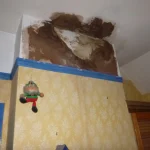
Blocked chimneys sometimes develop damp, particularly if ventilation wasn’t provided. When you remove the covering, you might find extensive staining, damaged plaster, or even rot in adjacent woodwork.
This needs addressing before proceeding. Identify and fix the source (usually missing or damaged chimney pointing), dry everything out properly, and repair damaged fabric. Add this to your timeline and budget.
The Mantelpiece Isn’t What You Expected
Many people hope to uncover an original Victorian or Edwardian surround. Sometimes you do. Often you don’t—it was removed decades ago, or it’s damaged, or it’s not the style you wanted.
Budget for potentially sourcing a replacement surround. Architectural salvage yards stock period pieces, or you can commission reproduction. This can add £300-2000+ depending on style and material.
Making the Decision
Reopening a blocked fireplace makes sense if:
- You want the character and atmosphere an open fire or wood burner provides
- The property would benefit from a working fireplace (aesthetic and value)
- Initial investigation suggests the chimney is viable
- You’re prepared for the costs and timescale involved
It doesn’t make sense if:
- The chimney stack has been removed or the breast demolished
- Early investigation reveals major structural problems
- You’re not prepared for the maintenance commitment of an active fireplace
- Budget constraints mean you’d be compromising on safety to save money
The key is proper investigation before committing. A small exploratory opening and professional assessment costs relatively little but tells you everything you need to know about whether proceeding makes sense.
Don’t make assumptions. Don’t proceed blind. And don’t cut corners on safety. If the project is viable, do it properly. If it’s not, better to know early than discover problems after you’ve invested time and money.
A working fireplace adds character, warmth, and value to a property. When done right, reopening a blocked fireplace is an investment that pays back in utility and enjoyment. When done badly, it’s a source of ongoing problems and regret. The difference is in the assessment, planning, and professional input at each stage.
Frequently Asked Questions
How much does it cost to open up a blocked fireplace?
Costs vary enormously based on chimney condition and scope of work. Straightforward cases where the chimney is sound and minimal repairs are needed sit at the lower end. Projects requiring liner installation, moderate repairs, or more extensive work fall into a mid-range bracket. Complex cases involving structural work or major chimney repairs represent significant investment. Get quotes from local tradespeople for accurate figures based on your specific situation.
Can I open up a blocked fireplace myself?
You can remove the covering yourself if you’re competent with basic DIY, but you must have the chimney professionally swept and assessed before use. Never attempt to use a reopened chimney without professional inspection—you can’t see internal defects that might cause smoke problems or fire risks. Most people find it more cost-effective to have the entire process handled by tradespeople.
How long does it take to open a blocked fireplace?
Straightforward projects typically take 2-4 weeks elapsed time, though actual work is only 3-5 days. This includes removing covering, sweeping, minor repairs, and making good. Complex cases requiring structural assessment, Building Regulations approval, or major repairs can take 2-3 months. Much of this time is waiting for tradespeople availability rather than active work.
Do I need permission to unblock a fireplace?
Reopening a fireplace for use as an open fire doesn’t require Building Regulations approval—you’re returning it to its original purpose. However, you need Building Regulations notification if installing a wood burner, fitting a liner, or making structural changes. Planning permission isn’t usually needed unless you’re in a conservation area or listed building making external alterations.
What if the chimney is in bad condition?
Bad chimney condition doesn’t necessarily prevent use. Installing a flexible stainless steel liner (£600-1200) creates a new flue within the old chimney, bypassing most defects. If the chimney structure is fundamentally unsound, you can install a twin-wall flue system independent of the existing chimney, or opt for gas/electric alternatives that don’t need the chimney at all.
Can I use a reopened fireplace immediately?
No. You must have the chimney professionally swept and assessed before first use. Blocked chimneys accumulate decades of soot, debris, nests, and fallen mortar. Attempting to burn without clearing this risks chimney fires, carbon monoxide issues, and smoke entering the room. Professional sweeping also identifies any hidden defects that need addressing before the fireplace is safe to use.
Will opening a fireplace add value to my home?
Working fireplaces generally add value, particularly in period properties where they’re expected features. The value added typically exceeds the reopening cost in desirable areas like Cambridge. However, the main benefit is livability and character rather than pure financial return. Consider it an improvement that makes the property more attractive to buyers rather than a direct investment.
What’s behind a blocked fireplace?
Most commonly, you’ll find the original fireplace opening still intact, possibly with the fireback removed. Sometimes there’s partial brick or concrete infill. Accumulated soot, debris, and nest material is normal. Less commonly, you might find structural modifications, missing components, or damage that occurred before blocking. Each fireplace is different—proper investigation reveals what’s actually there.
Can I burn wood in Cambridge after reopening my fireplace?
In an open fireplace, no—Cambridge’s Smoke Control Area only permits authorised smokeless fuels in open fires. However, if you install a DEFRA-approved wood-burning stove, you can burn seasoned wood legally. Many people discover this restriction after reopening and choose to install a stove rather than use the open fire with smokeless fuel.
How often does a reopened chimney need sweeping?
Once cleaned and in regular use, chimneys need sweeping annually at minimum. If you’re burning wood or coal frequently (more than once a week through winter), twice-yearly sweeping is advisable. Newly reopened chimneys sometimes need more frequent early sweeping as residual deposits work loose, but standard maintenance intervals apply once the chimney is established in regular use.
Summary
Reopening a blocked fireplace is achievable in most Cambridge properties, but success depends on proper investigation before commitment. The key steps are straightforward: create an exploratory opening to see what’s there, arrange professional sweeping to clear decades of accumulation, have the chimney assessed for safety and suitability, then decide on your route forward based on what you’ve learned.
Costs vary from around £800-1,200 for straightforward cases to £4,000-6,000+ for complex projects. Most fall somewhere in the middle once you account for necessary repairs and improvements. Time investment runs from a few weeks for simple reopening to several months for projects requiring structural work or Building Regulations approval.
The fireplace opening itself is usually recoverable. The question is always about chimney condition. Sound chimneys can be used as-is. Chimneys with issues can often be lined. Severely compromised chimneys might require alternative solutions or render the project unviable.
Don’t proceed without professional assessment. The cost of investigation is small compared to discovering problems after you’ve invested in reopening. And never use a newly opened chimney without professional sweeping—this isn’t optional, it’s essential for safety and often required by insurance.
In Cambridge’s Smoke Control Area, remember that open fireplaces can only burn authorised smokeless fuels. Many homeowners discover this restriction after reopening and opt to install a DEFRA-approved stove instead, allowing them to burn seasoned wood legally.
Done properly, reopening a blocked fireplace adds character, functionality, and value to your property. The difference between success and regret is in the assessment, professional input, and willingness to do the job right rather than cutting corners to save money.
Expert Chimney Services for Clean, Compliant Burning
Getting the most from your chimney while meeting UK emission standards requires professional expertise. As authors of the City & Guilds Chimney Sweeping Qualification and certified Guild of Master Chimney Sweeps, Ablewight Chimney Services combines industry-leading knowledge with practical experience.
Our comprehensive chimney services ensure optimal performance, legal compliance, and safety:
- Professional chimney sweeping – Annual cleaning and maintenance
- CCTV chimney surveys – Advanced inspection technology
- Stove servicing – Complete maintenance and performance optimisation
- Bird nest removal – Wildlife-compliant clearance
- Bee nest removal – Safe clearance
- Tar and creosote removal – Specialist cleaning for heavy deposits
- Compliance certification – Insurance-valid documentation
- Expert advice – Personalised solutions for your heating system
Why Choose Ablewight:
- HETAS Approved for professional standards
- Trading Standards Approved for consumer protection
- Guild of Master Chimney Sweeps certified
- £5 million public liability insurance
- No-mess guarantee on all work
Get Professional Chimney Care Today:
- 01223 627012
- hello@ablewight.co.uk
Service Areas: Cambridge • Ely • Newmarket • Royston • Saffron Walden • St Ives • Huntingdon • St Neots • Bishop’s Stortford • All surrounding villages within 25 milesDon’t compromise on safety, performance, or compliance. Contact Ablewight Chimney Services today for professional expertise you can trust.